

Hybrid Diffusion Model for Breast Ultrasound Image Augmentation
arXiv:2603.26834v1 Announce Type: cross Abstract: We propose a hybrid diffusion-based augmentation framework to overcome the critical challenge of ultrasound data augmentation in breast ultrasound (BUS) datasets. Unlike conventional diffusion-based augmentations, our approach improves visual fidelity and preserves ultrasound texture by combining text-to-image generation with image-to-image (img2img) refinement, as well as fine-tuning with low-rank adaptation (LoRA) and textual inversion (TI). Our method generated realistic, class-consistent images on an open-source Kaggle breast ultrasound ima — Farhan Fuad Abir, Sanjeda Sara Jennifer, Niloofar Yousefi, Laura J. Brattain
View PDF HTML (experimental)
Abstract:We propose a hybrid diffusion-based augmentation framework to overcome the critical challenge of ultrasound data augmentation in breast ultrasound (BUS) datasets. Unlike conventional diffusion-based augmentations, our approach improves visual fidelity and preserves ultrasound texture by combining text-to-image generation with image-to-image (img2img) refinement, as well as fine-tuning with low-rank adaptation (LoRA) and textual inversion (TI). Our method generated realistic, class-consistent images on an open-source Kaggle breast ultrasound image dataset (BUSI). Compared to the Stable Diffusion v1.5 baseline, incorporating TI and img2img refinement reduced the Frechet Inception Distance (FID) from 45.97 to 33.29, demonstrating a substantial gain in fidelity while maintaining comparable downstream classification performance. Overall, the proposed framework effectively mitigates the low-fidelity limitations of synthetic ultrasound images and enhances the quality of augmentation for robust diagnostic modeling.
Comments: Accepted at IEEE International Symposium on Biomedical Imaging (ISBI) 2026
Subjects:
Image and Video Processing (eess.IV); Artificial Intelligence (cs.AI); Computer Vision and Pattern Recognition (cs.CV)
Cite as: arXiv:2603.26834 [eess.IV]
(or arXiv:2603.26834v1 [eess.IV] for this version)
https://doi.org/10.48550/arXiv.2603.26834
arXiv-issued DOI via DataCite (pending registration)
Submission history
From: Farhan Fuad Abir [view email] [v1] Fri, 27 Mar 2026 05:29:41 UTC (11,925 KB)
Sign in to highlight and annotate this article

Conversation starters
Daily AI Digest
Get the top 5 AI stories delivered to your inbox every morning.
More about
researchpaperarxiv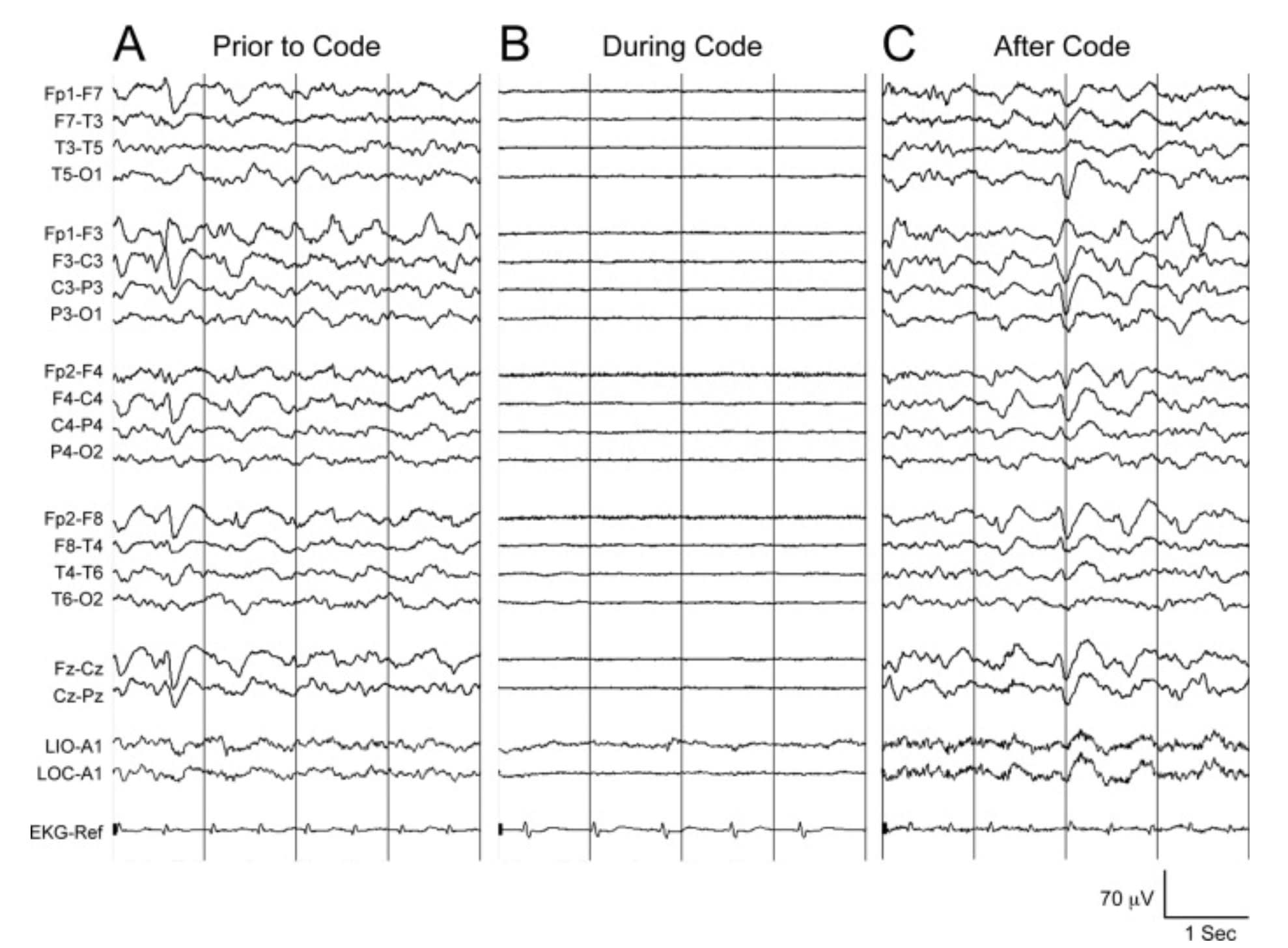
Why do I believe preserving structure is enough?
There's a lot even our best neuroscientists don't know about the human brain. How can we have any reasonable hope for preservation given those unknowns? What if there are crucial memory mechanisms that are so poorly understood, we don't even know to check whether our methods preserve them? As it turns out, there's some interesting empirical evidence about the general shape , and limits, of those unknowns. In Ted Chiang's short story Exhalation , a race of aliens have brains which run on compressed air, performing computations and storing information in elaborate arrangements of hinged gold-foil leaves. The leaves are held in position by a constant stream of air flowing through the brain's tubules, encoding alien thoughts and memories. That ephemeral suspension pattern is the whole self—any


Knowledge Map
Connected Articles — Knowledge Graph
This article is connected to other articles through shared AI topics and tags.
More in Research Papers

Label-free pathological subtyping of non-small cell lung cancer using deep classification and virtual immunohistochemical staining
npj Digital Medicine, Published online: 03 April 2026; doi:10.1038/s41746-026-02557-x Label-free pathological subtyping of non-small cell lung cancer using deep classification and virtual immunohistochemical staining
Discussion
Sign in to join the discussion
No comments yet — be the first to share your thoughts!