
Senators want US energy information agency to monitor data center electricity usage
Utilities are privy to information about energy use from data centers in their region; they use that information to forecast growth. But data centers will often shop around to different utilities, which, experts say, causes utilities to double-count projects and forecast “phantom” growth—data centers that will never be built in their region. The CEO of Vistra, a retail electricity company, said during its first quarter earnings call last year that utilities may be inflating electricity demand anywhere from three to five times beyond what is actually needed.
In December, EIA Administrator Tristan Abbey said at a roundtable that he expects the EIA “is going to be an essential player in providing objective data and analysis to policymakers” with respect to data centers. The agency announced on Wednesday that it would be conducting a voluntary pilot program to collect energy consumption information from nearly 200 companies operating data centers in Texas, Washington, and Virginia, which will cover “energy sources, electricity consumption, site characteristics, server metrics, and cooling systems.”
While the senators praise the EIA pilot program, their letter includes several questions about how the agency plans to move forward with more data collection, such as whether or not the energy surveys will be mandatory and whether or not the EIA will collect information on behind-the-meter power. This information will be especially crucial, the senators say, to make sure that Big Tech companies that signed the agreement at the White House earlier this month pledging that consumers won’t bear the costs of data center electricity use will stick to their promises.
“Without this data, policymakers, utility companies, and local communities are operating in the dark,” the senators write.
The EIA mandates that other industries, including oil and gas and manufacturing, provide regular data to the agency; Hawley and Warren assert that the EIA should be able to collect similar information from data centers under the same provision. The provision is broad enough, Peskoe says, that it could absolutely be interpreted to encompass data centers.
The letter comes amid widespread concern in Washington and around the country over data center development. On Wednesday, Senator Bernie Sanders introduced a bill that would introduce a national moratorium on data center construction and development until AI safety laws were passed. The same day, Democratic Senator Dick Durbin introduced a bill to mandate data centers disclose their energy and water use. And state legislatures have brought forth hundreds of data center bills, with at least a dozen states considering a moratorium on construction altogether.
This story originally appeared on wired.com.
Sign in to highlight and annotate this article

Conversation starters
Daily AI Digest
Get the top 5 AI stories delivered to your inbox every morning.
More about
Energy ConsumptionData CenterAI Governance
AI Research Is Getting Harder to Separate From Geopolitics
A policy change announced by NeurIPS, the world’s leading AI research conference, drew widespread backlash from Chinese researchers this week and then was quickly reversed.

The latest in data centers, AI, and energy
Massive new data centers are the physical foundation for tech companies’ hopes and dreams for AI. But the rush to expand warehouses full of energy-hungry servers has also kicked up fights across the world over their impact on power grids, utility bills, nearby communities, and the environment.  From audacious plans to launch data centers into […]

VCs are betting billions on AI’s next wave, so why is OpenAI killing Sora?
When an 82-year-old Kentucky woman was offered $26 million from an AI company that wanted to build a data center on her land, she said no. Sure, that same company can try to rezone 2,000 acres nearby anyway, but as AI infrastructure stretches further into the real world, the real world is starting to push back.  That tension is everywhere […]
Knowledge Map
Connected Articles — Knowledge Graph
This article is connected to other articles through shared AI topics and tags.
More in Products
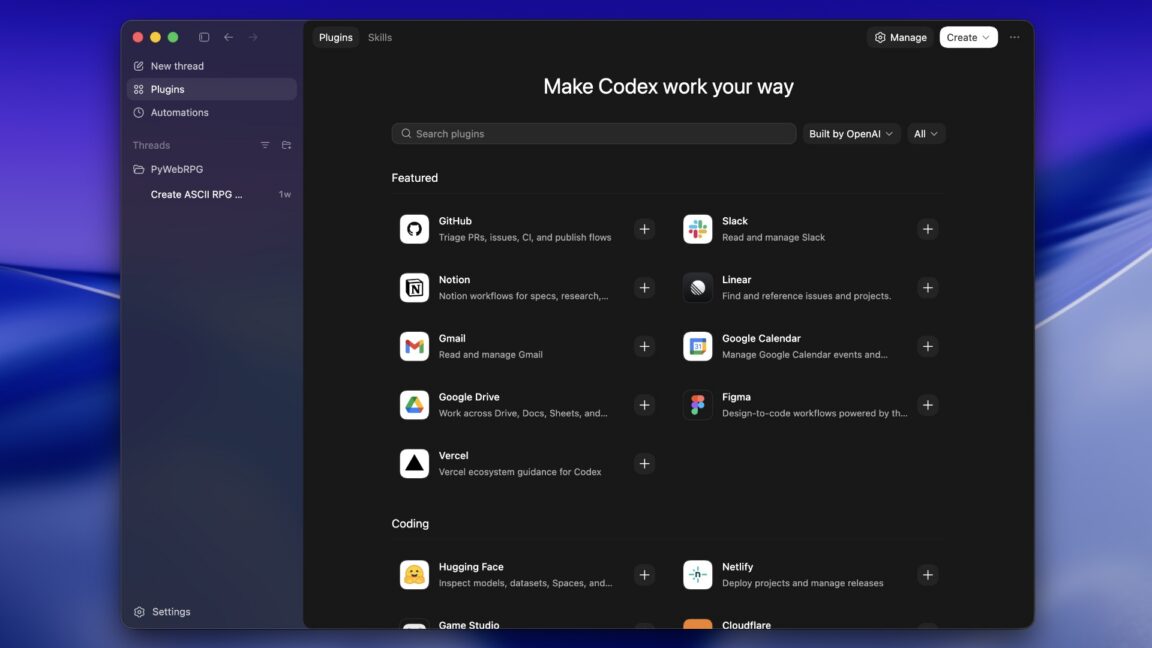
With new plugins feature, OpenAI officially takes Codex beyond coding
AI Research Is Getting Harder to Separate From Geopolitics
A policy change announced by NeurIPS, the world’s leading AI research conference, drew widespread backlash from Chinese researchers this week and then was quickly reversed.

Memory chip giant SK hynix could help end ‘RAMmageddon’ with blockbuster US IPO
SK hynix’s potential U.S. listing could raise $10-$14 billion to help it build more capacity, encourage others to follow, and end the 'RAMmageddon' memory shortage.
The latest in data centers, AI, and energy
Massive new data centers are the physical foundation for tech companies’ hopes and dreams for AI. But the rush to expand warehouses full of energy-hungry servers has also kicked up fights across the world over their impact on power grids, utility bills, nearby communities, and the environment.  From audacious plans to launch data centers into […]