
AI Research Is Getting Harder to Separate From Geopolitics
A policy change announced by NeurIPS, the world’s leading AI research conference, drew widespread backlash from Chinese researchers this week and then was quickly reversed.
The world’s top AI research conference, the Conference on Neural Information Processing Systems—better known as NeurIPS—became the latest organization this week to become embroiled in a growing clash between geopolitics and global scientific collaboration. The conference’s organizers announced and then quickly reversed controversial new restrictions for international participants after Chinese AI researchers threatened to boycott the event.
“This is a potential watershed moment,” says Paul Triolo, a partner at the advisory firm DGA-Albright Stonebridge who studies US-China relations. Triolo argues that attracting Chinese researchers to NeurIPS is beneficial to US interests, but some American officials have pushed for American and Chinese scientists to decouple their work—especially in AI, which has become a particularly sensitive topic in Washington.
The incident could deepen political tensions around AI research, as well as dissuade Chinese scientists from working at US universities and tech companies in the future. “At some level now it is going to be hard to keep basic AI research out of the [political] picture,” Triolo says.
In its annual handbook for paper submissions, issued in mid-March, NeurIPS organizers announced updated restrictions for participation. The rules stated that the event could not provide services including “peer review, editing, and publishing” to any organizations subject to US sanctions, and linked to a database of sanctioned entities. It included companies and organizations on the Bureau of Industry and Security’s entity list and those on another list with alleged ties to the Chinese military.
The new rules would have affected researchers at Chinese companies like Tencent and Huawei who regularly present work at NeurIPS. The database also includes entities from other countries such as Russia and Iran. The US places limits on doing business with these organizations, but there are no rules around academic publishing or conference participation.
The NeurIPS handbook has since been updated to specify that the restrictions apply only to Specially Designated Nationals and Blocked Persons, a list used primarily for terrorist groups and criminal organizations.
“In preparing the NeurIPS 2026 handbook, we included a link to a US government sanctions tool that covers a significantly broader set of restrictions than those NeurIPS is actually required to follow,” the event’s organizers said in a statement issued Friday. “This error was due to miscommunication between the NeurIPS Foundation and our legal team.”
Before they reversed course, the conference organizers initially said that the new rule was “about legal requirements that apply to the NeurIPS Foundation, which is responsible for complying with sanctions,” adding that it was seeking legal consultation on the issue.
Immediate Backlash
The new rule drew swift backlash from AI researchers around the world, particularly in China, which produces a large quantity of cutting-edge machine learning papers and is home to a growing share of the world’s top AI talent. Several academic groups there issued statements condemning the measure and, more importantly, discouraging Chinese academics from attending NeurIPS in the future. Some urged Chinese academics to contribute instead to domestic research conferences, potentially helping increase the country’s influence in relevant science and tech fields.
The China Association of Science and Technology (CAST), an influential government-affiliated organization for scientists and engineers, said Thursday that it would stop providing funding for Chinese scholars traveling to attend NeurIPS and would use the money instead to support domestic and international conferences that “respect the rights of Chinese scholars.”
CAST also said it will no longer count publications at the 2026 NeurIPS conference as academic achievements when evaluating future research funding. It’s unclear if the organization will reverse course now that NeurIPS has walked back the new rule.
At least six scholars have publicly said they turned down invitations to serve as area chairs at NeurIPS this year due to the sanctions policy. Others said they would decline to participate as paper reviewers.
“I have served as [area chair] for NeurIPS every year since 2020. Just declined,” Nan Jiang, a machine learning researcher at the University of Illinois Urbana-Champaign, said in a social media post. “At least the organizers owe the community an explanation why they are the only major ML venue adopting such a policy.”
“That’s one less area chair responsibility for me. If I hadn’t already committed to colleagues, I wouldn’t submit a paper this year either,” wrote Yasin Abbasi-Yadkori, a researcher at the AI firm Sapient Intelligence.
Fraught Links
The controversy reflects the increasingly fraught political landscape that top researchers, many of whom have been long accustomed to collaborating with international colleagues, now have to navigate. Although progress in AI has often depended on this kind of openness, rising tensions between the US and China in recent years have significantly complicated the picture.
Thousands of Chinese scientists take part in NeurIPS annually. In 2025, roughly half of the papers presented at the event came from researchers with a Chinese academic background, according to an analysis conducted by The Economist. Tsinghua University, widely considered the top university in China, was listed on 390 NeurIPS papers, more than any other institution or company. Researchers from Alibaba also received one of the conference’s best-paper awards for work related to the company’s open source AI model Qwen.
A previous WIRED analysis shows that despite rising tensions between Washington and Beijing, US and Chinese researchers have largely continued to collaborate on work published at NeurIPS. But the latest sanctions saga could strain those ties.
“NeurIPS’ prosperity comes from the joint efforts of researchers worldwide, and its growth and success have long been supported by sponsorships from some of the sanctioned entities too,” Yuliang Xiu, an assistant professor in digital graphics at the Westlake University in China, wrote on social media, adding that he had also declined an invitation to serve as an area chair at the conference.
This is an edition of Zeyi Yang and Louise Matsakis’ Made in China newsletter. Read previous newsletters here.
Sign in to highlight and annotate this article

Conversation starters
Daily AI Digest
Get the top 5 AI stories delivered to your inbox every morning.
More about
NeurIPSGeopoliticsChina
Senators want US energy information agency to monitor data center electricity usage

The Latest AI Documentary Asks: Just How Scared Should We Be?
The AI Doc: Or How I Became an Apocaloptimist seeks the middle ground on a polarizing technology—and ends up letting tech execs like Sam Altman off the hook.

David Sacks is done as AI czar — here’s what he’s doing instead
Sacks will be much further from the power center in Washington than since the outset of this second Trump administration.
Knowledge Map
Connected Articles — Knowledge Graph
This article is connected to other articles through shared AI topics and tags.
More in Products
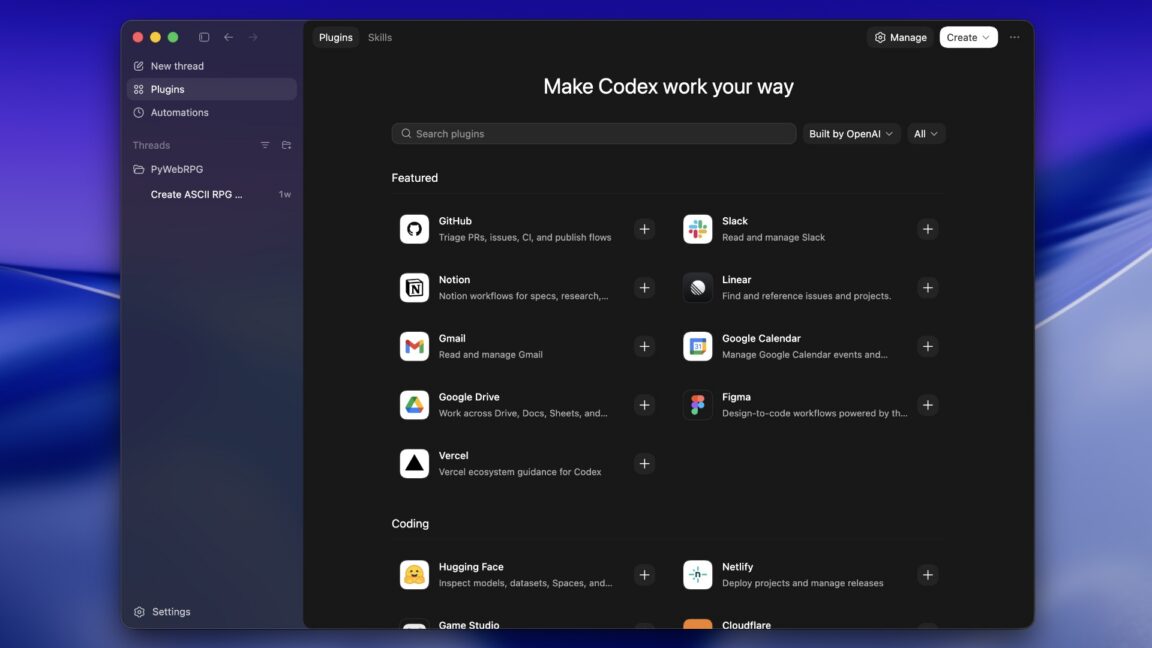
With new plugins feature, OpenAI officially takes Codex beyond coding

Memory chip giant SK hynix could help end ‘RAMmageddon’ with blockbuster US IPO
SK hynix’s potential U.S. listing could raise $10-$14 billion to help it build more capacity, encourage others to follow, and end the 'RAMmageddon' memory shortage.

The latest in data centers, AI, and energy
Massive new data centers are the physical foundation for tech companies’ hopes and dreams for AI. But the rush to expand warehouses full of energy-hungry servers has also kicked up fights across the world over their impact on power grids, utility bills, nearby communities, and the environment.  From audacious plans to launch data centers into […]

VCs are betting billions on AI’s next wave, so why is OpenAI killing Sora?
When an 82-year-old Kentucky woman was offered $26 million from an AI company that wanted to build a data center on her land, she said no. Sure, that same company can try to rezone 2,000 acres nearby anyway, but as AI infrastructure stretches further into the real world, the real world is starting to push back.  That tension is everywhere […]