
Paramount just hired a former Google exec to help level up its tech
Paramount is hiring an accomplished tech exec to help bolster its advertising tech and product. Read the full memo from Paramount's product chief.
Exclusive
Paramount just hired a former Google exec to help level up its tech
By
James Faris
You're currently following this author! Want to unfollow? Unsubscribe via the link in your email.
Paramount Skydance is investing heavily in technology under CEO David Ellison.
Eric Thayer/Getty Images; Kristina Bumphrey/Variety via Getty Images
2026-04-02T17:58:59.536Z
-
Paramount is hiring former Google VP Hugh Williams to boost its advertising tech and product.
-
Williams also worked with Bill Gates at Microsoft and helped build Bing.
-
Read the memo from Paramount's product chief, Dane Glasgow.
Paramount Skydance is bringing on a former Big Tech executive to take its technology to the next level.
Hugh Williams, a former Google VP credited with helping invent the "infinite scroll" feature, is joining David Ellison's Paramount to bolster the company's advertising tech and product.
Williams, who's been called "the godfather of doomscrolling," was hired by Bill Gates at Microsoft to help build what became Bing. He then was a VP at eBay and Tinder before joining Google, and has since advised tech companies like DoorDash.
Paramount product chief Dane Glasgow told employees on Thursday that Williams is "a highly respected technology leader" who has "deep experience building and scaling" digital platforms.
"His track record of modernizing technology ecosystems and unlocking new business value makes him an exceptional fit for Paramount as we continue to evolve our technical capabilities and prowess," Glasgow said in a memo announcing the hire, which was obtained by Business Insider.
Williams joins Paramount as an EVP and "Executive in Residence" focused on the company's ad tech. He'll report to Glasgow, the product chief said. Williams will oversee Paramount ad sales and platform execs Travis Scoles, Todd Bender, and Paul Mahood.
Since becoming Paramount's CEO, Ellison has pledged to remake the century-old media company by "prioritizing investments in advanced technology and data."
Under Ellison's leadership, Paramount has expanded the role of its data and insights team, reorganized key technical groups, and hired former Amazon ad sales exec Danielle Carney. Last fall, Ellison brought over Glasgow from Meta and hired Jay Askinasi from Roku to be Paramount's revenue chief.
Paramount has shaken up the workplace in other ways, notably with a return-to-office order for many staffers. Most employees in the New York and Los Angeles areas returned to the office full time starting in January, while others will start reporting in September.
Read the full memo from Glasgow, Paramount's product chief, here:
Team,As we continue to transform our business and execute against our ambitious strategy, I'm excited to share that Hugh Williams will be joining Paramount as our new Executive Vice President, Executive in Residence (EIR), reporting to me.Hugh is a highly respected technology leader with deep experience building and scaling platforms at the intersection of data, commerce, and digital products. Over the course of his career, he has held senior leadership roles at some of the world's most innovative companies — including Google, eBay, and Microsoft — driving large-scale transformation across engineering, data, and product organizations. He has also advised DoorDash, Ocado, and ASOS through critical transformations and growth periods. His track record of modernizing technology ecosystems and unlocking new business value makes him an exceptional fit for Paramount as we continue to evolve our technical capabilities and prowess.Hugh's unrivaled expertise and proven ability to innovate will make him an important partner to me and our leadership team as we work together to transform our business. As an EIR, Hugh will advise on a number of crucial matters, beginning with the design and execution of a unified Advertising Product and Technology function. Doing so will help us deliver best-in-class solutions for our partners and audiences and drive our advertising technology roadmap further.A critical part of Hugh's work will be evolving our organizational design and leading change management efforts as we create a more integrated, high-performing Ad Tech function. To this end, Travis Scoles, Todd Bender and Paul Mahood will join the unified Ad Tech organization under Hugh's leadership, driving cross-functional work across our business. Partnering closely with Jay and the Ad Sales team, Cindy and the DTC team, and other key internal stakeholders, this team will ensure we are operating with clarity, speed, and accountability while continuing to advance our monetization capabilities.Please join me in welcoming Hugh to Paramount. I'm confident his leadership will help us take a significant step forward in building a modern, scalable, and high-impact advertising technology ecosystem.Cheers!Dane
-
Media
-
Exclusive
Read next
Business Insider
https://www.businessinsider.com/paramount-hires-former-google-exec-hugh-williams-ad-tech-product-2026-4Sign in to highlight and annotate this article

Conversation starters
Daily AI Digest
Get the top 5 AI stories delivered to your inbox every morning.
More about
product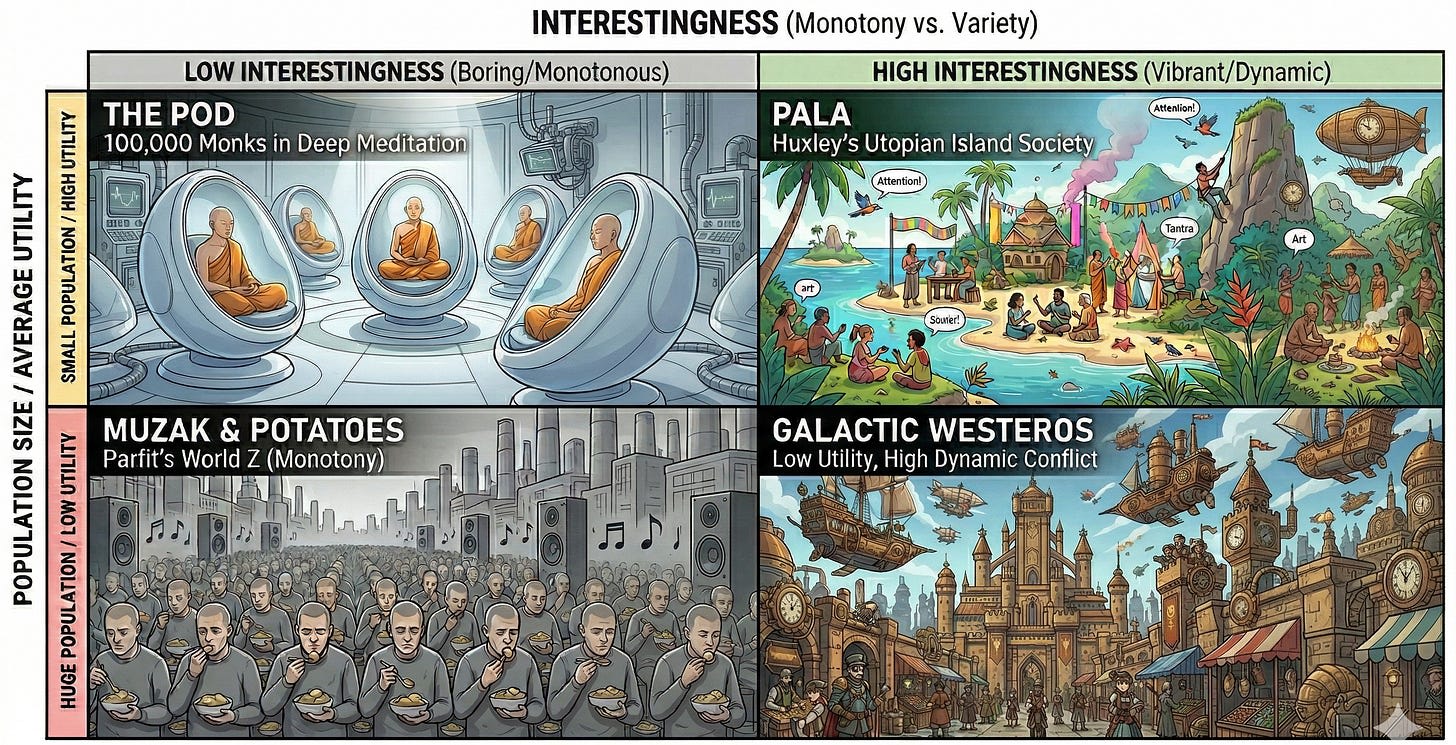
God Mode is Boring: Musings on Interestingness
(Crossposted from my Substack ) There is a preference that I think most people have, but which is extremely underdescribed. It is underdescribed because it is not very legible. But I believe that once I point it out, you will be able to easily recognize it. In a sense, I am doing something sinful here. A real description of interestingness should probably be done through song, or dance, or poetry. But I lack every artistic talent that would do the job justice. What I can do is analyze systems and write prose. Hopefully at least the LLMs will appreciate it. I am writing this with some anxiety. If it is a small sin to create an analytical post about interestingness, it is a cardinal sin to create a boring analytical post about interestingness. It is impossible to really cage within language,

Explainable Causal Reinforcement Learning for circular manufacturing supply chains during mission-critical recovery windows
Explainable Causal Reinforcement Learning for circular manufacturing supply chains during mission-critical recovery windows Introduction: A Learning Journey Through Broken Supply Chains My journey into this specialized intersection of AI began during a particularly challenging consulting project in early 2023. I was working with an automotive manufacturer whose just-in-time supply chain had collapsed when a critical semiconductor supplier experienced a factory fire. The recovery window was measured in days, not weeks, and traditional optimization algorithms kept suggesting solutions that looked perfect mathematically but failed catastrophically in practice. They would recommend rerouting through suppliers that appeared available in the database but were actually allocation-constrained, or
Knowledge Map
Connected Articles — Knowledge Graph
This article is connected to other articles through shared AI topics and tags.
More in Products
God Mode is Boring: Musings on Interestingness
(Crossposted from my Substack ) There is a preference that I think most people have, but which is extremely underdescribed. It is underdescribed because it is not very legible. But I believe that once I point it out, you will be able to easily recognize it. In a sense, I am doing something sinful here. A real description of interestingness should probably be done through song, or dance, or poetry. But I lack every artistic talent that would do the job justice. What I can do is analyze systems and write prose. Hopefully at least the LLMs will appreciate it. I am writing this with some anxiety. If it is a small sin to create an analytical post about interestingness, it is a cardinal sin to create a boring analytical post about interestingness. It is impossible to really cage within language,


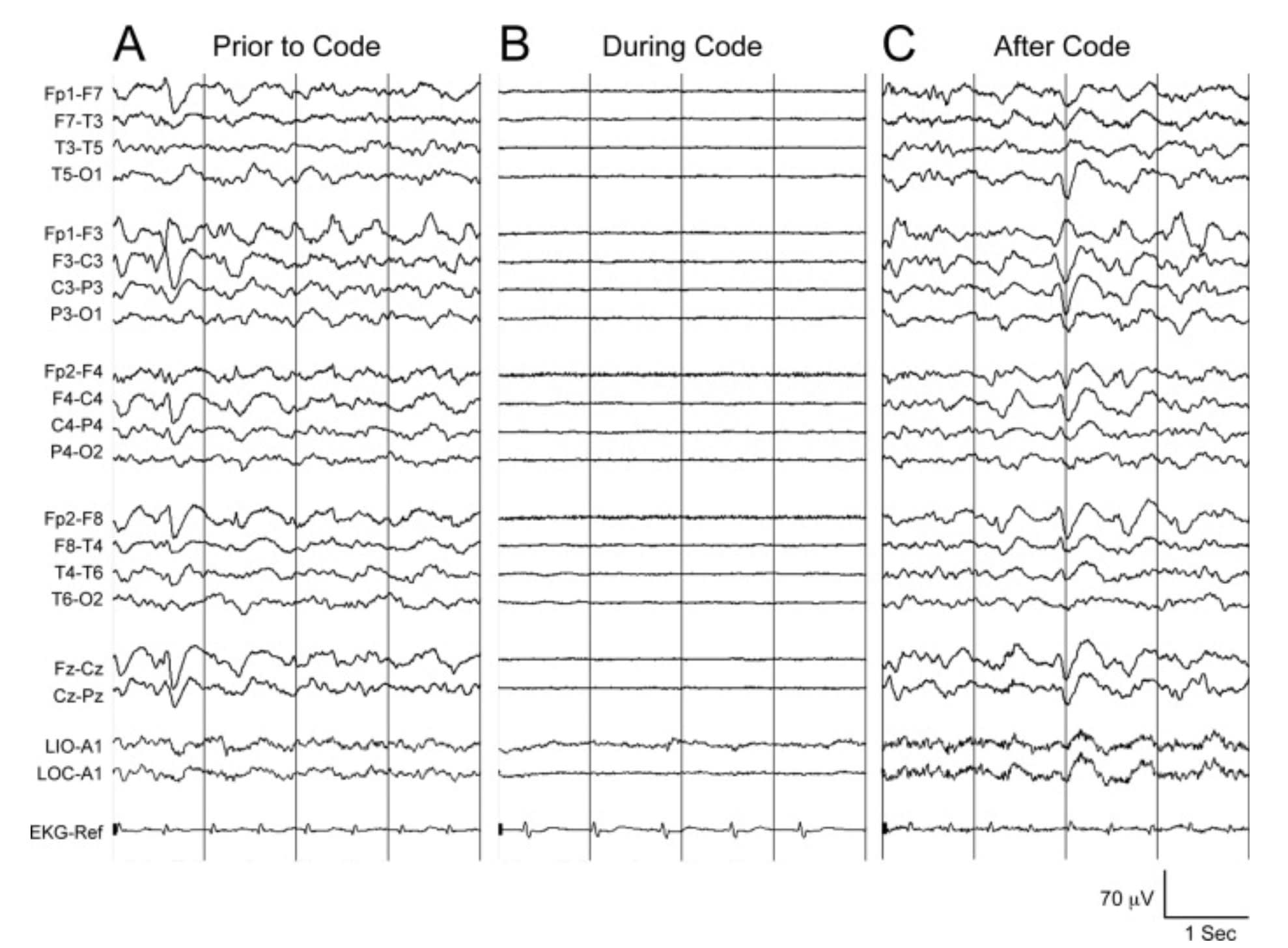
Why do I believe preserving structure is enough?
There's a lot even our best neuroscientists don't know about the human brain. How can we have any reasonable hope for preservation given those unknowns? What if there are crucial memory mechanisms that are so poorly understood, we don't even know to check whether our methods preserve them? As it turns out, there's some interesting empirical evidence about the general shape , and limits, of those unknowns. In Ted Chiang's short story Exhalation , a race of aliens have brains which run on compressed air, performing computations and storing information in elaborate arrangements of hinged gold-foil leaves. The leaves are held in position by a constant stream of air flowing through the brain's tubules, encoding alien thoughts and memories. That ephemeral suspension pattern is the whole self—any
Discussion
Sign in to join the discussion
No comments yet — be the first to share your thoughts!