
Towards a Medical AI Scientist
Medical AI Scientist represents the first autonomous research framework designed for clinical applications, enabling evidence-based hypothesis generation and manuscript drafting through clinician-engineer collaboration across three research modes. (8 upvotes on HuggingFace)
Abstract
Medical AI Scientist represents the first autonomous research framework designed for clinical applications, enabling evidence-based hypothesis generation and manuscript drafting through clinician-engineer collaboration across three research modes.
AI-generated summary
Autonomous systems that generate scientific hypotheses, conduct experiments, and draft manuscripts have recently emerged as a promising paradigm for accelerating discovery. However, existing AI Scientists remain largely domain-agnostic, limiting their applicability to clinical medicine, where research is required to be grounded in medical evidence with specialized data modalities. In this work, we introduce Medical AI Scientist, the first autonomous research framework tailored to clinical autonomous research. It enables clinically grounded ideation by transforming extensively surveyed literature into actionable evidence through clinician-engineer co-reasoning mechanism, which improves the traceability of generated research ideas. It further facilitates evidence-grounded manuscript drafting guided by structured medical compositional conventions and ethical policies. The framework operates under 3 research modes, namely paper-based reproduction, literature-inspired innovation, and task-driven exploration, each corresponding to a distinct level of automated scientific inquiry with progressively increasing autonomy. Comprehensive evaluations by both large language models and human experts demonstrate that the ideas generated by the Medical AI Scientist are of substantially higher quality than those produced by commercial LLMs across 171 cases, 19 clinical tasks, and 6 data modalities. Meanwhile, our system achieves strong alignment between the proposed method and its implementation, while also demonstrating significantly higher success rates in executable experiments. Double-blind evaluations by human experts and the Stanford Agentic Reviewer suggest that the generated manuscripts approach MICCAI-level quality, while consistently surpassing those from ISBI and BIBM. The proposed Medical AI Scientist highlights the potential of leveraging AI for autonomous scientific discovery in healthcare.
View arXiv page View PDF Project page Add to collection
Get this paper in your agent:
hf papers read 2603.28589
Don't have the latest CLI?
curl -LsSf https://hf.co/cli/install.sh | bash
Models citing this paper 0
No model linking this paper
Cite arxiv.org/abs/2603.28589 in a model README.md to link it from this page.
Datasets citing this paper 0
No dataset linking this paper
Cite arxiv.org/abs/2603.28589 in a dataset README.md to link it from this page.
Spaces citing this paper 0
No Space linking this paper
Cite arxiv.org/abs/2603.28589 in a Space README.md to link it from this page.
Collections including this paper 1
Sign in to highlight and annotate this article

Conversation starters
Daily AI Digest
Get the top 5 AI stories delivered to your inbox every morning.
More about
researchpaperarxiv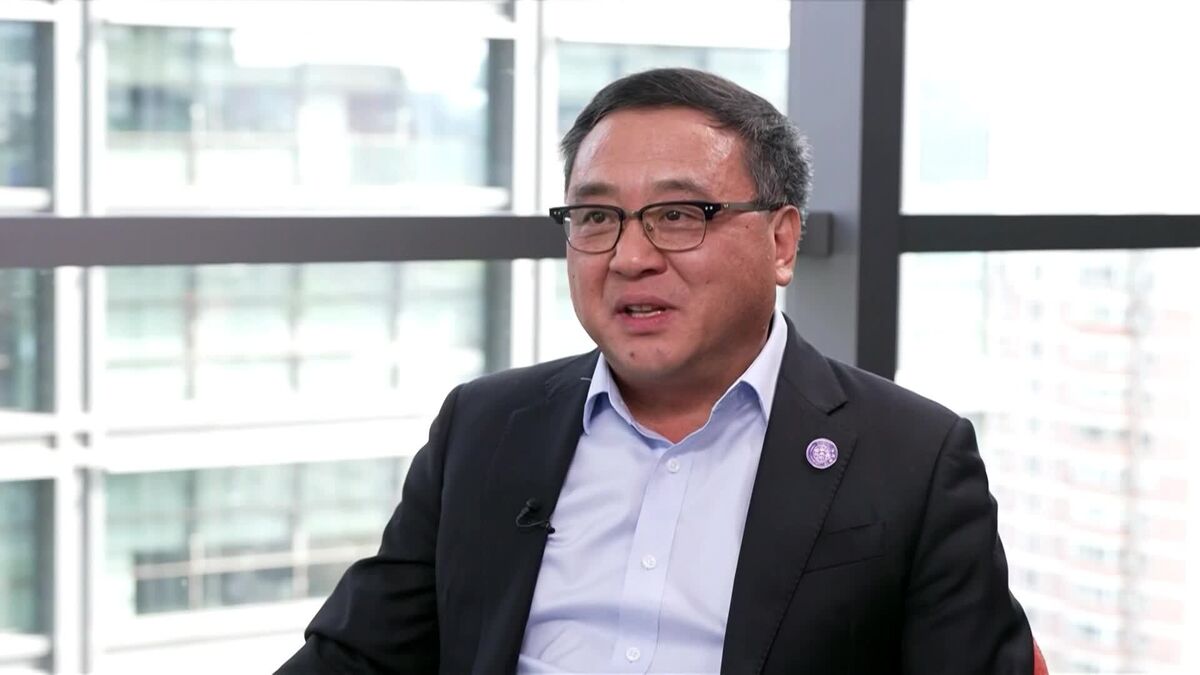
Former Baidu President on AI Tokenization in China
The former President of Baidu says AI tokenization is exploding in China, far beyond what OpenClaw illustrated earlier this year. Zhang Yaqin, who runs China's Institute of AI Industry Research at Beijing's Tsinghua University speaks to Bloomberg's Chief North Asia Correspondent Stephen Engle in Beijing. (Source: Bloomberg)

Uganda To Host Climate Change, Artificial Intelligence Summit, Sept 5-6 - Independent Newspaper Nigeria
<a href="https://news.google.com/rss/articles/CBMimAFBVV95cUxNcnBtdldJUERlX0dzOTJEY2sybEc2ZjZSbUtiLWIzUUhJbkQ1N3BwUWlCcV95YmZNSmFGbFQ1enE5VWJlY0JBWDhlSENlNEFNMmM5Q0hrM080V3Q2eUF3cmpkeFBXRS01YXBpRUI4Uk5KOVY5bjFaRm1GNmVudGUtNTFmVDlBMDIyNGVGaF9WTkdHTDMxY1BZcw?oc=5" target="_blank">Uganda To Host Climate Change, Artificial Intelligence Summit, Sept 5-6</a> <font color="#6f6f6f">Independent Newspaper Nigeria</font>

AI could transform research assessment — and some academics are worried - Nature
<a href="https://news.google.com/rss/articles/CBMiX0FVX3lxTE12VmJ3THU1WmwzcENmWFJqTVRfclJGVkhzTG9Kcm9mTm1VZnJsV2IyZGwtc21EWnZRSkRfSXM3SDRlOVZnUlhpVm9VUEMtRWRRYmNDVU1kdHg5NllvSERj?oc=5" target="_blank">AI could transform research assessment — and some academics are worried</a> <font color="#6f6f6f">Nature</font>
Knowledge Map
Connected Articles — Knowledge Graph
This article is connected to other articles through shared AI topics and tags.
More in Research Papers
AI could transform research assessment — and some academics are worried - Nature
<a href="https://news.google.com/rss/articles/CBMiX0FVX3lxTE12VmJ3THU1WmwzcENmWFJqTVRfclJGVkhzTG9Kcm9mTm1VZnJsV2IyZGwtc21EWnZRSkRfSXM3SDRlOVZnUlhpVm9VUEMtRWRRYmNDVU1kdHg5NllvSERj?oc=5" target="_blank">AI could transform research assessment — and some academics are worried</a> <font color="#6f6f6f">Nature</font>

As AI-Generated Music Advances, Humans Still Lead in Creativity, CMU Research Finds
<p> <img loading="lazy" src="https://www.cmu.edu/news/sites/default/files/styles/listings_desktop_1x_/public/2026-01/251104A_WTM_AI-Creativity-Music102.jpg.webp?itok=uEc2ayOO" width="900" height="508" alt="A woman with long black hair is seated on the right opposite a computer screen with a small piano keyboard and computer keyboard in front of her on a desk, where a man next to her with glasses and wavy black hair operates the mouse and talks to her."> </p> AI can write songs, but still has a way to go before matching the creativity of tunes made by people, according to Carnegie Mellon University research.

Discussion
Sign in to join the discussion
No comments yet — be the first to share your thoughts!