Watch Out Bitcoin: Cryptography-Breaking Quantum Computers May Be Closer Than Expected, Says Caltech
Research suggests fault-tolerant quantum machines could arrive sooner than expected, posing a threat to Bitcoin and Ethereum cryptography.
In brief
-
Caltech researchers say quantum computers may require just 10,000–20,000 qubits to crack modern cryptography.
-
The work outlines a new error-correction approach for neutral-atom quantum computers.
-
The advance could accelerate timelines for machines capable of running Shor’s algorithm, which threatens widely used cryptography.
Quantum computers capable of breaking modern cryptography may require far fewer qubits than previously believed, according to new research from the California Institute of Technology.
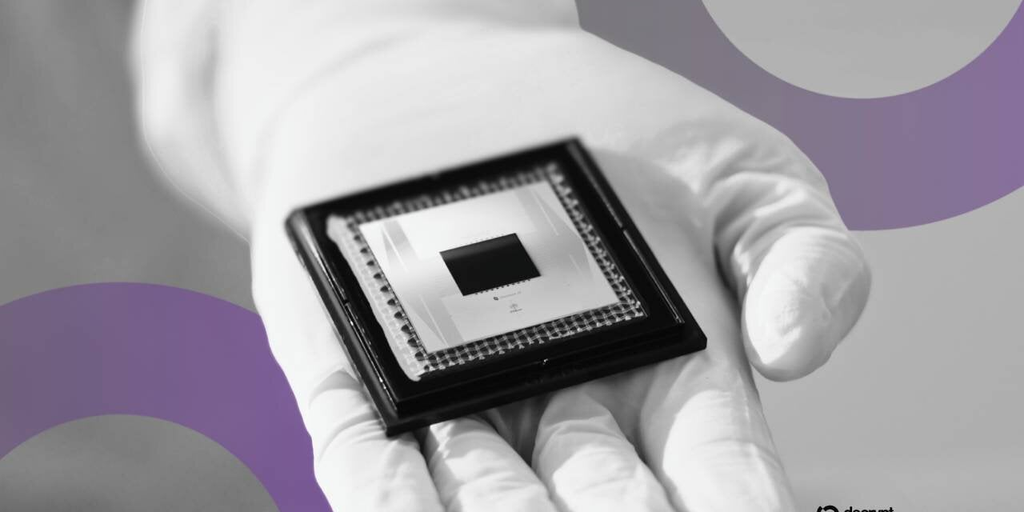
In the study published Monday, Caltech worked with Pasadena-based Oratomic, a quantum computing startup founded by Caltech researchers, to develop a new neutral-atom system in which individual atoms are trapped and controlled with lasers to act as qubits. Doing so could allow a fault-tolerant quantum computer to run Shor’s algorithm, which could derive private keys from the public keys used in Bitcoin’s elliptic-curve cryptography, with as few as 10,000 reconfigurable atomic qubits.
Oratomic co-founder and CEO Dolev Bluvstein, a visiting associate in physics at Caltech, said advances in quantum computing are accelerating the timeline for practical machines and increasing pressure to migrate to quantum-resistant cryptography.
“People are used to quantum computers always being 10 years away,” Bluvstein told Decrypt. “But when you look at where we were a little over ten years ago, the best estimates of what would be required for Shor’s algorithm were one billion qubits at a time when the best systems we had in the lab were roughly five qubits.”
Today’s most common error-correction systems often require about 1,000 physical qubits to create a single reliable, logical qubit, the error-corrected unit used to perform calculations. That overhead has helped push estimates for practical fault-tolerant systems into the million-qubit range, slowing progress toward machines capable of running algorithms that could threaten RSA and elliptic-curve cryptography used by Bitcoin and Ethereum.
Bluvstein noted that current lab systems are already approaching—and in some cases exceeding—6,000 physical qubits. In other words, the cryptography risk may be much sooner than experts previously expected.
“You can really see the system size and controllability increasing over time as the required system size goes down,” he said.
In September, Caltech researchers revealed a neutral-atom quantum computer operating 6,100 qubits with 99.98% accuracy and 13-second coherence times. It was a milestone toward error-corrected quantum machines that also renewed concerns about future threats to Bitcoin from Shor’s algorithm.
The threat has prompted governments and technology firms to begin migrating to post-quantum cryptography, or encryption designed to withstand quantum attacks. Researchers, however, caution that major engineering challenges remain, including scaling quantum systems while maintaining extremely low error rates.
“Just having 10,000 physical qubits is something that could happen within a year,” Bluvstein said. “But that's really not the goalpost people think it is. It’s not like when you design a computer, you just put the transistors on the chip, wash your hands, and say you’re done. It’s a highly non-trivial, extremely complicated task to actually go and build one of these.”
Despite this, Bluvstein said a practical quantum computer could emerge before the end of the decade.
The news comes as Google researchers reported new findings on Tuesday, suggesting future quantum computers could break elliptic curve cryptography with fewer resources than previously thought. That added urgency to calls for a transition to post-quantum cryptography before such machines become viable.
Although the cryptocurrency industry has increasingly begun to focus on quantum risk, Bluvstein said that risk extends far beyond blockchain networks and requires changes across much of the modern digital world.
“I think the whole world’s digital infrastructure. It’s not just blockchain. It’s internet of things devices, internet communication, routers, satellites,” he said. “It spans the entire global digital infrastructure, and it’s complicated.”
Daily Debrief Newsletter
Start every day with the top news stories right now, plus original features, a podcast, videos and more.
Decrypt AI
https://decrypt.co/362988/cryptography-breaking-quantum-computers-closer-expected-caltech-bitcoinSign in to highlight and annotate this article

Conversation starters
Daily AI Digest
Get the top 5 AI stories delivered to your inbox every morning.
More about
research
UTEP research seeks to make AI speech more natural - KTSM 9 News
<a href="https://news.google.com/rss/articles/CBMilgFBVV95cUxOUXU5QnZjNHp2OUY2MHpadVUydlBrVlVETzdZQmxFX2FaTEo0WjhUT29FckJMY1FXXy1zZFdrY3FScDRScnBsbDRSakhtXzdhdWFLa0N4TFdvMFFRVHF1VG5xdGw3VlNxeXBITThfY3Y0SDBDbDBIcXRoRklGLUpFVFpoSUc3YUdzZnE1Nk1CX0x3U1dlaEHSAZsBQVVfeXFMUFlfcVVpLWNYd3oxTnB3cmt4YXprOWl6UFhQTS02WUNra21hTFllc19BUm5sTEViamlzS2lheFAzR2g0UWZVaHRmZmhsWV9RU0NuR2t2VnhaZENHZUlVWjRPbFNPV1JHZVNLV1RkMl90QUt1YTJSMEVHQUhCQktBc00xRDhrMl9INEFEUFY0dkVjV0NEOUFYdmNwd00?oc=5" target="_blank">UTEP research seeks to make AI speech more natural</a> <font color="#6f6f6f">KTSM 9 News</font>

Exclusive | Caltech Researchers Claim Radical Compression of High-Fidelity AI Models - WSJ
<a href="https://news.google.com/rss/articles/CBMiuANBVV95cUxQQWE5dG14R3FVTXBQdGRCcHVFU3N6a2QyWUVXamxHSHdINE9UQTZvci14ZlJVS3VzSk5VNDg4Wm1PQjN5U244Z3U2Mm1rd1lNNTZNTE1OMEoyQjI1SkNUTV8xRW5KdVBYYkViVjZOZlZnV01lQTJZemc1V2RWV1QtUFhEVFRFcWpYNGFOTC1kWDhtN3VpTjNjOVJyMDhlMmV6NUJGWTZZRFc1MU5pWHdYR1JJS1Nxbnk0Um9tV3RGV2h4SEVBbTJxeEk4azFLYTdBdlRmcjJyNmJyT09lQjh6aFlLajBDUXplMDczMDVvUDZvNDExR2ltUE9EeWZUN004TURNOXZBc2t1S2JBMURDNUwxZlVfczd4dmhQSkNiSFRzZmgxZXZ4RWV2SFhObWh4a2VFUFZPY0VSM09LWFBYUi14Y192R29NOU4welJnUWN1MmYwUWtHUEhzVzJVTWxoUF9VcFhsYzZhTDVuVFBrbFR3ai1aLVY1SkZZMlR0TW1ZWmpHNEw2aE1LLVJiYS1HOGNBT05DbE13Z2Y4SVFRc2VzUDFTQlhZYjBsb0JaQkxDUV9FdE9VSg?oc=5" target="_blank">Exclusive | Caltech Researchers Claim Radical Compression of High-Fidelity AI Models</a> <font color="#6f6f6f">WSJ</font>
North Korean hackers implicated in major supply chain attack
<p>Suspected <a href="https://www.axios.com/world/north-korea" target="_blank">North Korean hackers</a> are believed to be behind an ongoing compromise of the widely used open-source package Axios, which is downloaded millions of times per week, researchers at Google said Tuesday.</p><p><strong>Why it matters:</strong> Hackers briefly turned a widely trusted developer tool into a vehicle for credential-stealing malware that could give attackers ongoing access to infected systems.</p><hr><ul><li>Axios, a widely used JavaScript library for making HTTP requests, is not affiliated with Axios Media.</li></ul><p><strong>Driving the news</strong>: Researchers at Google linked the activity to a North Korean group tracked as <a href="https://cloud.google.com/blog/topics/threat-intelligence/unc1069-
Knowledge Map
Connected Articles — Knowledge Graph
This article is connected to other articles through shared AI topics and tags.
More in Research Papers

Why Drug Toxicity Can’t Be Predicted in Isolation — Building EIRION with Graph Neural Networks
How we built a graph neural network that finally sees the whole play — not just the audition Every year, drugs that passed early safety tests go on to harm people in ways nobody predicted. Not because the chemistry was wrong. Not because the researchers were careless. But because we kept evaluating drugs the way a talent agent judges an actor from a solo audition tape. Isolated. Out of context. No script. No co-stars. No stage. In real theatre, a performance is never just about one actor. It depends on who they share the stage with, which scene they appear in, what the story demands at that moment. A brilliant performer in the wrong play, surrounded by the wrong cast, in the wrong context — can still wreck the whole production. That is exactly how drug toxicity works. And that is exactly t
It's Not Smarter Models — It's Cheaper Memory: TurboQuant's Real Impact, Wall Street Panic & Academic Storm
<blockquote> <p><strong>One-line summary:</strong> TurboQuant is a genuinely important engineering breakthrough — but Google's marketing, academic ethics controversy, and Wall Street's overreaction made the story far more dramatic than the technology itself.</p> </blockquote> <h2> 0. What This Article Answers </h2> <p>Google Research published TurboQuant at ICLR 2026 (<a href="https://arxiv.org/abs/2504.19874" rel="noopener noreferrer">arXiv 2504.19874</a>), claiming 6x memory compression, 8x speedup, and zero accuracy loss for LLM KV caches.</p> <p>Then, in the same week:</p> <ol> <li>Global memory stocks lost over <strong>$90 billion</strong> in market cap</li> <li>An ETH Zürich researcher publicly accused the paper of <strong>academic plagiarism and experimental fraud</strong> </li> <li

LongCat-Next: Lexicalizing Modalities as Discrete Tokens
Discrete Native Autoregressive framework enables unified multimodal processing by representing diverse modalities in a shared discrete space through a novel visual transformer architecture. (43 upvotes on HuggingFace)

CARLA-Air: Fly Drones Inside a CARLA World -- A Unified Infrastructure for Air-Ground Embodied Intelligence
CARLA-Air integrates high-fidelity driving and multirotor flight simulation within a unified Unreal Engine framework, supporting joint air-ground agent modeling with photorealistic environments and multi-modal sensing capabilities. (1 upvotes on HuggingFace)
Discussion
Sign in to join the discussion
No comments yet — be the first to share your thoughts!