

DiffSoup: Direct Differentiable Rasterization of Triangle Soup for Extreme Radiance Field Simplification
arXiv:2603.27151v1 Announce Type: cross Abstract: Radiance field reconstruction aims to recover high-quality 3D representations from multi-view RGB images. Recent advances, such as 3D Gaussian splatting, enable real-time rendering with high visual fidelity on sufficiently powerful graphics hardware. However, efficient online transmission and rendering across diverse platforms requires drastic model simplification, reducing the number of primitives by several orders of magnitude. We introduce DiffSoup, a radiance field representation that employs a soup (i.e., a highly unstructured set) of a sm — Kenji Tojo, Bernd Bickel, Nobuyuki Umetani
View PDF HTML (experimental)
Abstract:Radiance field reconstruction aims to recover high-quality 3D representations from multi-view RGB images. Recent advances, such as 3D Gaussian splatting, enable real-time rendering with high visual fidelity on sufficiently powerful graphics hardware. However, efficient online transmission and rendering across diverse platforms requires drastic model simplification, reducing the number of primitives by several orders of magnitude. We introduce DiffSoup, a radiance field representation that employs a soup (i.e., a highly unstructured set) of a small number of triangles with neural textures and binary opacity. We show that this binary opacity representation is directly differentiable via stochastic opacity masking, enabling stable training without a mollifier (i.e., smooth rasterization). DiffSoup can be rasterized using standard depth testing, enabling seamless integration into traditional graphics pipelines and interactive rendering on consumer-grade laptops and mobile devices. Code is available at this https URL.
Subjects:
Graphics (cs.GR); Computer Vision and Pattern Recognition (cs.CV)
Cite as: arXiv:2603.27151 [cs.GR]
(or arXiv:2603.27151v1 [cs.GR] for this version)
https://doi.org/10.48550/arXiv.2603.27151
arXiv-issued DOI via DataCite (pending registration)
Submission history
From: Kenji Tojo [view email] [v1] Sat, 28 Mar 2026 06:00:57 UTC (39,511 KB)
Sign in to highlight and annotate this article

Conversation starters
Daily AI Digest
Get the top 5 AI stories delivered to your inbox every morning.
More about
researchpaperarxiv
Scaling Agentic Memory to 5 Billion Vectors via Binary Quantization and Dynamic Wavelet Matrices
In a study, a new “dynamic wavelet matrix” was used as a vector database, where the memory grows only with log(σ) instead of with n. I considered building a KNN model with a huge memory, capable of holding, for example, 5 billion vectors. First, the words in the context window are converted into an embedding using deberta-v3-small. This is a fast encoder that also takes the position of the tokens into account (disentangled attention) and is responsible for the context in the model. The embedding is then converted into a bit sequence using binary quantization, where dimensions greater than 0 are converted to 1 and otherwise to 0. The advantage is that bit sequences are compressible and are entered into the dynamic wavelet matrix, where the memory grows only with log(σ). A response token is
![[D] ICML reviewer making up false claim in acknowledgement, what to do?](https://d2xsxph8kpxj0f.cloudfront.net/310419663032563854/konzwo8nGf8Z4uZsMefwMr/default-img-matrix-rain-CvjLrWJiXfamUnvj5xT9J9.webp)
[D] ICML reviewer making up false claim in acknowledgement, what to do?
In a rebuttal acknowledgement we received, the reviewer made up a claim that our method performs worse than baselines with some hyperparameter settings. We did do a comprehensive list of hyperparameter comparisons and the reviewer's claim is not supported by what's presented in the paper. In this case what can we do? submitted by /u/dontknowwhattoplay [link] [comments]

Knowledge Map
Connected Articles — Knowledge Graph
This article is connected to other articles through shared AI topics and tags.
More in Research Papers
[D] ICML reviewer making up false claim in acknowledgement, what to do?
In a rebuttal acknowledgement we received, the reviewer made up a claim that our method performs worse than baselines with some hyperparameter settings. We did do a comprehensive list of hyperparameter comparisons and the reviewer's claim is not supported by what's presented in the paper. In this case what can we do? submitted by /u/dontknowwhattoplay [link] [comments]

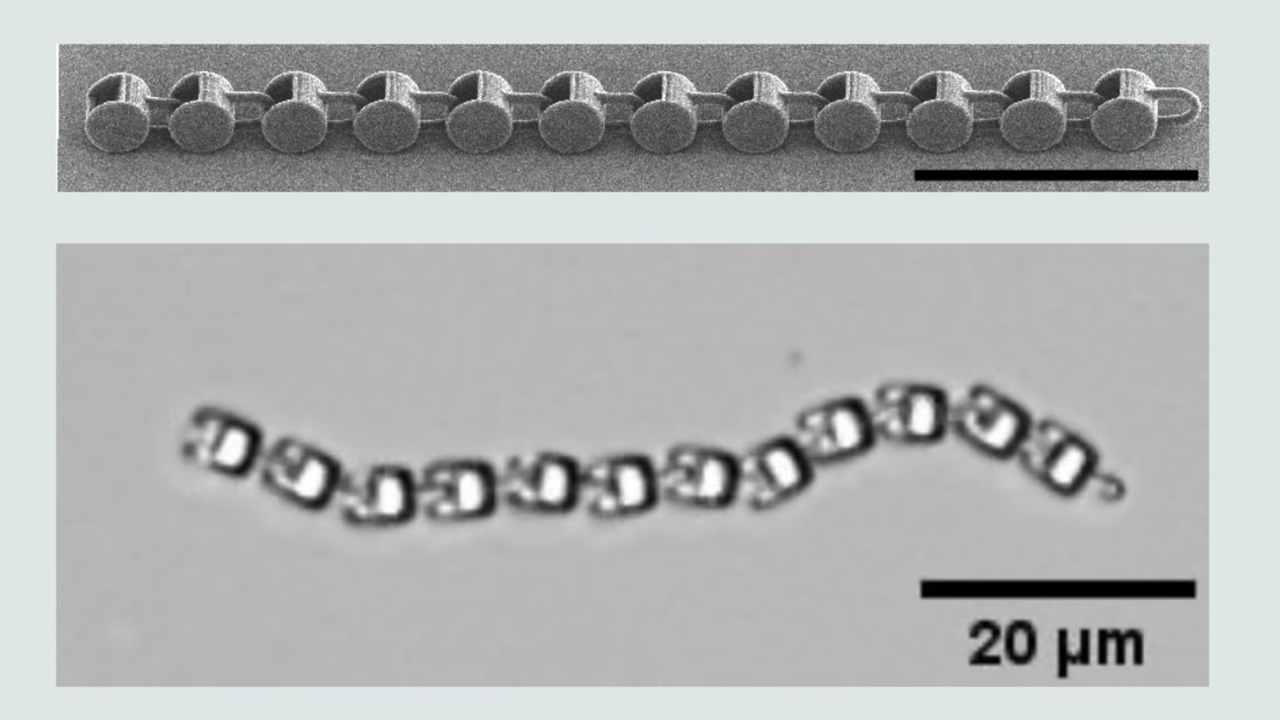
Researchers 3D print robot the size of a single-cell organism — devices move and navigate even without a ‘brain,’ uses their shape and the environment to get going
Researchers 3D print robot the size of a single-cell organism — devices move and navigate even without a ‘brain,’ uses their shape and the environment to get going
Discussion
Sign in to join the discussion
No comments yet — be the first to share your thoughts!