

Continuous-Time Learning of Probability Distributions: A Case Study in a Digital Trial of Young Children with Type 1 Diabetes
Understanding how biomarker distributions evolve over time is a central challenge in digital health and chronic disease monitoring. In diabetes, changes in the distribution of glucose measurements can reveal patterns of disease progression and treatment response that conventional summary measures miss. Motivated by a 26-week clinical trial comparing the closed-loop insulin delivery system t:slim X2 with standard therapy in children with type 1 diabetes, we propose a probabilistic framework to model the continuous-time evolution of time-indexed distributions using continuous glucose monitoring — Antonio Álvarez-López, Marcos Matabuena
View PDF HTML (experimental)
Abstract:Understanding how biomarker distributions evolve over time is a central challenge in digital health and chronic disease monitoring. In diabetes, changes in the distribution of glucose measurements can reveal patterns of disease progression and treatment response that conventional summary measures miss. Motivated by a 26-week clinical trial comparing the closed-loop insulin delivery system t:slim X2 with standard therapy in children with type 1 diabetes, we propose a probabilistic framework to model the continuous-time evolution of time-indexed distributions using continuous glucose monitoring data (CGM) collected every five minutes. We represent the glucose distribution as a Gaussian mixture, with time-varying mixture weights governed by a neural ODE. We estimate the model parameter using a distribution-matching criterion based on the maximum mean discrepancy. The resulting framework is interpretable, computationally efficient, and sensitive to subtle temporal distributional changes. Applied to CGM trial data, the method detects treatment-related improvements in glucose dynamics that are difficult to capture with traditional analytical approaches.
Comments: 53 pages, 11 figures
Subjects:
Machine Learning (stat.ML); Machine Learning (cs.LG)
Cite as: arXiv:2603.24427 [stat.ML]
(or arXiv:2603.24427v1 [stat.ML] for this version)
https://doi.org/10.48550/arXiv.2603.24427
arXiv-issued DOI via DataCite (pending registration)
Submission history
From: Antonio Álvarez-López [view email] [v1] Wed, 25 Mar 2026 15:36:03 UTC (10,275 KB)
Sign in to highlight and annotate this article

Conversation starters
Daily AI Digest
Get the top 5 AI stories delivered to your inbox every morning.
More about
researchpaperarxiv
Scaling Agentic Memory to 5 Billion Vectors via Binary Quantization and Dynamic Wavelet Matrices
In a study, a new “dynamic wavelet matrix” was used as a vector database, where the memory grows only with log(σ) instead of with n. I considered building a KNN model with a huge memory, capable of holding, for example, 5 billion vectors. First, the words in the context window are converted into an embedding using deberta-v3-small. This is a fast encoder that also takes the position of the tokens into account (disentangled attention) and is responsible for the context in the model. The embedding is then converted into a bit sequence using binary quantization, where dimensions greater than 0 are converted to 1 and otherwise to 0. The advantage is that bit sequences are compressible and are entered into the dynamic wavelet matrix, where the memory grows only with log(σ). A response token is
![[D] ICML reviewer making up false claim in acknowledgement, what to do?](https://d2xsxph8kpxj0f.cloudfront.net/310419663032563854/konzwo8nGf8Z4uZsMefwMr/default-img-matrix-rain-CvjLrWJiXfamUnvj5xT9J9.webp)
[D] ICML reviewer making up false claim in acknowledgement, what to do?
In a rebuttal acknowledgement we received, the reviewer made up a claim that our method performs worse than baselines with some hyperparameter settings. We did do a comprehensive list of hyperparameter comparisons and the reviewer's claim is not supported by what's presented in the paper. In this case what can we do? submitted by /u/dontknowwhattoplay [link] [comments]

Knowledge Map
Connected Articles — Knowledge Graph
This article is connected to other articles through shared AI topics and tags.
More in Research Papers
[D] ICML reviewer making up false claim in acknowledgement, what to do?
In a rebuttal acknowledgement we received, the reviewer made up a claim that our method performs worse than baselines with some hyperparameter settings. We did do a comprehensive list of hyperparameter comparisons and the reviewer's claim is not supported by what's presented in the paper. In this case what can we do? submitted by /u/dontknowwhattoplay [link] [comments]

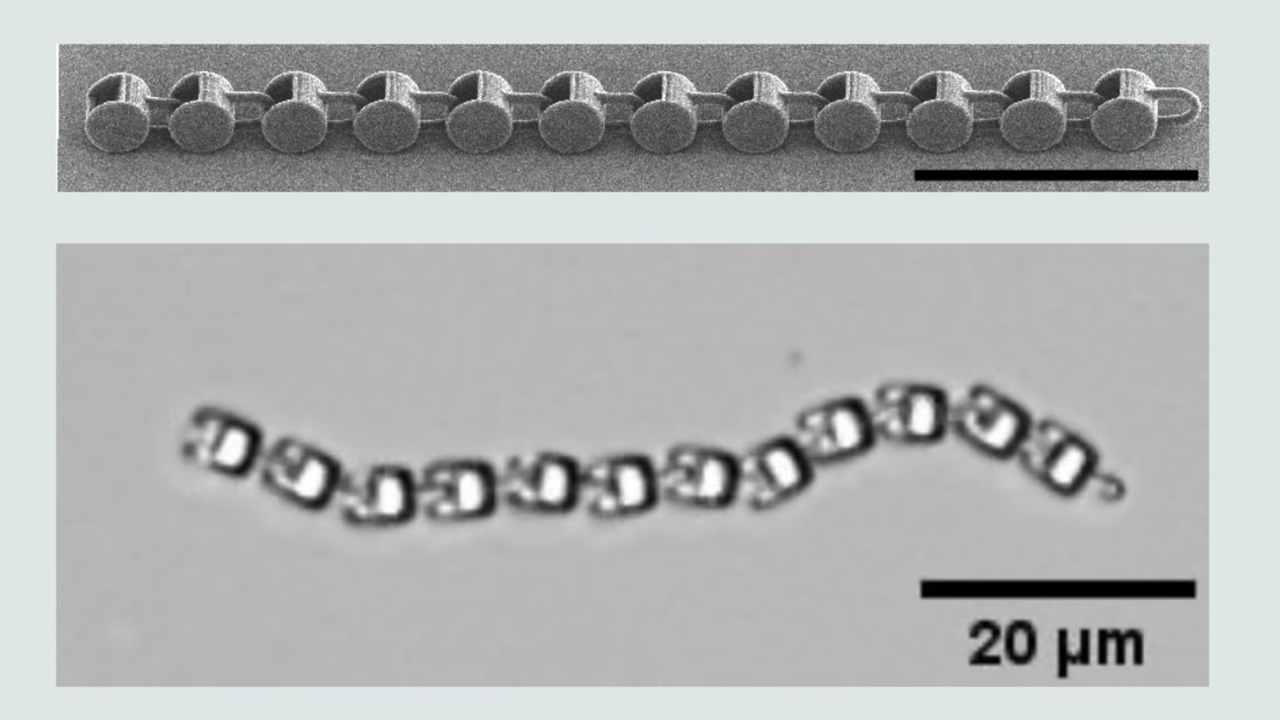
Researchers 3D print robot the size of a single-cell organism — devices move and navigate even without a ‘brain,’ uses their shape and the environment to get going
Researchers 3D print robot the size of a single-cell organism — devices move and navigate even without a ‘brain,’ uses their shape and the environment to get going
Discussion
Sign in to join the discussion
No comments yet — be the first to share your thoughts!