
Unified Spherical Frontend: Learning Rotation-Equivariant Representations of Spherical Images from Any Camera
arXiv:2511.18174v2 Announce Type: replace Abstract: Modern perception increasingly relies on fisheye, panoramic, and other wide field-of-view (FoV) cameras, yet most pipelines still apply planar CNNs designed for pinhole imagery on 2D grids, where pixel-space neighborhoods misrepresent physical adjacency and models are sensitive to global rotations. Traditional spherical CNNs partially address this mismatch but require costly spherical harmonic transform that constrains resolution and efficiency. We present Unified Spherical Frontend (USF), a distortion-free lens-agnostic framework that transf — Mukai Yu, Mosam Dabhi, Liuyue Xie, Sebastian Scherer, L\'aszl\'o A. Jeni
View PDF HTML (experimental)
Abstract:Modern perception increasingly relies on fisheye, panoramic, and other wide field-of-view (FoV) cameras, yet most pipelines still apply planar CNNs designed for pinhole imagery on 2D grids, where pixel-space neighborhoods misrepresent physical adjacency and models are sensitive to global rotations. Traditional spherical CNNs partially address this mismatch but require costly spherical harmonic transform that constrains resolution and efficiency. We present Unified Spherical Frontend (USF), a distortion-free lens-agnostic framework that transforms images from any calibrated camera onto the unit sphere via ray-direction correspondences, and performs spherical resampling, convolution, and pooling canonically in the spatial domain. USF is modular: projection, location sampling, value interpolation, and resolution control are fully decoupled. Its configurable distance-only convolution kernels offer rotation-equivariance, mirroring translation-equivariance in planar CNNs while avoiding harmonic transforms entirely. We compare multiple standard planar backbones with their spherical counterparts across classification, detection, and segmentation tasks on synthetic (Spherical MNIST) and real-world (PANDORA, Stanford 2D-3D-S) datasets, and stress-test robustness to extreme lens distortions, varying FoV, and arbitrary rotations. USF scales efficiently to high-resolution spherical imagery and maintains less than 1% performance drop under random test-time rotations without training-time rotational augmentation, and enables zero-shot generalization to any unseen (wide-FoV) lenses with minimal performance degradation.
Comments: Accepted to CVPR 2026. Camera-ready version. Added computation benchmark
Subjects:
Computer Vision and Pattern Recognition (cs.CV)
Cite as: arXiv:2511.18174 [cs.CV]
(or arXiv:2511.18174v2 [cs.CV] for this version)
https://doi.org/10.48550/arXiv.2511.18174
arXiv-issued DOI via DataCite
Submission history
From: Mukai Yu [view email] [v1] Sat, 22 Nov 2025 19:57:46 UTC (40,107 KB) [v2] Mon, 30 Mar 2026 06:36:53 UTC (40,150 KB)
Sign in to highlight and annotate this article

Conversation starters
Daily AI Digest
Get the top 5 AI stories delivered to your inbox every morning.
More about
researchpaperarxiv
Paper Finds That Leading AI Chatbots Like ChatGPT and Claude Remain Incredibly Sycophantic, Resulting in Twisted Effects on Users - Futurism
<a href="https://news.google.com/rss/articles/CBMikwFBVV95cUxQWnR0SXhyVm01QXZhUTNsWDNYSFNoNDZnRWpuN3M0Skw5LXJVNFVOSWg4TWRXSEFqY2Zab0M2LWhKV1hZa0xKcDJId19RSW1WRndVREU1TFVZSl8tZ3U1MGk3U2kzWWtDbm9ZWmNMM3R5VFpMdXJ3ZzlHaXZGR2FQbHBqeWFZekppZHdhVTYyU3BnWDA?oc=5" target="_blank">Paper Finds That Leading AI Chatbots Like ChatGPT and Claude Remain Incredibly Sycophantic, Resulting in Twisted Effects on Users</a> <font color="#6f6f6f">Futurism</font>

Blazor WASM's Deputy Thread Model Will Break JavaScript Interop - Here's Why That Matters
<h2> The Problem </h2> <p>Microsoft is changing how .NET runs inside WebAssembly. When you enable threading with <code><WasmEnableThreads>true</WasmEnableThreads></code>, the entire .NET runtime moves off the browser's main thread and onto a background Web Worker — what they call the <strong>"Deputy Thread" model</strong>.</p> <p>This sounds like a good idea on paper. The UI stays responsive. .NET gets real threads. Everyone wins.</p> <p>Except it breaks JavaScript interop. Not in a subtle, edge-case way. It breaks it <em>fundamentally</em>.</p> <h2> What Actually Happens </h2> <p>In traditional Blazor WASM (no threading), .NET and JavaScript share the same thread. When JavaScript calls <code>DotNet.invokeMethod</code>, the CPU jumps from the JS stack to the C# stack and back. It's fast. I
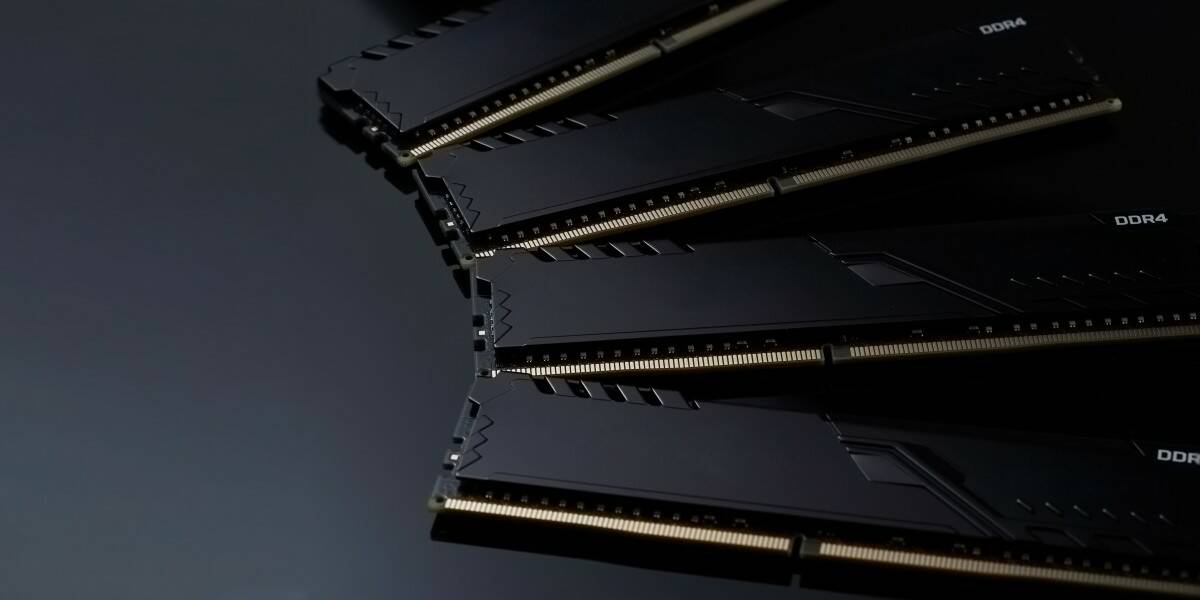
Google's TurboQuant saves memory, but won't save us from DRAM-pricing hell
<h4>Chocolate Factory’s compression tech clears the way to cheaper AI inference, not more affordable memory</h4> <p>When Google unveiled <a target="_blank" rel="nofollow" href="https://research.google/blog/turboquant-redefining-ai-efficiency-with-extreme-compression/">TurboQuant</a>, an AI data compression technology that promises to slash the amount of memory required to serve models, many hoped it would help with a memory shortage that has seen prices triple since last year. Not so much.…</p>
Knowledge Map
Connected Articles — Knowledge Graph
This article is connected to other articles through shared AI topics and tags.
More in Research Papers

Illinois Tech computer science researcher honored by IEEE Chicago Section - EurekAlert!
<a href="https://news.google.com/rss/articles/CBMiXEFVX3lxTE13OVpWMEk1Z3hlMkR2bHNBQ2dkazFwb3VqN3hCa29GWGJvSVlPa00zd2xUakRmYXFqQmc5OWU0eGl4a21FMDAwWUN2Q3p0M3FrbXBkNV8zN0cxaG1s?oc=5" target="_blank">Illinois Tech computer science researcher honored by IEEE Chicago Section</a> <font color="#6f6f6f">EurekAlert!</font>

AI maps science papers to predict research trends two to three years ahead - Tech Xplore
<a href="https://news.google.com/rss/articles/CBMie0FVX3lxTE5aTkZYTWdaRDZwTXNRMldpMG1WZ1YzWDZTOHN5M183Z3A1ZTFYbnhEWTdPRmpvZnZFU0xodlRsNWxFaGxTcEpwalhJNmJpQWE5VjhaRS1tOXJIeTc5Z0JNblJ3dFd4WjRYZGJOX0NrWGt6ZmZJVTBpRm5wWQ?oc=5" target="_blank">AI maps science papers to predict research trends two to three years ahead</a> <font color="#6f6f6f">Tech Xplore</font>
AI inspires new research topics in materials science - Nanowerk
<a href="https://news.google.com/rss/articles/CBMiZ0FVX3lxTFBPWlJSM2ExeVQ3LVppTm45NHpEMW9YVkxscThCNDd2OVB0c3J1ZmVCbWNSZWZ0TjZwSzlOdEFXN2UtRk5LU1hxdXd4ZklldGxoM0FZSnhCd19PWkNHQ1ZRVDNwSHNUSk0?oc=5" target="_blank">AI inspires new research topics in materials science</a> <font color="#6f6f6f">Nanowerk</font>
Discussion
Sign in to join the discussion
No comments yet — be the first to share your thoughts!