

Who Leads? Comparing Human-Centric and Model-Centric Strategies for Defining ML Target Variables
arXiv:2510.25974v2 Announce Type: replace-cross Abstract: Predictive modeling has the potential to enhance human decision-making. However, many predictive models fail in practice due to problematic problem formulation in cases where the prediction target is an abstract concept or construct and practitioners need to define an appropriate target variable as a proxy to operationalize the construct of interest. The choice of an appropriate proxy target variable is rarely self-evident in practice, requiring both domain knowledge and iterative data modeling. This process is inherently collaborative, — Mengtian Guo, David Gotz, Yue Wang
View PDF HTML (experimental)
Abstract:Predictive modeling has the potential to enhance human decision-making. However, many predictive models fail in practice due to problematic problem formulation in cases where the prediction target is an abstract concept or construct and practitioners need to define an appropriate target variable as a proxy to operationalize the construct of interest. The choice of an appropriate proxy target variable is rarely self-evident in practice, requiring both domain knowledge and iterative data modeling. This process is inherently collaborative, involving both domain experts and data scientists. In this work, we explore how human-machine teaming can support this process by accelerating iterations while preserving human judgment. We study the impact of two human-machine teaming strategies on proxy construction: 1) relevance-first: humans leading the process by selecting relevant proxies, and 2) performance-first: machines leading the process by recommending proxies based on predictive performance. Based on a controlled user study of a proxy construction task (N = 20), we show that the performance-first strategy facilitated faster iterations and decision-making, but also biased users towards well-performing proxies that are misaligned with the application goal. Our study highlights the opportunities and risks of human-machine teaming in operationalizing machine learning target variables, yielding insights for future research to explore the opportunities and mitigate the risks.
Comments: 23 pages, 6 figures
Subjects:
Human-Computer Interaction (cs.HC); Machine Learning (cs.LG)
Cite as: arXiv:2510.25974 [cs.HC]
(or arXiv:2510.25974v2 [cs.HC] for this version)
https://doi.org/10.48550/arXiv.2510.25974
arXiv-issued DOI via DataCite
Submission history
From: Mengtian Guo [view email] [v1] Wed, 29 Oct 2025 21:17:50 UTC (1,119 KB) [v2] Sun, 29 Mar 2026 22:45:34 UTC (1,106 KB)
Sign in to highlight and annotate this article

Conversation starters
Daily AI Digest
Get the top 5 AI stories delivered to your inbox every morning.
More about
researchpaperarxiv
Scaling Agentic Memory to 5 Billion Vectors via Binary Quantization and Dynamic Wavelet Matrices
In a study, a new “dynamic wavelet matrix” was used as a vector database, where the memory grows only with log(σ) instead of with n. I considered building a KNN model with a huge memory, capable of holding, for example, 5 billion vectors. First, the words in the context window are converted into an embedding using deberta-v3-small. This is a fast encoder that also takes the position of the tokens into account (disentangled attention) and is responsible for the context in the model. The embedding is then converted into a bit sequence using binary quantization, where dimensions greater than 0 are converted to 1 and otherwise to 0. The advantage is that bit sequences are compressible and are entered into the dynamic wavelet matrix, where the memory grows only with log(σ). A response token is
![[D] ICML reviewer making up false claim in acknowledgement, what to do?](https://d2xsxph8kpxj0f.cloudfront.net/310419663032563854/konzwo8nGf8Z4uZsMefwMr/default-img-matrix-rain-CvjLrWJiXfamUnvj5xT9J9.webp)
[D] ICML reviewer making up false claim in acknowledgement, what to do?
In a rebuttal acknowledgement we received, the reviewer made up a claim that our method performs worse than baselines with some hyperparameter settings. We did do a comprehensive list of hyperparameter comparisons and the reviewer's claim is not supported by what's presented in the paper. In this case what can we do? submitted by /u/dontknowwhattoplay [link] [comments]

Knowledge Map
Connected Articles — Knowledge Graph
This article is connected to other articles through shared AI topics and tags.
More in Research Papers
[D] ICML reviewer making up false claim in acknowledgement, what to do?
In a rebuttal acknowledgement we received, the reviewer made up a claim that our method performs worse than baselines with some hyperparameter settings. We did do a comprehensive list of hyperparameter comparisons and the reviewer's claim is not supported by what's presented in the paper. In this case what can we do? submitted by /u/dontknowwhattoplay [link] [comments]

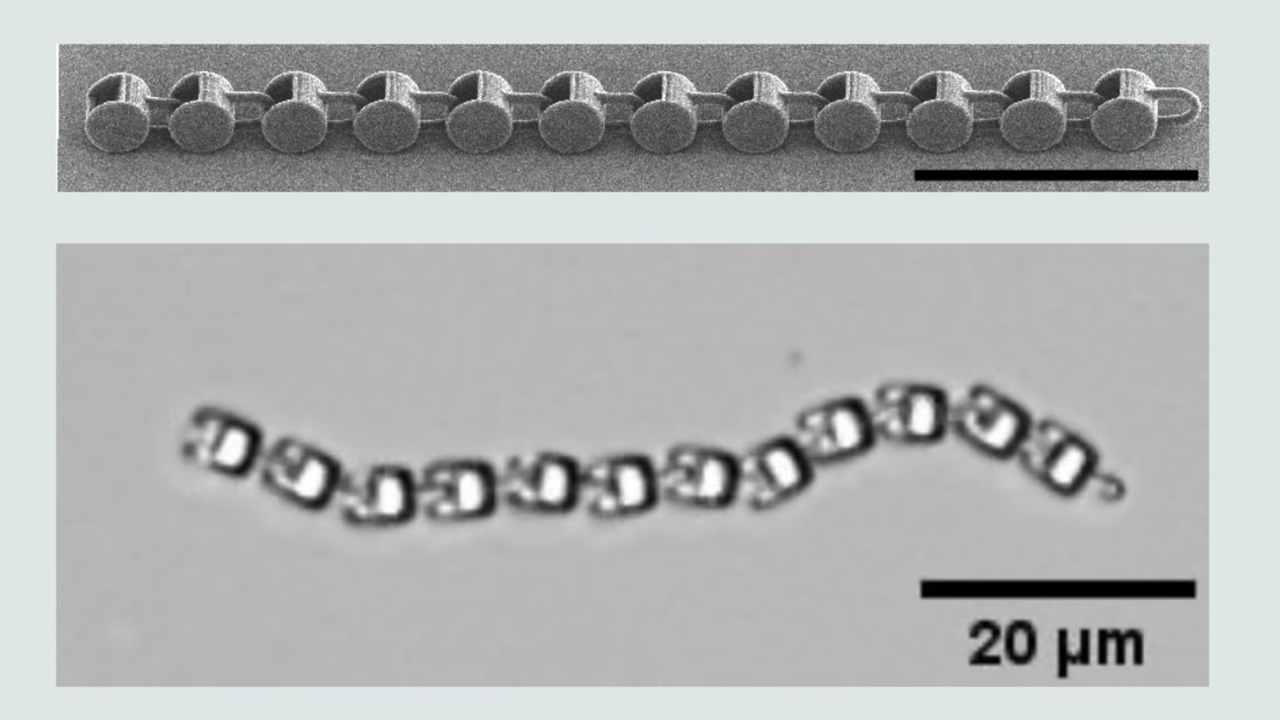
Researchers 3D print robot the size of a single-cell organism — devices move and navigate even without a ‘brain,’ uses their shape and the environment to get going
Researchers 3D print robot the size of a single-cell organism — devices move and navigate even without a ‘brain,’ uses their shape and the environment to get going
Discussion
Sign in to join the discussion
No comments yet — be the first to share your thoughts!