
MAN++: Scaling Momentum Auxiliary Network for Supervised Local Learning in Vision Tasks
arXiv:2507.16279v2 Announce Type: replace Abstract: Deep learning typically relies on end-to-end backpropagation for training, a method that inherently suffers from issues such as update locking during parameter optimization, high GPU memory consumption, and a lack of biological plausibility. In contrast, supervised local learning seeks to mitigate these challenges by partitioning the network into multiple local blocks and designing independent auxiliary networks to update each block separately. However, because gradients are propagated solely within individual local blocks, performance degrad — Junhao Su, Feiyu Zhu, Hengyu Shi, Tianyang Han, Yurui Qiu, Junfeng Luo, Xiaoming Wei, Jialin Gao
View PDF HTML (experimental)
Abstract:Deep learning typically relies on end-to-end backpropagation for training, a method that inherently suffers from issues such as update locking during parameter optimization, high GPU memory consumption, and a lack of biological plausibility. In contrast, supervised local learning seeks to mitigate these challenges by partitioning the network into multiple local blocks and designing independent auxiliary networks to update each block separately. However, because gradients are propagated solely within individual local blocks, performance degradation occurs, preventing supervised local learning from supplanting end-to-end backpropagation. To address these limitations and facilitate inter-block information flow, we propose the Momentum Auxiliary Network++ (MAN++). MAN++ introduces a dynamic interaction mechanism by employing the Exponential Moving Average (EMA) of parameters from adjacent blocks to enhance communication across the network. The auxiliary network, updated via EMA, effectively bridges the information gap between blocks. Notably, we observed that directly applying EMA parameters can be suboptimal due to feature discrepancies between local blocks. To resolve this issue, we introduce a learnable scaling bias that balances feature differences, thereby further improving performance. We validate MAN++ through extensive experiments on tasks that include image classification, object detection, and image segmentation, utilizing multiple network architectures. The experimental results demonstrate that MAN++ achieves performance comparable to end-to-end training while significantly reducing GPU memory usage. Consequently, MAN++ offers a novel perspective for supervised local learning and presents a viable alternative to conventional training methods.
Comments: Accepted by TPAMI
Subjects:
Computer Vision and Pattern Recognition (cs.CV)
Cite as: arXiv:2507.16279 [cs.CV]
(or arXiv:2507.16279v2 [cs.CV] for this version)
https://doi.org/10.48550/arXiv.2507.16279
arXiv-issued DOI via DataCite
Submission history
From: Junhao Su [view email] [v1] Tue, 22 Jul 2025 06:50:19 UTC (15,588 KB) [v2] Sat, 28 Mar 2026 12:37:48 UTC (19,177 KB)
Sign in to highlight and annotate this article

Conversation starters
Daily AI Digest
Get the top 5 AI stories delivered to your inbox every morning.
More about
researchpaperarxiv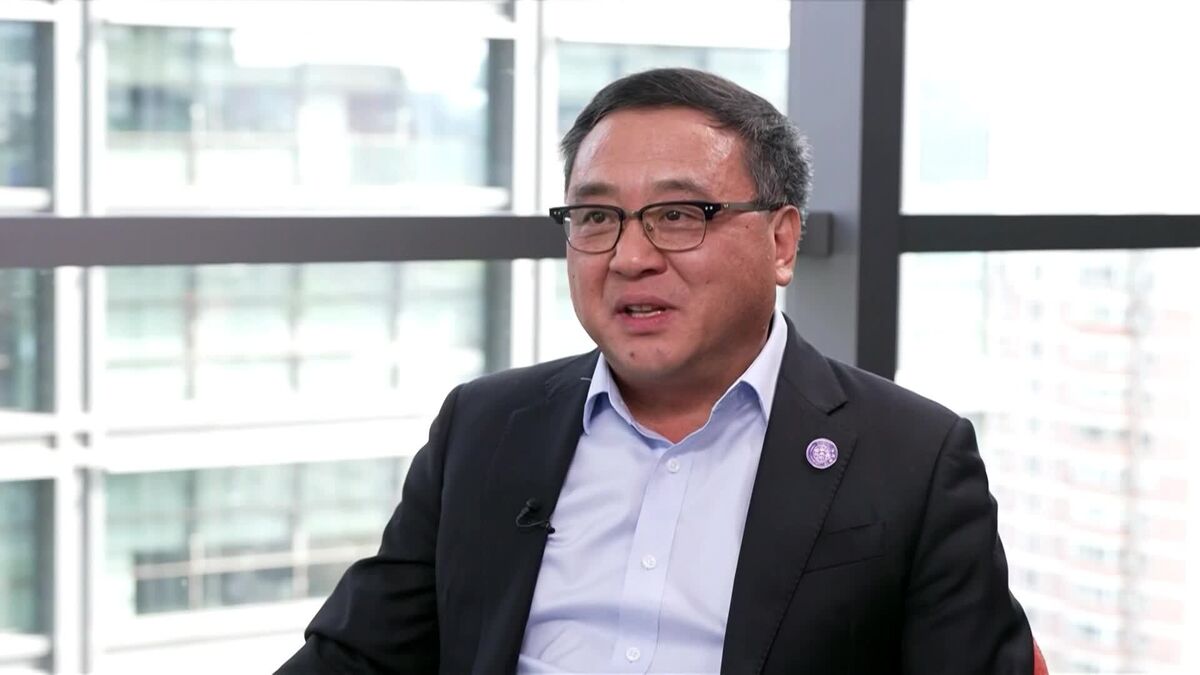
Former Baidu President on AI Tokenization in China
The former President of Baidu says AI tokenization is exploding in China, far beyond what OpenClaw illustrated earlier this year. Zhang Yaqin, who runs China's Institute of AI Industry Research at Beijing's Tsinghua University speaks to Bloomberg's Chief North Asia Correspondent Stephen Engle in Beijing. (Source: Bloomberg)

Uganda To Host Climate Change, Artificial Intelligence Summit, Sept 5-6 - Independent Newspaper Nigeria
<a href="https://news.google.com/rss/articles/CBMimAFBVV95cUxNcnBtdldJUERlX0dzOTJEY2sybEc2ZjZSbUtiLWIzUUhJbkQ1N3BwUWlCcV95YmZNSmFGbFQ1enE5VWJlY0JBWDhlSENlNEFNMmM5Q0hrM080V3Q2eUF3cmpkeFBXRS01YXBpRUI4Uk5KOVY5bjFaRm1GNmVudGUtNTFmVDlBMDIyNGVGaF9WTkdHTDMxY1BZcw?oc=5" target="_blank">Uganda To Host Climate Change, Artificial Intelligence Summit, Sept 5-6</a> <font color="#6f6f6f">Independent Newspaper Nigeria</font>

AI could transform research assessment — and some academics are worried - Nature
<a href="https://news.google.com/rss/articles/CBMiX0FVX3lxTE12VmJ3THU1WmwzcENmWFJqTVRfclJGVkhzTG9Kcm9mTm1VZnJsV2IyZGwtc21EWnZRSkRfSXM3SDRlOVZnUlhpVm9VUEMtRWRRYmNDVU1kdHg5NllvSERj?oc=5" target="_blank">AI could transform research assessment — and some academics are worried</a> <font color="#6f6f6f">Nature</font>
Knowledge Map
Connected Articles — Knowledge Graph
This article is connected to other articles through shared AI topics and tags.
More in Research Papers
AI could transform research assessment — and some academics are worried - Nature
<a href="https://news.google.com/rss/articles/CBMiX0FVX3lxTE12VmJ3THU1WmwzcENmWFJqTVRfclJGVkhzTG9Kcm9mTm1VZnJsV2IyZGwtc21EWnZRSkRfSXM3SDRlOVZnUlhpVm9VUEMtRWRRYmNDVU1kdHg5NllvSERj?oc=5" target="_blank">AI could transform research assessment — and some academics are worried</a> <font color="#6f6f6f">Nature</font>
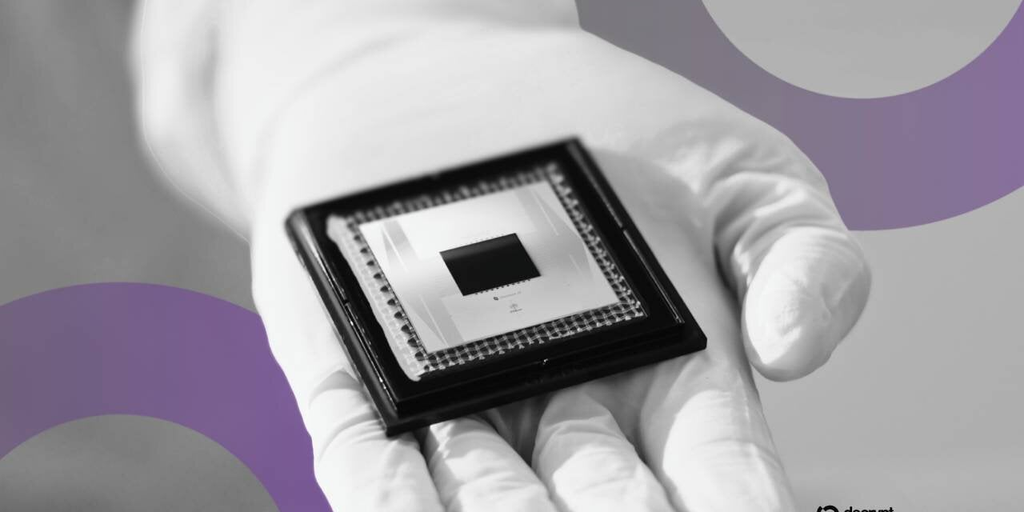

As AI-Generated Music Advances, Humans Still Lead in Creativity, CMU Research Finds
<p> <img loading="lazy" src="https://www.cmu.edu/news/sites/default/files/styles/listings_desktop_1x_/public/2026-01/251104A_WTM_AI-Creativity-Music102.jpg.webp?itok=uEc2ayOO" width="900" height="508" alt="A woman with long black hair is seated on the right opposite a computer screen with a small piano keyboard and computer keyboard in front of her on a desk, where a man next to her with glasses and wavy black hair operates the mouse and talks to her."> </p> AI can write songs, but still has a way to go before matching the creativity of tunes made by people, according to Carnegie Mellon University research.
Discussion
Sign in to join the discussion
No comments yet — be the first to share your thoughts!