

1-bit Quantized Continuous Aperture Arrays
arXiv:2604.01780v1 Announce Type: new Abstract: Continuous aperture arrays (CAPAs) have emerged as a promising physical-layer paradigm for sixth generation (6G) systems, offering spatial degrees of freedom beyond those of conventional discrete antenna arrays. This paper investigates the interaction between the CAPA receive architecture and low-cost 1-bit analog-to-digital converters (ADCs), which impose a severe nonlinear distortion penalty in conventional discrete systems. For Rayleigh fading, we derive a moment matching approximation (MMA)-based closed-form symbol error probability (SEP) approximation based on Gamma moment-matching of the spatial eigenvalue distribution, and show that CAPAs incur a diversity-order penalty governed by Jensen's inequality on the mode eigenvalues. For line-
View PDF HTML (experimental)
Abstract:Continuous aperture arrays (CAPAs) have emerged as a promising physical-layer paradigm for sixth generation (6G) systems, offering spatial degrees of freedom beyond those of conventional discrete antenna arrays. This paper investigates the interaction between the CAPA receive architecture and low-cost 1-bit analog-to-digital converters (ADCs), which impose a severe nonlinear distortion penalty in conventional discrete systems. For Rayleigh fading, we derive a moment matching approximation (MMA)-based closed-form symbol error probability (SEP) approximation based on Gamma moment-matching of the spatial eigenvalue distribution, and show that CAPAs incur a diversity-order penalty governed by Jensen's inequality on the mode eigenvalues. For line-of-sight (LoS) propagation, we prove that CAPA achieves exactly the unquantized additive white Gaussian noise (AWGN) performance bound under perfect spatial and phase alignment, completely eliminating the 1-bit penalty that forces discrete systems to double their antenna count. Monte Carlo simulations under Rayleigh, Rician, and LoS conditions validate all analytical results.
Comments: Submitted to an IEEE conference
Subjects:
Signal Processing (eess.SP)
Cite as: arXiv:2604.01780 [eess.SP]
(or arXiv:2604.01780v1 [eess.SP] for this version)
https://doi.org/10.48550/arXiv.2604.01780
arXiv-issued DOI via DataCite (pending registration)
Submission history
From: Kuranage Roche Rayan Ranasinghe [view email] [v1] Thu, 2 Apr 2026 08:44:26 UTC (154 KB)
Sign in to highlight and annotate this article

Conversation starters
Daily AI Digest
Get the top 5 AI stories delivered to your inbox every morning.
More about
announcealignmentpaper
Scaling Agentic Memory to 5 Billion Vectors via Binary Quantization and Dynamic Wavelet Matrices
In a study, a new “dynamic wavelet matrix” was used as a vector database, where the memory grows only with log(σ) instead of with n. I considered building a KNN model with a huge memory, capable of holding, for example, 5 billion vectors. First, the words in the context window are converted into an embedding using deberta-v3-small. This is a fast encoder that also takes the position of the tokens into account (disentangled attention) and is responsible for the context in the model. The embedding is then converted into a bit sequence using binary quantization, where dimensions greater than 0 are converted to 1 and otherwise to 0. The advantage is that bit sequences are compressible and are entered into the dynamic wavelet matrix, where the memory grows only with log(σ). A response token is
![[D] ICML reviewer making up false claim in acknowledgement, what to do?](https://d2xsxph8kpxj0f.cloudfront.net/310419663032563854/konzwo8nGf8Z4uZsMefwMr/default-img-matrix-rain-CvjLrWJiXfamUnvj5xT9J9.webp)
[D] ICML reviewer making up false claim in acknowledgement, what to do?
In a rebuttal acknowledgement we received, the reviewer made up a claim that our method performs worse than baselines with some hyperparameter settings. We did do a comprehensive list of hyperparameter comparisons and the reviewer's claim is not supported by what's presented in the paper. In this case what can we do? submitted by /u/dontknowwhattoplay [link] [comments]
Knowledge Map
Connected Articles — Knowledge Graph
This article is connected to other articles through shared AI topics and tags.
More in Research Papers
[D] ICML reviewer making up false claim in acknowledgement, what to do?
In a rebuttal acknowledgement we received, the reviewer made up a claim that our method performs worse than baselines with some hyperparameter settings. We did do a comprehensive list of hyperparameter comparisons and the reviewer's claim is not supported by what's presented in the paper. In this case what can we do? submitted by /u/dontknowwhattoplay [link] [comments]

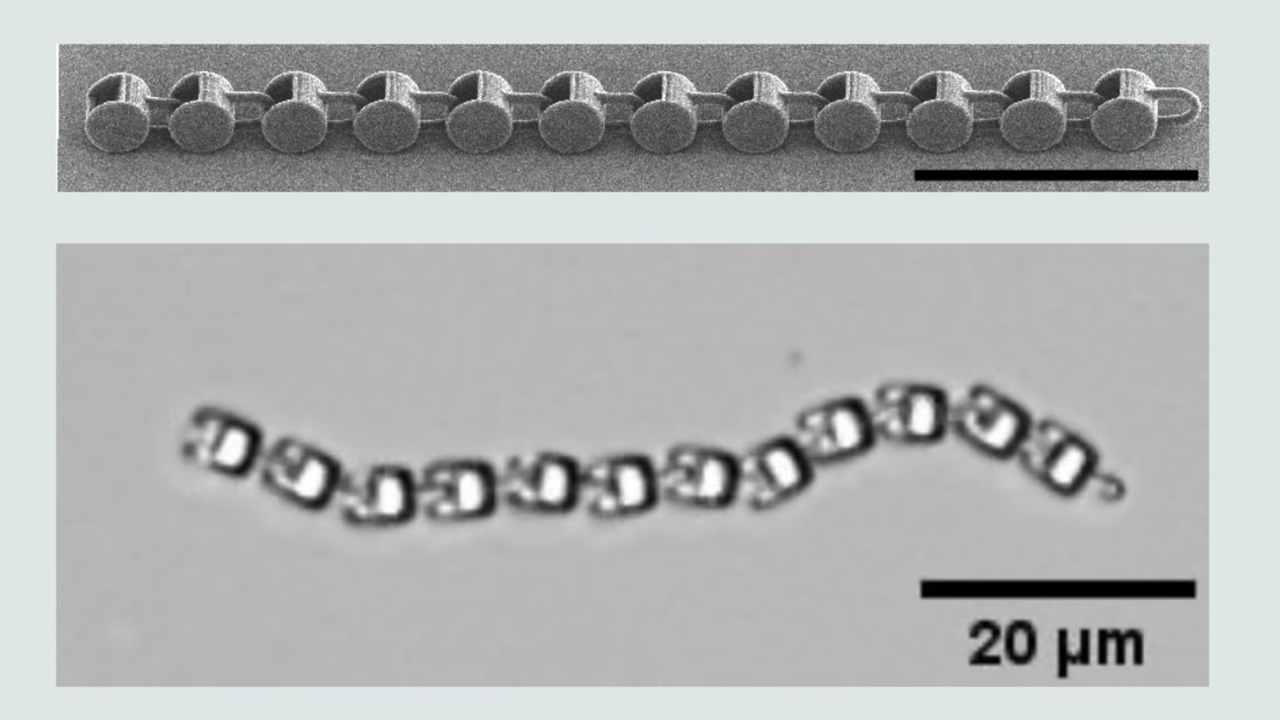
Researchers 3D print robot the size of a single-cell organism — devices move and navigate even without a ‘brain,’ uses their shape and the environment to get going
Researchers 3D print robot the size of a single-cell organism — devices move and navigate even without a ‘brain,’ uses their shape and the environment to get going
Discussion
Sign in to join the discussion
No comments yet — be the first to share your thoughts!