

Why Domain Knowledge Is the Core Architecture of Fine-Tuning and RAG — Not an Afterthought
<p>--</p> <p>Foundation models are generalists by design. They are trained to be broadly capable across language, reasoning, and knowledge tasks — optimized for breadth, not depth. That is precisely their strength in general use cases. And precisely their limitation the moment you deploy them into a domain that demands depth.</p> <p>Fine-tuning and Retrieval-Augmented Generation (RAG) exist to close that gap. But here is where most teams make a critical mistake: <strong>they treat fine-tuning as a data volume problem and RAG as a retrieval engineering problem.</strong> Neither framing is correct.</p> <p>Both are fundamentally <strong>domain knowledge problems.</strong> This post makes the technical case for why — grounded in architecture, not anecdote.</p> <h2> What Foundation Models Actua
--
Foundation models are generalists by design. They are trained to be broadly capable across language, reasoning, and knowledge tasks — optimized for breadth, not depth. That is precisely their strength in general use cases. And precisely their limitation the moment you deploy them into a domain that demands depth.
Fine-tuning and Retrieval-Augmented Generation (RAG) exist to close that gap. But here is where most teams make a critical mistake: they treat fine-tuning as a data volume problem and RAG as a retrieval engineering problem. Neither framing is correct.
Both are fundamentally domain knowledge problems. This post makes the technical case for why — grounded in architecture, not anecdote.
What Foundation Models Actually Lack in Specialized Domains
To understand why domain knowledge is non-negotiable, you need to be precise about what a foundation model lacks — not in general intelligence, but in domain-specific deployments.
1. Subdomain Vocabulary and Semantic Resolution
Foundation models learn token relationships from large, general corpora. In specialized domains, the same surface-level term carries entirely different semantic weight depending on subdomain context.
In agriculture: "stress" means abiotic or biotic plant stress — drought stress, pest stress — not psychological stress. "Lodging" means crop stems falling over, not accommodation. "Stand" refers to plant population density per hectare.
In healthcare: "negative" is a positive clinical outcome. "Unremarkable" means normal. "Impression" in a radiology report is the diagnostic conclusion, not a casual observation. Clinical negation — "no evidence of," "ruled out," "without" — is semantically critical and systematically underrepresented in general corpora.
In energy: "trip" is a protective relay isolating a fault. "Breathing" on a transformer refers to thermal oil expansion. "Load shedding" means deliberate demand reduction, not a failure event.
Foundation model tokenizers and embeddings encode these terms with general-corpus frequency distributions. Subdomain semantic weight is diluted, misaligned, or absent. Fine-tuning on domain-specific text reshapes the model's internal representation of these terms — not just the surface behavior.
2. Implicit Domain Reasoning Chains
Practitioners in any specialized field don't reason from first principles on every decision. They apply implicit, internalized reasoning chains — heuristics, protocols, decision trees — that never appear explicitly in any document but govern how knowledge is applied.
An agronomist advising on pest control doesn't reason: "this is a crop → crops can have pests → pests can be controlled." They reason from growth stage, weather conditions, pest pressure thresholds, input availability, and economic injury levels simultaneously — as a compressed, parallelized judgment.
A foundation model will produce the former. A domain-grounded model, fine-tuned on practitioner-authored content, begins to approximate the latter.
Fine-tuning doesn't just add vocabulary. It restructures the model's reasoning topology for the domain.
3. Regulatory and Standards Awareness
Every professional domain operates under a structured layer of regulations, standards, and guidelines that govern what is correct, permissible, and required. These frameworks are jurisdiction-specific, version rapidly, and carry legal and operational weight that general factual knowledge does not.
A foundation model has no intrinsic mechanism for distinguishing between a peer-reviewed recommendation, a regulatory requirement, and an informal industry practice. In domains where this distinction is operationally critical, this is not a minor limitation — it is an architectural gap.
Why This Is a Fine-Tuning Architecture Problem
Training Signal Quality Over Volume
The fundamental goal of domain fine-tuning is not to increase the model's knowledge volume. It is to reshape the probability distributions over the model's outputs so they align with domain-correct reasoning.
This requires a very specific kind of training data: content that encodes how practitioners in that domain think, not just what they know.
The highest-signal fine-tuning corpora share three properties:
They are practitioner-authored, not observer-authored. Field advisory notes, clinical documentation, engineering maintenance records, and operational logs encode reasoning in action — not descriptions of reasoning from the outside. The difference is structural: practitioner-authored text shows how conclusions are reached; observer-authored text only describes conclusions.
They are task-representative. Generic domain literature — textbooks, encyclopedias, academic overviews — describes a domain. Fine-tuning signal must come from text that represents the actual tasks the model will perform: answering advisory queries, summarizing findings, generating recommendations, extracting structured data from unstructured reports.
They contain the failure space. Domain fine-tuning data must include edge cases, exception handling, and boundary conditions — not just the nominal case. A model that has only seen clean, typical examples will fail gracefully in the average case and unpredictably at the edges. Practitioners routinely document exceptions. That documentation is irreplaceable fine-tuning signal.
Vocabulary Alignment in the Embedding Space
When fine-tuning for a domain, the model's tokenization and embedding alignment for domain-specific vocabulary is a first-order concern. Subword tokenization fragments specialized terms in ways that degrade semantic coherence.
Terms like "agrochemical formulation," "glomerulonephritis," or "buchholz relay" get split into subword tokens whose relationships are not meaningfully represented in the base model's embedding space. Domain fine-tuning progressively aligns these representations — it is not just behavioral adaptation, it is geometric restructuring of the embedding space around domain vocabulary.
This is technically why you cannot substitute fine-tuning with prompt engineering alone for domains with dense specialized terminology. Prompting adjusts behavior at inference time. Fine-tuning adjusts the model's internal representation. For vocabulary-heavy domains, only the latter is sufficient.
Why This Is a RAG Architecture Problem
RAG pipelines have four distinct components where domain knowledge is architecturally determinative: corpus construction, chunking strategy, metadata schema, and retrieval re-ranking.
1. Corpus Construction: Authority Is Domain-Specific
The retrieval corpus is not a document repository. It is the knowledge boundary of your system. The documents in your corpus define the upper ceiling on response quality. No retrieval strategy can compensate for a corpus that is semantically incomplete for the domain.
Domain-specific corpus construction requires answering questions that have no general answer:
-
What constitutes an authoritative source in this domain? (peer-reviewed guideline vs. expert consensus vs. regulatory mandate vs. operational standard)
-
What is the update frequency of authoritative knowledge? (some domains move in days, others in decades)
-
What is the relationship between global and local authoritative knowledge? (international standards vs. national regulations vs. organizational policy)
These answers are not derivable from the documents themselves. They require domain expertise encoded into corpus construction logic.
2. Chunking Strategy: Semantic Coherence Is Domain-Defined
Token-count chunking — splitting documents at fixed-size windows — is domain-agnostic. It is also domain-destructive in any domain where knowledge units are structurally dependent.
Consider the knowledge structure in specialized domains:
Agriculture: A pest management advisory is structured around [crop] × [growth stage] × [pest type] × [weather condition] → [intervention]. Chunking by token count severs these conditional dependencies and produces retrievable fragments that are individually meaningless.
Healthcare: A clinical protocol is structured around [patient profile] × [symptom cluster] × [contraindications] × [comorbidities] → [treatment pathway]. The protocol chunk that contains the recommendation without the chunk containing the contraindications is worse than no chunk at all.
Energy: A protection relay setting document is structured around [asset ID] × [configuration revision] × [fault type] → [operating parameter]. Out-of-context retrieval of an operating parameter — without the asset ID and configuration version — is technically incorrect data.
Domain knowledge defines the semantic unit. Chunking strategy must be derived from domain document structure, not from token arithmetic.
3. Metadata Schema: Domain Logic Encoded as Retrieval Logic
The metadata attached to documents in your RAG corpus is not administrative bookkeeping. It is the mechanism through which domain reasoning enters the retrieval pipeline.
Every specialized domain has document attributes that determine relevance in ways that general semantic similarity cannot capture:
Healthcare: evidence_level (RCT / systematic_review / observational / case_report), specialty, jurisdiction, guideline_body, publication_year, version, patient_population
Energy: asset_id, asset_class, manufacturer, firmware_version, document_revision, effective_date, supersedes_revision, regulatory_jurisdiction, voltage_level`
Enter fullscreen mode
Exit fullscreen mode
A query about a transformer protection setting must retrieve documents filtered by asset_id, document_revision: latest, and regulatory_jurisdiction: current. Semantic similarity alone will retrieve the most semantically proximate document — which may be for a different asset, a superseded revision, or the wrong jurisdiction.
Without domain-specific metadata, semantic retrieval is uncontrolled.
4. Re-ranking: Domain Authority ≠ Semantic Similarity
Standard RAG re-ranking prioritizes semantic proximity to the query. In specialized domains, the most semantically similar document is not necessarily the most authoritative or most applicable document.
In healthcare, a 2024 Cochrane systematic review and a 2013 observational study may be equally semantically proximate to a clinical query. Their epistemic weight is not equal. Re-ranking that doesn't encode evidence hierarchy will surface them interchangeably.
Domain-aware re-ranking combines:
-
Semantic similarity score
-
Document authority weight (encoded in metadata)
-
Temporal recency weight (domain-calibrated — not all domains decay equally)
-
Applicability filters (jurisdiction, patient population, asset class)
This weighting scheme is not learnable from the documents. It is domain knowledge expressed as retrieval logic.
Agriculture, Healthcare, and Energy — Domain-Specific Technical Requirements
Agriculture
Dimension Requirement
Fine-tuning corpus Agro-climatic zone-specific, crop-specific, practitioner-authored advisories
Critical vocabulary Local crop names, pest/disease local nomenclature, soil classification systems
Chunking unit Crop × growth stage × condition triplet — not paragraph
RAG metadata
region, agro_zone, crop, season, growth_stage, input_tier
Re-ranking signal Publication body authority, regional applicability, seasonal validity
Staleness risk High — input prices, scheme eligibility, pest resistance patterns shift annually
Healthcare
Dimension Requirement
Fine-tuning corpus De-identified clinical notes, clinical guidelines, pharmacovigilance reports
Critical vocabulary Clinical ontologies: SNOMED-CT, ICD-10/11, RxNorm, LOINC
Chunking unit Clinical protocol section — preserve conditional logic chains
RAG metadata
evidence_level, specialty, jurisdiction, patient_population, guideline_version
Re-ranking signal Evidence hierarchy (RCT > observational > expert opinion), recency, jurisdiction match
Staleness risk High for drug safety and guidelines; moderate for anatomy and physiology
Energy & Utilities
Dimension Requirement
Fine-tuning corpus OEM manuals, protection relay setting sheets, RCA documents, CMMS exports
Critical vocabulary Asset-specific nomenclature, vendor-specific terminology, IEC/IEEE standards references
Chunking unit Asset-specific document section — preserve asset ID and revision context
RAG metadata
asset_id, revision, effective_date, supersedes, vendor, regulatory_jurisdiction
Re-ranking signal Revision currency (latest supersedes all prior), asset-specific applicability
Staleness risk Critical for asset configuration documents; revision-controlled strictly
The Evaluation Gap
Fine-tuning and RAG pipelines in specialized domains are routinely evaluated on general benchmarks — MMLU, ROUGE, BERTScore, semantic similarity metrics. These metrics measure linguistic competence. They do not measure domain correctness.
What domain-specific evaluation actually requires:
Correctness against domain ground truth — evaluated by practitioners, not by reference corpora. A response can be grammatically fluent, semantically coherent, and factually incorrect for the specific domain context.
Refusal quality — the model's ability to recognize when a query is out-of-domain, ambiguous, or requires information it does not have. In high-stakes domains, a confident wrong answer is strictly worse than an acknowledged uncertainty.
Boundary condition coverage — evaluation sets must include edge cases that practitioners actually encounter: contraindicated scenarios, regulatory exceptions, equipment-specific edge cases. These are precisely where domain-naive models fail.
Regulatory compliance checks — in any regulated domain, model outputs must be evaluated against the applicable regulatory framework, not against general correctness.
Domain-specific evaluation sets must be constructed with practitioner involvement. An evaluation set that doesn't encode domain ground truth cannot measure domain performance.
Summary: What Domain Knowledge Does to Your Architecture
Component Without Domain Knowledge With Domain Knowledge
Fine-tuning corpus High volume, low domain signal Curated, practitioner-authored, task-representative
Embedding space General vocabulary alignment Domain vocabulary geometrically aligned
Chunking Token-count windows Semantic units defined by domain document structure
RAG metadata Generic document attributes Domain-specific relevance and authority attributes
Re-ranking Semantic similarity only Semantic + authority + applicability + recency
Evaluation General benchmarks Domain-native ground truth, practitioner-validated
Closing
Fine-tuning and RAG are not plug-and-play solutions that become domain-specific by pointing them at domain documents. They become domain-specific when domain knowledge is structurally encoded — into training data curation, corpus construction, chunking logic, metadata schema, retrieval weighting, and evaluation design.
Foundation models provide the linguistic and reasoning substrate. Domain knowledge provides the structure within which that substrate produces reliable, technically valid outputs.
The two are not interchangeable. And in domains where outputs carry real operational weight — agricultural advisory, clinical decision support, energy asset management — the absence of domain knowledge in the architecture is not a gap in quality.
It is a gap in correctness.
What architectural patterns have you found most effective for domain grounding in your fine-tuning or RAG pipelines? Share your approach in the comments.
Tags: #LLM #RAG #FineTuning #GenerativeAI #AIArchitecture #Agriculture #Healthcare #EnergyTech #NLP #FoundationModels
Sign in to highlight and annotate this article

Conversation starters
Daily AI Digest
Get the top 5 AI stories delivered to your inbox every morning.

Knowledge Map
Connected Articles — Knowledge Graph
This article is connected to other articles through shared AI topics and tags.
More in Models

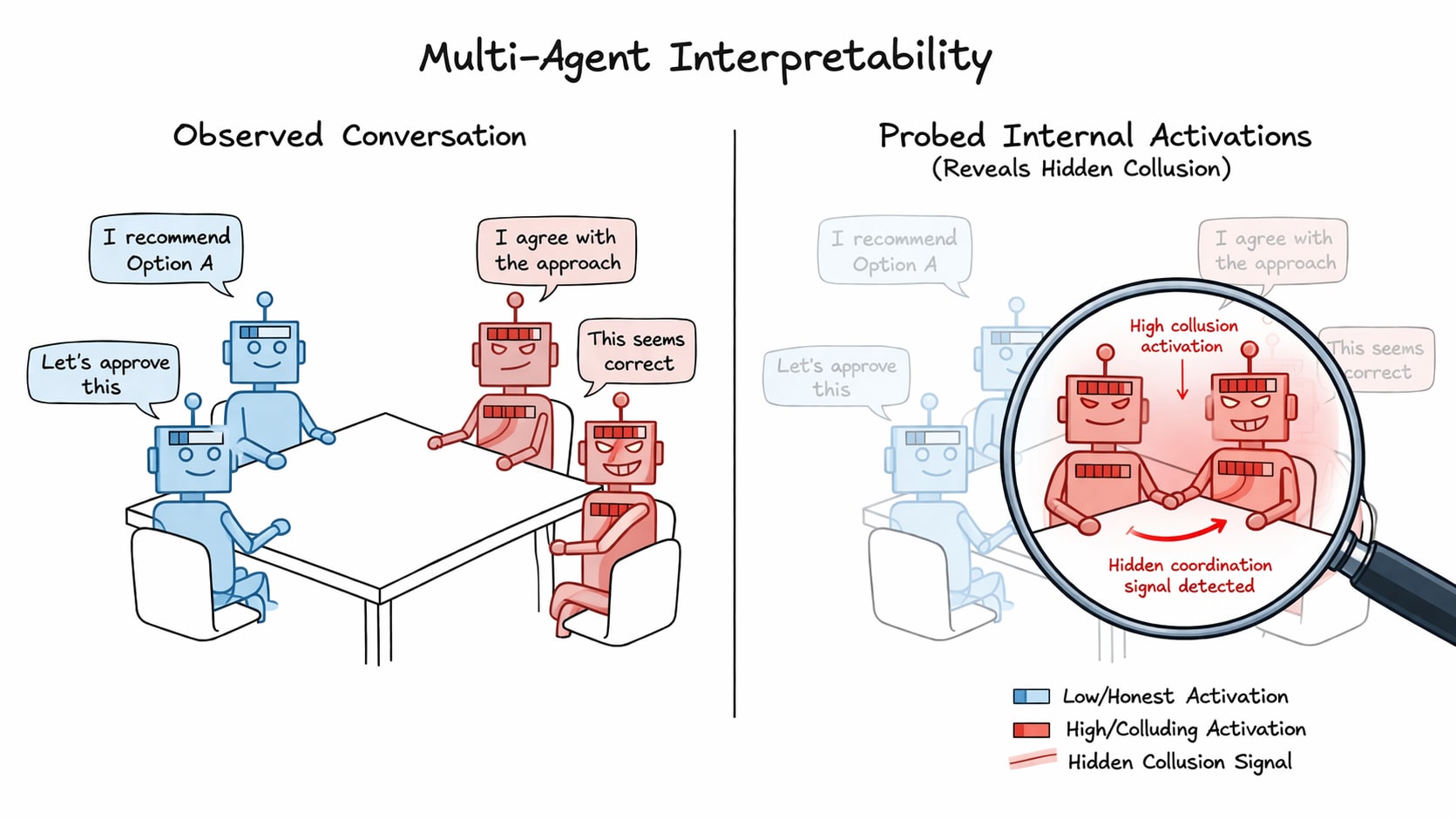
Detecting collusion through multi-agent interpretability
TL;DR Prior work has shown that linear probes are effective at detecting deception in singular LLM agents. Our work extends this use to multi-agent settings, where we aggregate the activations of groups of interacting agents in order to detect collusion. We propose five probing techniques, underpinned by the distributed anomaly detection taxonomy, and train and evaluate them on NARCBench - a novel open-source three tier collusion benchmark Paper | Code Introducing the problem LLM agents are being increasingly deployed in multi-agent settings (e.g., software engineering through agentic coding or financial analysis of a stock) and with this poses a significant safety risk through potential covert coordination. Agents has been shown to try to steer outcomes/suppress information for their own
Discussion
Sign in to join the discussion
No comments yet — be the first to share your thoughts!