
Using synthetic biology and AI to address global antimicrobial resistance threat
Driven by overuse and misuse of antibiotics, drug-resistant infections are on the rise, while development of new antibacterial tools has slowed.
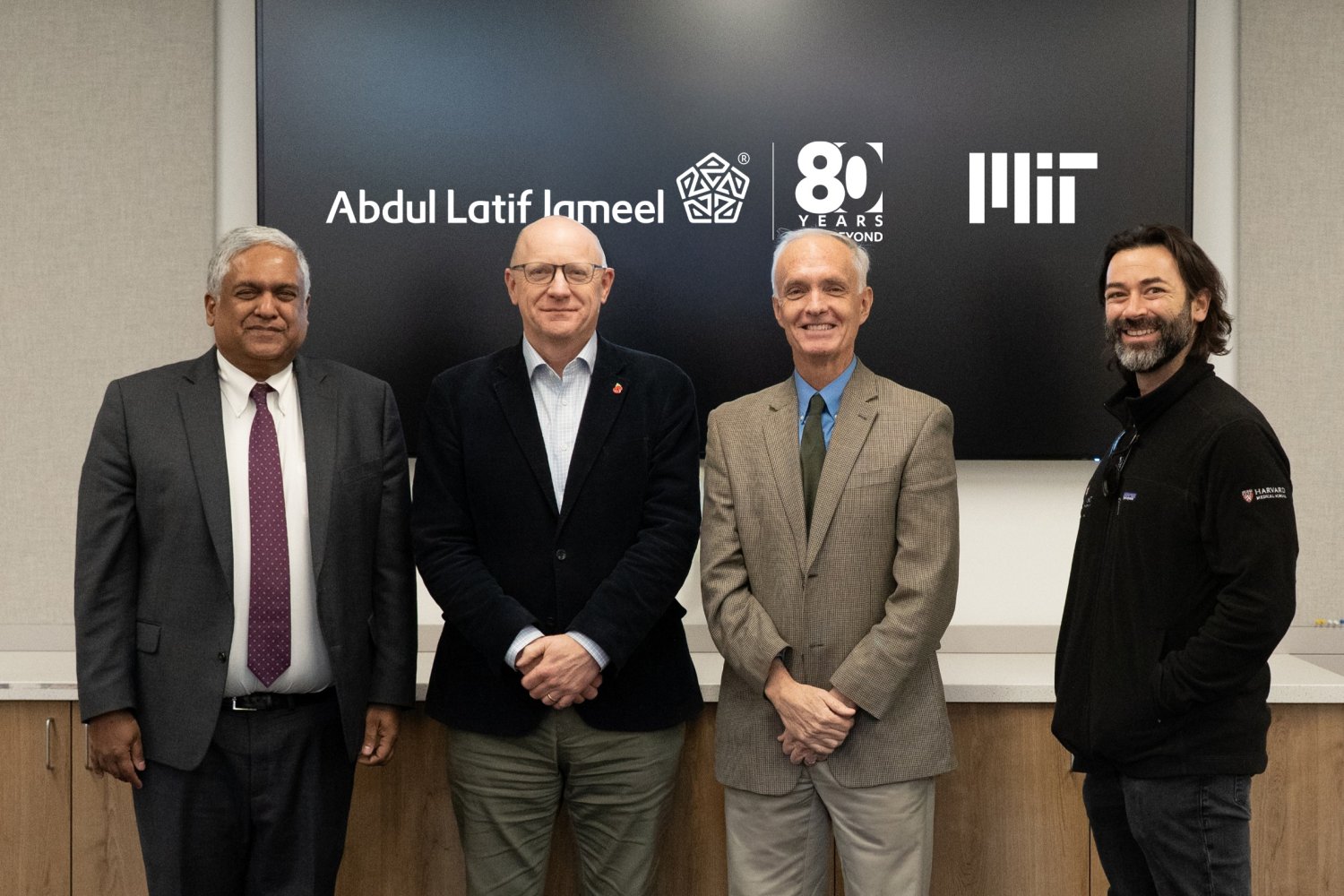
James J. Collins, the Termeer Professor of Medical Engineering and Science at MIT and faculty co-lead of the Abdul Latif Jameel Clinic for Machine Learning in Health, is embarking on a multidisciplinary research project that applies synthetic biology and generative artificial intelligence to the growing global threat of antimicrobial resistance (AMR).
The research project is sponsored by Jameel Research, part of the Abdul Latif Jameel International network. The initial three-year, $3 million research project in MIT’s Department of Biological Engineering and Institute of Medical Engineering and Science focuses on developing and validating programmable antibacterials against key pathogens.
AMR — driven by the overuse and misuse of antibiotics — has accelerated the rise of drug-resistant infections, while the development of new antibacterial tools has slowed. The impact is felt worldwide, especially in low- and middle-income countries, where limited diagnostic infrastructure causes delays or ineffective treatment.
The project centers on developing a new generation of targeted antibacterials using AI to design small proteins to disable specific bacterial functions. These designer molecules would be produced and delivered by engineered microbes, providing a more precise and adaptable approach than traditional antibiotics.
“This project reflects my belief that tackling AMR requires both bold scientific ideas and a pathway to real-world impact,” Collins says. “Jameel Research is keen to address this crisis by supporting innovative, translatable research at MIT.”
Mohammed Abdul Latif Jameel ’78, chair of Abdul Latif Jameel, says, “antimicrobial resistance is one of the most urgent challenges we face today, and addressing it will require ambitious science and sustained collaboration. We are pleased to support this new research, building on our long-standing relationship with MIT and our commitment to advancing research across the world, to strengthen global health and contribute to a more resilient future.”
MIT AI News
https://news.mit.edu/2026/using-synthetic-biology-ai-address-global-antimicrobial-resistance-0211Sign in to highlight and annotate this article

Conversation starters
Daily AI Digest
Get the top 5 AI stories delivered to your inbox every morning.
More about
global

🦀 Rust Foundations — The Stuff That Finally Made Things Click
"Rust compiler and Clippy are the biggest tsunderes — they'll shout at you for every small mistake, but in the end… they just want your code to be perfect." Why I Even Started Rust I didn't pick Rust out of curiosity or hype. I had to. I'm working as a Rust dev at Garden Finance , where I built part of a Wallet-as-a-Service infrastructure. Along with an Axum backend, we had this core Rust crate ( standard-rs ) handling signing and broadcasting transactions across: Bitcoin EVM chains Sui Solana Starknet And suddenly… memory safety wasn't "nice to have" anymore. It was everything. Rust wasn't just a language — it was a guarantee . But yeah… in the beginning? It felt like the compiler hated me :( So I'm writing this to explain Rust foundations in the simplest way possible — from my personal n
Knowledge Map
Connected Articles — Knowledge Graph
This article is connected to other articles through shared AI topics and tags.
More in Products

![Best OCR for template-based form extraction? [D]](https://d2xsxph8kpxj0f.cloudfront.net/310419663032563854/konzwo8nGf8Z4uZsMefwMr/default-img-robot-hand-JvPW6jsLFTCtkgtb97Kys5.webp)
Best OCR for template-based form extraction? [D]
Hi, I’m working on a school project and I’m currently testing OCR tools for forms. The documents are mostly structured or semi-structured forms, similar to application/registration forms with labeled fields and sections. My idea is that an admin uploads a template of the document first, then a user uploads a completed form, and the system extracts the data from it. After extraction, the user reviews the result, checks if the fields are correct, and edits anything that was read incorrectly. So I’m looking for an OCR/document understanding tool that can work well for template-based extraction, but also has some flexibility in case document layouts change later on. Right now I’m trying Google Document AI , and I’m planning to test PaddleOCR next. I wanted to ask what OCR tools you’d recommend
Discussion
Sign in to join the discussion
No comments yet — be the first to share your thoughts!