
Modder uses Claude AI to rewrite BIOS so they can boot unsupported 12 P-core Bartlett Lake CPU in Windows on a Z790 motherboard
Modder uses Claude AI to rewrite BIOS so they can boot unsupported 12 P-core Bartlett Lake CPU in Windows on a Z790 motherboard
(Image credit: Intel)
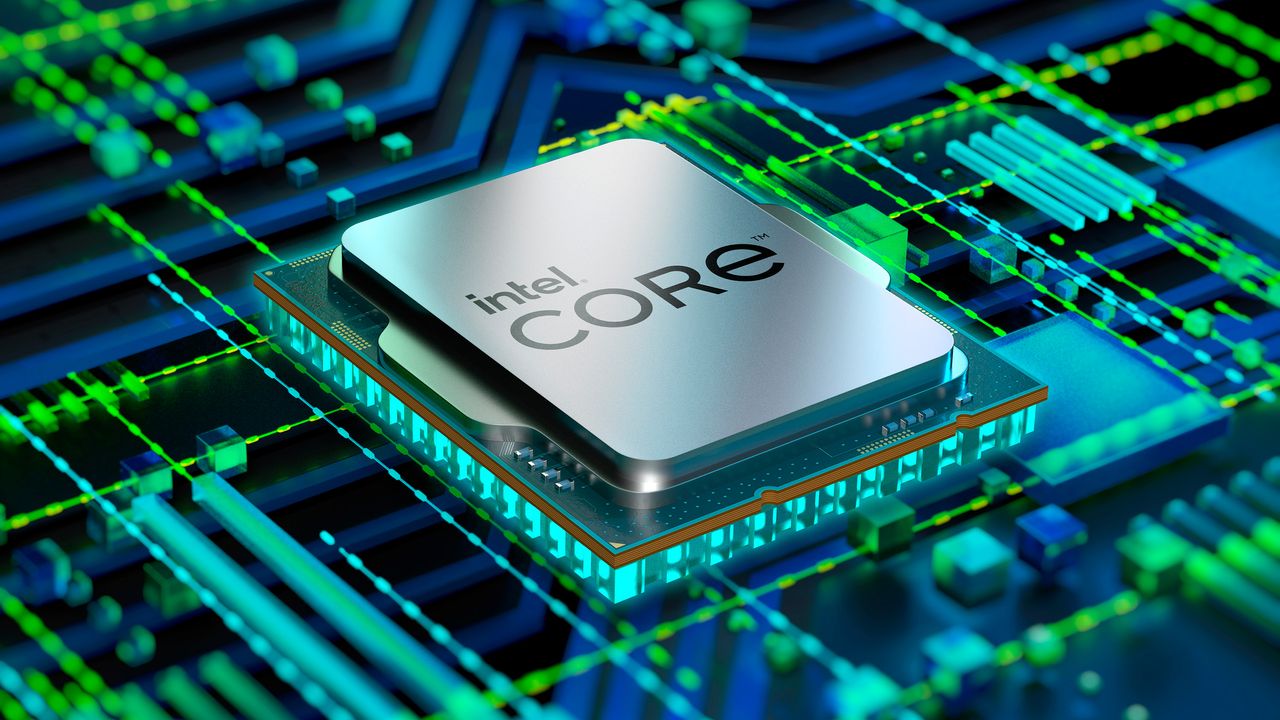
After getting an OEM-exclusive 12 P-core Bartlett Lake CPU to post on an Asus Z790-AYW OC Wi-Fi, modder 'kryptonfly' on the Overclock.net forums has finally managed to boot the same chip into Windows using the same motherboard. A thread on the Overclock.net forums shows the numerous hurdles kryptonfly had to overcome to get Bartlett Lake to boot into Windows, with screenshots to prove everything.
The process involved BIOS modding with the help of Claude AI and numerous trial-and-error runs. After successfully getting the chip to POST, the main issue Krytonfly had to overcome next was a memory initialization issue preventing the system from going beyond the initial POSTing stage to boot into Windows. To achieve this, Kryptonfly fooled the Z790 motherboard into thinking the Bartlett Lake CPU's system agent and PCIe graphics were part of a 13th/14th Gen Raptor Lake CPU.
the ocn bartlett lake thread is astonishing.from asking mobo vendors for help to swapping microcodes and modifying bios, they kept pushing the post code from getting stuck at 55 all the way to 99 a2 and finally posted.intel official supports bartlett lake on specific… https://t.co/SjqvFh2WLA pic.twitter.com/QNUgClTmmMApril 3, 2026
There are still issues the modder has to work out, including a problem where the Bartlett Lake CPU fails to enter the BIOS, making BIOS tweaks impossible without swapping CPUs. Nonetheless, getting a Bartlett Lake chip to boot into Windows is a huge achievement and one step forward to making Bartlett Lake fully functional on mainstream LGA 1700 motherboards. Kryptonfly confirmed he is already looking at implementing the BIOS on more boards, including LGA 1700 socket versions of the Asus Apex and Encore.
Article continues below
Bartlett Lake-S is one of Intel's most unorthodox CPU lineups to date, featuring a flagship SKU that offers a 12 P-core design that clocks up to 5.9GHz. Although these chips are targeted at embedded and edge applications, the top-end 10-core and 12-core models have caught the attention of enthusiasts for their very unique high-core-count P-core-only configurations. None of Intel's existing hybrid chips come with more than eight P-cores, including the Core i9-14900K and Core Ultra 9 285K.
Practically, there's not much the 12-core Core 9 273QPE or 10-core Core 7 253QPE can achieve over their existing Raptor Lake counterparts, especially since Bartlett Lake lacks E-cores altogether. However, in niche latency-sensitive applications that take advantage of only 12 or 10 cores, these chips could potentially outperform a Core i9-14900K or an Ultra 9 285K. Again, though, this is a very niche window where Bartlett Lake-S could potentially outperform conventional Intel desktop CPUs.
Follow Tom's Hardware on Google News, or add us as a preferred source, to get our latest news, analysis, & reviews in your feeds.
Aaron Klotz is a contributing writer for Tom’s Hardware, covering news related to computer hardware such as CPUs, and graphics cards.
Sign in to highlight and annotate this article

Conversation starters
Daily AI Digest
Get the top 5 AI stories delivered to your inbox every morning.
More about
claude
Why I Run 22 Docker Services at Home
Somewhere in my living room, a 2018 gaming PC is running 22 Docker containers, processing 15,000 emails through a local LLM, and managing the finances of a real business. It was never supposed to do any of this. I run a one-person software consultancy in the Netherlands; web development, 3D printing, and consulting. Last year, I started building an AI system to help me manage it all. Eight specialized agents handling email triage, financial tracking, infrastructure monitoring, and scheduling. Every piece of inference runs locally. No cloud APIs touching my private data. This post covers the hardware, what it actually costs, and what I'd do differently if I started over. The Setup: Three Machines, One Mesh Network The entire system runs on three machines connected via Tailscale mesh VPN: do

Anthropic cuts Claude subscribers off from OpenClaw in cost crackdown
In short: Anthropic has blocked Claude Pro and Max subscribers from using their flat-rate plans with third-party AI agent frameworks, starting with OpenClaw. The move, which took effect on 4 April 2026, shifts the cost of running autonomous agents onto users through a pay-as-you-go billing tier. The creator of OpenClaw, who joined OpenAI in February, called [ ] This story continues at The Next Web

Knowledge Map
Connected Articles — Knowledge Graph
This article is connected to other articles through shared AI topics and tags.
More in Models



Research across 1,372 participants and 9K+ trials details "cognitive surrender", where most subjects had minimal AI skepticism and accepted faulty AI reasoning (Kyle Orland/Ars Technica)
Kyle Orland / Ars Technica : Research across 1,372 participants and 9K+ trials details cognitive surrender , where most subjects had minimal AI skepticism and accepted faulty AI reasoning When it comes to large language model-powered tools, there are generally two broad categories of users.

Discussion
Sign in to join the discussion
No comments yet — be the first to share your thoughts!