

The Complete Architecture for Trustworthy Autonomous Agents
Four layers. Four questions. Missing any one of them is how production systems fail. Every serious conversation about securing AI agents eventually produces the same result: a list of things you need to do that don’t obviously fit together. Fine-grained authorization. Runtime monitoring. Capability scoping. Behavioral guardrails. Intent tracking. Wire-level enforcement. Each of these sounds right in isolation. None of them, in isolation, is sufficient. The reason production agentic systems fail is rarely that they’re missing everything. It’s that they have one or two layers and are missing the others — often without knowing it. The team that built a careful authorization system discovers their agent can still drift from its declared intent in ways that pass every check. The team that deplo
Could not retrieve the full article text.
Read on Towards AI →Sign in to highlight and annotate this article

Conversation starters
Daily AI Digest
Get the top 5 AI stories delivered to your inbox every morning.
More about
modeltrainingrelease
Gemma 4 Uncensored (autoresearch results)
Gemma 4 Uncensored — all 4 models, MoE expert abliteration, automated research loop Released uncensored versions of all four Gemma 4 models. bf16 + GGUF for each. Collection : https://huggingface.co/collections/TrevorJS/gemma-4-uncensored-69d2885d6e4fc0581f492698 Code : https://github.com/TrevorS/gemma-4-abliteration Results Model Baseline After KL Div E2B (2.3B) 98% 0.4% 0.346 E4B (4.5B) 99% 0.7% 0.068 26B MoE 98% 0.7% 0.090 31B 100% 3.2% 0.124 Refusal rates from 686 prompts across 4 datasets (JailbreakBench, tulu-harmbench, NousResearch, mlabonne). Manually audited — most flagged refusals are actually the model complying with a disclaimer attached. 26B MoE Standard abliteration only touches dense layers, which gets you from 98% → 29% on the MoE. The remaining refusals are in the expert w
The Service Layer: Where Separate Components Become a System
This is Part 4 of a series building a production-ready semantic search API with Java, Spring Boot, and pgvector. Part 1 covered the architecture. Part 2 defined the schema. Part 3 handled the embeddings — how text becomes vectors. Each piece worked in isolation. But systems don't fail in isolation — they fail at the boundaries. If you've ever built a feature that worked perfectly on its own but broke the moment you connected it to everything else — this article is about preventing that. At this point, we have a schema that can store documents and an embedding layer that can generate vectors. But nothing connects them. A document has nowhere to go. A query has no pipeline. This is where the service layer comes in. This is a production-style implementation — not a demo. The full project stru

I built a faster alternative to cp and rsync — here's how it works
I'm a systems engineer. I spend a lot of time copying files — backups to USB drives, transfers to NAS boxes, moving data between servers over SSH. And I kept running into the same frustrations: cp -r is painfully slow on HDDs when you have tens of thousands of small files rsync is powerful but complex, and still slow for bulk copies scp and SFTP top out at 1-2 MB/s on transfers that should be much faster No tool tells you upfront if the destination even has enough space So I built fast-copy — a Python CLI that copies files at maximum sequential disk speed. The core idea When you run cp -r , files are read in directory order — which is essentially random on disk. Every file seek on an HDD costs 5-10ms. Multiply that by 60,000 files and you're spending minutes just on head movement. fast-cop
Knowledge Map
Connected Articles — Knowledge Graph
This article is connected to other articles through shared AI topics and tags.
More in Products

🚀Playwright vs Selenium in 2026: The Ultimate Guide for Modern Test Automation
⚡ Why This Decision Matters More Than You Think Most engineers don’t struggle with writing tests. They struggle with trusting them . ❌ Test passes locally → fails in CI ❌ Pipeline fails → rerun → magically passes ❌ Thread.sleep() becomes your best friend That’s not bad luck. 👉 That’s a tooling mismatch . In 2026, choosing between Playwright vs Selenium is not just technical. It’s a decision about: ⚡ Speed 🧠 Reliability 🏗️ Engineering culture 🧭 Two Generations of Testing Philosophy 🧱 Selenium: The Foundation Born in 2004 W3C WebDriver standard Enterprise adoption Built for: Server-rendered apps Predictable DOM Simpler JS ⚡ Playwright: The Modern Approach Built for: SPA apps Async-heavy UI Dynamic DOM Key idea: “Don’t just act on the DOM — understand its state.” ⚡ Core Difference (This
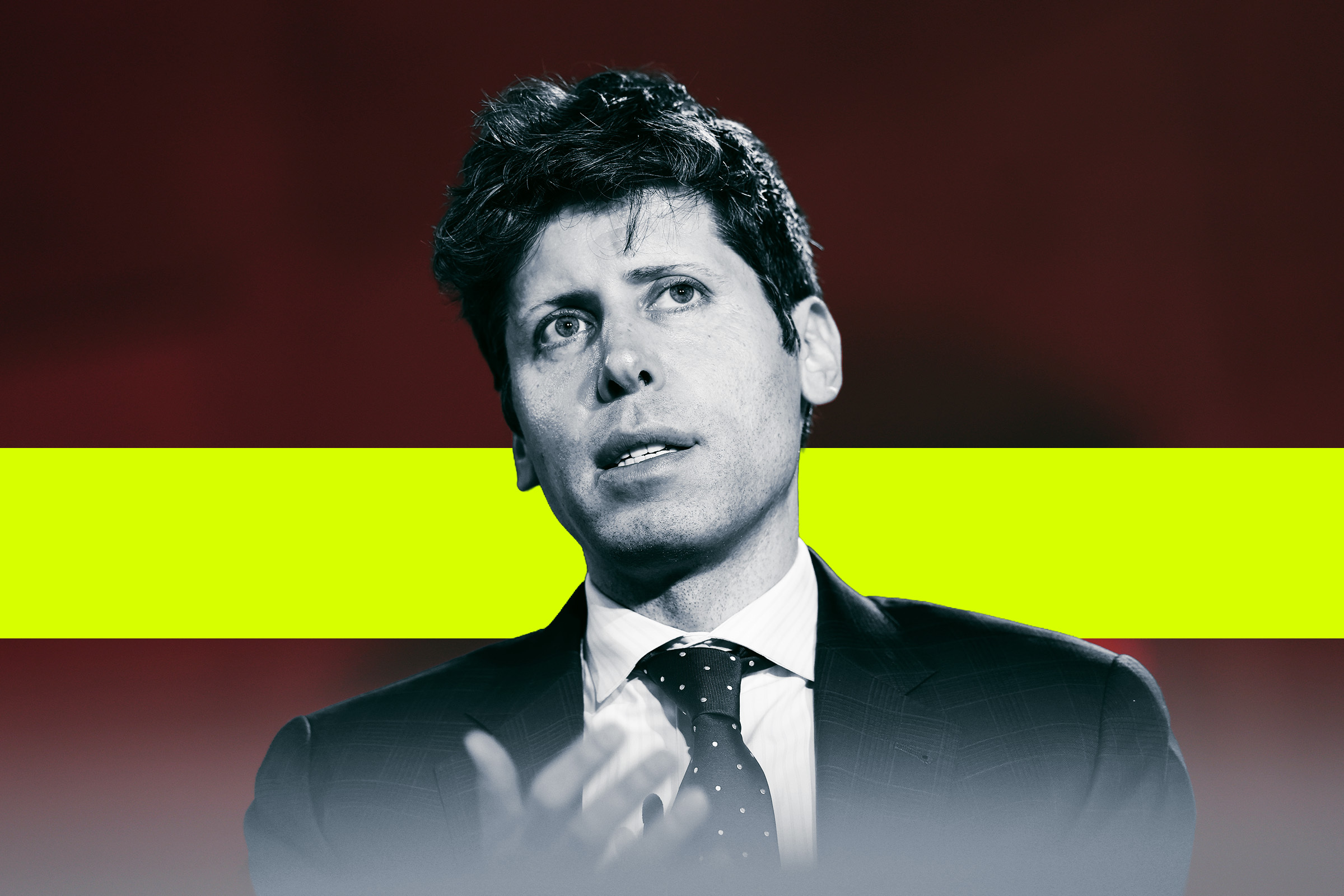
Nonprofit Research Groups Disturbed to Learn That OpenAI Has Secretly Been Funding Their Work
"I don't want OpenAI to write their own rules for how they interact with children." The post Nonprofit Research Groups Disturbed to Learn That OpenAI Has Secretly Been Funding Their Work appeared first on Futurism .
The Service Layer: Where Separate Components Become a System
This is Part 4 of a series building a production-ready semantic search API with Java, Spring Boot, and pgvector. Part 1 covered the architecture. Part 2 defined the schema. Part 3 handled the embeddings — how text becomes vectors. Each piece worked in isolation. But systems don't fail in isolation — they fail at the boundaries. If you've ever built a feature that worked perfectly on its own but broke the moment you connected it to everything else — this article is about preventing that. At this point, we have a schema that can store documents and an embedding layer that can generate vectors. But nothing connects them. A document has nowhere to go. A query has no pipeline. This is where the service layer comes in. This is a production-style implementation — not a demo. The full project stru

Silverback AI Chatbot Announces Development of AI Assistant Feature to Support Automated Digital Interaction and Workflow Management - Daytona Beach News-Journal
Silverback AI Chatbot Announces Development of AI Assistant Feature to Support Automated Digital Interaction and Workflow Management Daytona Beach News-Journal
Discussion
Sign in to join the discussion
No comments yet — be the first to share your thoughts!