
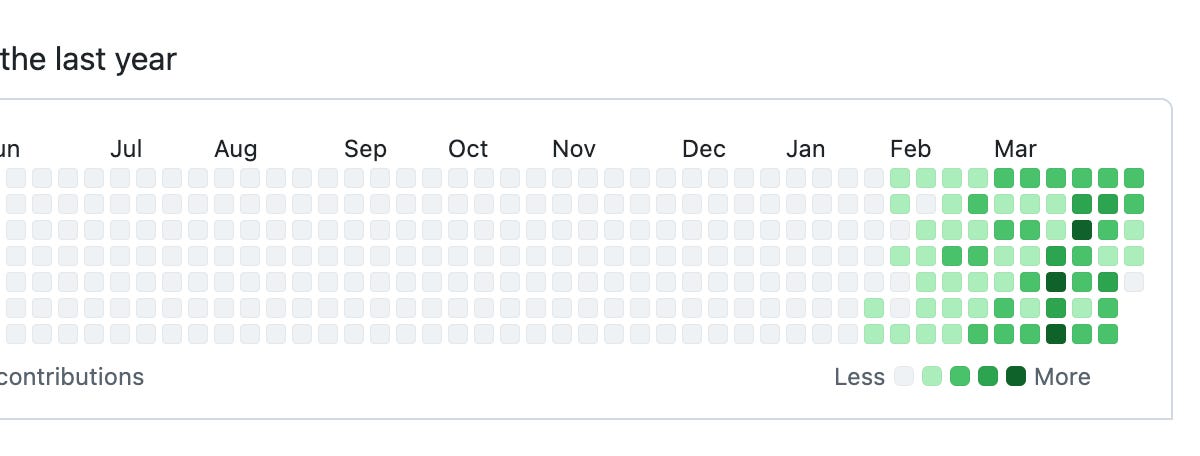
Sources: Mark Zuckerberg is back to writing code after a two-decade hiatus, submitting three diffs to Meta s monorepo, and is a heavy user of Claude Code CLI (Gergely Orosz/The Pragmatic Engineer)
Gergely Orosz / The Pragmatic Engineer : Sources: Mark Zuckerberg is back to writing code after a two-decade hiatus, submitting three diffs to Meta's monorepo, and is a heavy user of Claude Code CLI Mark Zuckerberg and Garry Tan join the trend of C-level folks jumping back into coding with AI. Also: a bad week for Claude Code and GitHub, and more
Sponsor Posts
ElevenLabs:
ElevenAgents by ElevenLabs — You know us for voice. Now meet ElevenAgents — featuring Expressive Mode, our most human-sounding AI voice technology in 70+ languages with ultra-low latency. Hear it for yourself.
IDrive:
Protecting your Cloud Applications Data — Backing up Office 365, Google Workspace, Dropbox & Salesforce data is critical to preventing data loss or corruption, complying with laws and avoiding critical downtime in case of a disaster.
Sign in to highlight and annotate this article

Conversation starters
Daily AI Digest
Get the top 5 AI stories delivered to your inbox every morning.
More about
claudetrendclaude code
Paper close reading: "Why Language Models Hallucinate"
People often talk about paper reading as a skill, but there aren’t that many examples of people walking through how they do it. Part of this is a problem of supply: it’s expensive to document one’s thought process for any significant length of time, and there’s the additional cost of probably looking quite foolish when doing so. Part of this is simply a question of demand: far more people will read a short paragraph or tweet thread summarizing a paper and offering some pithy comments, than a thousand-word post of someone’s train of thought as they look through a paper. Thankfully, I’m willing to risk looking a bit foolish, and I’m pretty unresponsive to demand at this present moment, so I’ll try and write down my thought processes as I read through as much of a a paper I can in 1-2 hours.

OpenClaw Changed How We Use AI. KiloClaw Made It Effortless to Get Started
OpenClaw is a powerful open-source AI agent, but self-hosting it is a pain. KiloClaw is OpenClaw fully hosted and managed by Kilo — sign up, connect your chat apps, and your agent is running in about a minute. No Docker, no YAML, no server babysitting. People are using it for personalized morning briefs, inbox digests, auto-building CRMs, browser automation, GitHub triage, and more. Hosting is $8/month with a 7-day free trial, inference runs through Kilo Gateway at zero markup across 500+ models, and it's free for open-source maintainers. Read All
I Shipped an AI SaaS in 4 Hours. Here Is the Exact Stack.
I Shipped an AI SaaS in 4 Hours. Here Is the Exact Stack. Every AI SaaS project starts the same way. You have a great idea. You open your editor. Then you spend three weeks on auth, Stripe integration, a dashboard, and a landing page — none of which is your actual product. I built a kit that eliminates that. Here is the exact stack and what each piece does. The Stack next.js 14 (App Router) tailwind css stripe billing nextauth openai / claude api routes prisma + postgresql What Comes Pre-Wired Authentication (NextAuth) // app/api/auth/[...nextauth]/route.ts import NextAuth from " next-auth " import { authOptions } from " @/lib/auth " const handler = NextAuth ( authOptions ) export { handler as GET , handler as POST } Google OAuth, GitHub OAuth, and email/password — all configured. Sessions
Knowledge Map
Connected Articles — Knowledge Graph
This article is connected to other articles through shared AI topics and tags.
More in Models

Paper close reading: "Why Language Models Hallucinate"
People often talk about paper reading as a skill, but there aren’t that many examples of people walking through how they do it. Part of this is a problem of supply: it’s expensive to document one’s thought process for any significant length of time, and there’s the additional cost of probably looking quite foolish when doing so. Part of this is simply a question of demand: far more people will read a short paragraph or tweet thread summarizing a paper and offering some pithy comments, than a thousand-word post of someone’s train of thought as they look through a paper. Thankfully, I’m willing to risk looking a bit foolish, and I’m pretty unresponsive to demand at this present moment, so I’ll try and write down my thought processes as I read through as much of a a paper I can in 1-2 hours.

Qwen3.5-4B GGUF quants comparison (KLD vs speed) - Lunar Lake
I wanted to know which type of quant is the best on this laptop (Intel 258V - iGPU 140V 18GB), so I tested all these small quants hoping that it generalizes to bigger models: Winners in bold (KLD≤0.01) Uploader Quant tk/s KLD GB KLD/GB* mradermacher* Q4_0 28.97 0.052659918 2.37 0.04593 mradermacher_i1 Q4_0 28.89 0.059171561 2.37 0.05162 mradermacher_i1 IQ3_XXS 28.59 0.177140713 1.77 0.20736 Unsloth UD-IQ2_XXS 28.47 0.573673327 1.42 0.83747 Unsloth Q4_0 28.3 0.053431218 2.41 0.04583 Bartowski Q4_0 28.28 0.049796789 2.45 0.04200 mradermacher Q4_K_S 27.74 0.050305722 2.39 0.04350 Unsloth Q4_K_S 27.29 0.028402815 2.41 0.02429 Unsloth UD-IQ3_XXS 27.03 0.146879419 1.82 0.16718 mradermacher Q2_K 26.98 0.858648176 1.78 1.00000 mradermacher_i1 Q4_K_M 25.95 0.026540567 2.52 0.02169 mradermacher_i1 I

Goal-Conditioned Neural ODEs with Guaranteed Safety and Stability for Learning-Based All-Pairs Motion Planning
arXiv:2604.02821v1 Announce Type: new Abstract: This paper presents a learning-based approach for all-pairs motion planning, where the initial and goal states are allowed to be arbitrary points in a safe set. We construct smooth goal-conditioned neural ordinary differential equations (neural ODEs) via bi-Lipschitz diffeomorphisms. Theoretical results show that the proposed model can provide guarantees of global exponential stability and safety (safe set forward invariance) regardless of goal location. Moreover, explicit bounds on convergence rate, tracking error, and vector field magnitude are established. Our approach admits a tractable learning implementation using bi-Lipschitz neural networks and can incorporate demonstration data. We illustrate the effectiveness of the proposed method
Discussion
Sign in to join the discussion
No comments yet — be the first to share your thoughts!