Secure AI for Healthcare: HIPAA-compliant vector search with Weaviate
Announcing Weaviate Enterprise Cloud new HIPAA compliance on AWS, enabling secure PHI storage, search, and vector-powered AI for healthcare workloads.
We’re excited to announce that our Weaviate Enterprise Cloud product is now ready to store electronic Patient Health Data in AWS. As of June 26, you can securely store, index, and search Protected Health Information (PHI/ePHI) in Weaviate—fully in line with the U.S. Health Insurance Portability and Accountability Act. Our platform now includes advanced encryption (in transit and at rest), role-based access controls, immutable backups, and lifecycle-managed storage, all backed by signed Business Associate Agreements (BAAs).
Why does this matter? Healthcare organizations process enormous volumes of sensitive data—and they spend billions of dollars each year on inefficient workflows and manual processes. Weaviate empowers doctors, insurers, and care teams to eliminate waste, accelerate claims processing, and deliver more data-driven decisions. Now, you can build HIPAA-ready AI applications on Weaviate with confidence, knowing your patients’ privacy and your compliance obligations are fully protected.
Weaviate’s Compliance Journey
Weaviate’s commitment to data protection is built on a robust framework of industry-leading certifications and audits. For over 18 months, we’ve maintained SOC II compliance, integrating comprehensive GDPR controls to secure European and global data. Earlier this year, we completed our Phase 1 audit for ISO 27001:2022, with full accreditation expected by July. Now, we are expanding our certification portfolio by adding HIPAA compliance, which will be incorporated into our next SOC II audit at year-end.
Beyond these core standards, our Business Continuity Management System aligns with ISO 22301:2019, with full certification planned for 2026. Together, these milestones demonstrate Weaviate’s readiness to meet the highest regulatory requirements, ensuring your data remains secure, resilient, and compliant across every market.
Advanced Security Controls for HIPAA Compliance
Weaviate Enterprise Cloud on AWS now includes a suite of purpose-built safeguards that meet HIPAA’s technical requirements and ensure your PHI remains protected at every layer:
- End-to-End Encryption: All data is encrypted in transit (TLS/mTLS) and at rest (AES-256), including internal Kubernetes traffic. This guarantees that ePHI cannot be intercepted or exposed at any point in your environment.
- Customer-Managed Keys: Maintain full control over your encryption keys for data-at-rest protection. You can supply your own keys via AWS Key Management Service (KMS) to enforce strict separation of duties.
- Granular Access Controls & Auditing: Role-based access ensures only authorized users and services can query or modify PHI. Detailed audit logs capture every read, write, and administrative action for complete visibility.
- Immutable, Redundant Backups: Daily snapshots are stored in immutable, zonally redundant storage to prevent tampering and guarantee rapid recovery during a disaster.
These controls work together to provide a turnkey, HIPAA-ready environment for all your healthcare workloads.
Future HIPAA Support: Azure, GCP & Serverless
Weaviate’s HIPAA compliance is not limited to AWS. Based on customer demand, we’ll soon extend these safeguards to other environments:
- Azure: Full HIPAA-ready deployment for Weaviate Enterprise Cloud on Azure is arriving in the next few months.
- Weaviate Serverless Cloud: We’re enabling serverless workloads to meet HIPAA standards, giving you elastic scalability with enterprise-grade security.
- GCP: Support for Google Cloud Platform is on our roadmap, ensuring you can run compliant vector search across all major clouds.
Stay tuned for detailed announcements and availability dates as we roll out these enhancements.
Example Real-world Use Cases
Weaviate enables healthcare providers, insurance companies and practices to semantically search data and retrieve important contextually relevant insights quickly. Below are five examples of this in practice.
Faster Claims Processing
Insurance claimants need their claim turned around quickly and accurately. By storing and vectorizing claims data in Weaviate, a connected LLM can instantly pull together all relevant patient history, diagnoses, and treatment notes, then deliver a concise, contextual summary to claim handlers. This reduces manual review time and accelerates approvals, helping payers save both time and money.
Remote Patient Monitoring & Alerting
Continuous streams of wearable or home-monitoring data (heart rate, glucose, etc.) can overwhelm traditional rule-based systems and miss subtle warning signs. By streaming sensor feeds into Weaviate alongside patients’ clinical records, you can define semantic alerts, such as “find glucose readings >180 mg/dL correlated with rapid heart-rate spikes”, so that care teams receive precise, real-time notifications, all within an end-to-end encrypted and immutable-log environment.
Personalized Patient Appointments
It is difficult for doctors to understand a patient’s full medical history—prior visits, prescribed medications, lab results—when they arrive for their appointment. Rather than combing through disparate systems, Weaviate can enable care teams to access an easy-to-read summary at the point of care, leading to more informed consultations and improved patient experience.
Medical-Image Metadata Retrieval
Radiology and pathology images often come with free-text captions and annotations stored separately, making it hard to find the right scans at scale. By embedding both image metadata and transcribed notes into Weaviate, clinicians can simply ask “show me all MRI scans of patients with suspected meningioma” to retrieve exactly the right series—complete with HIPAA-compliant audit logs for every access request.
Continuous Professional Development (CPD)
Keeping medical staff up to date with new publications and journals is challenging and time-consuming. Especially while ensuring they don’t miss critical retractions or updates. With medical journals and training material uploaded as unstructured text into Weaviate. Healthcare professionals can receive weekly “CPD roundups” that filter for the most relevant new research, automatically summarize key findings, and flag any withdrawn or contested articles.
Even in this high-level overview, you can see how HIPAA-compliant vector search on Weaviate unlocks major efficiency gains—without sacrificing privacy.
Start Building Secure Healthcare AI with Weaviate
Weaviate Enterprise Cloud is now fully HIPAA-compliant on AWS—so you can confidently build, deploy, and scale AI-driven healthcare applications without worrying about data security or regulatory hurdles.
Ready to see it in action?
- Schedule a personalized demo with our team today to explore how HIPAA-ready vector search can transform your workflows.
Know a team in healthcare IT, clinical research, or health-tech innovation? Share this post with your network, and let’s make healthcare technology smarter, faster, and more secure. Don’t forget to tag Weaviate on LinkedIn or Twitter—we can’t wait to see what you build!
Frequently asked questions
Let us help answer the most common questions you might have.
What Is HIPAA and Why It Matters?▼
Core Principles of HIPAA▼
Who Must Comply?▼
What Counts as PHI (and What Doesn’t)?▼
Are Vector Embeddings PHI?▼
Enforcement & Penalties▼
Appendix / Resources▼
Ready to start building?
Check out the Quickstart tutorial, or build amazing apps with a free trial of Weaviate Cloud (WCD).
Sign in to highlight and annotate this article

Conversation starters
Daily AI Digest
Get the top 5 AI stories delivered to your inbox every morning.
More about
compliance
Smart food safety: implementing AI for risk, compliance and control - New Food magazine
<a href="https://news.google.com/rss/articles/CBMivwFBVV95cUxNLTl5bzY1YTcyNThZLVowbG9Bb3haS1lOM3lpbmRxZktqR25kcEg3WjJDMDd1UFRDdnpNUHJPekt1amxuRXp3ZHBleFVPbS1HSEhVQl9YODJtOENYSVltbW52YW8xSFBlRHdENFRXekhqMTd0RFNsSFBITWhKcDdCcVp1TWxMSFVjYWhjU25VNlJVT09sWWVwbzRPZGZWT3pQNjU1RTcwMWlJd1RYQUZPWGNXeWRadGtISThCbVBnUQ?oc=5" target="_blank">Smart food safety: implementing AI for risk, compliance and control</a> <font color="#6f6f6f">New Food magazine</font>
HITEK AI launches a bundle of solutions to support compliance with new Dubai Law on building quality & safety - ZAWYA
<a href="https://news.google.com/rss/articles/CBMihAJBVV95cUxOU2JSOVMtbXlXM01fTDBmdWpfZ0JhQkpSSmlJOHBYbmFOSEEtcmFVMjFNX1JHcjgwOEhvNzJ4bHpTRWhfVFJQOHc3S2tERWNJSjg0ZWNjajVmYmVULXBmd2xSV2Z3ZE1qODFnbGhMLWJhNVpQczM5aTNlc1JhNllsc3JTdzhkOVdqRFpEX3BJSjM4TE02N1B5OFlfLVZ4b0RqVENMY0l3TThmZkVqUnJyODJWcWFBcUV4eGIwOXYwdkJjX0h0YVRzRHpFUUZmbVZ1VWNvYmZnUXpCTndLQWpNc2ZIS1VCbDNMcnp6UVVENUpueW5Ga2wwRllFTVJ3anBhb19zVw?oc=5" target="_blank">HITEK AI launches a bundle of solutions to support compliance with new Dubai Law on building quality & safety</a> <font color="#6f6f6f">ZAWYA</font>

The Necessity of a Holistic Safety Evaluation Framework for AI-Based Automation Features
arXiv:2602.05157v2 Announce Type: replace Abstract: The intersection of Safety of Intended Functionality (SOTIF) and Functional Safety (FuSa) analysis of driving automation features has traditionally excluded Quality Management (QM) components (components that has no ASIL requirements allocated from vehicle-level HARA) from rigorous safety impact evaluations. While QM components are not typically classified as safety-relevant, recent developments in artificial intelligence (AI) integration reveal that such components can contribute to SOTIF-related hazardous risks. Compliance with emerging AI safety standards, such as ISO/PAS 8800, necessitates re-evaluating safety considerations for these components. This paper examines the necessity of conducting holistic safety analysis and risk assessm
Knowledge Map
Connected Articles — Knowledge Graph
This article is connected to other articles through shared AI topics and tags.
More in Laws & Regulation
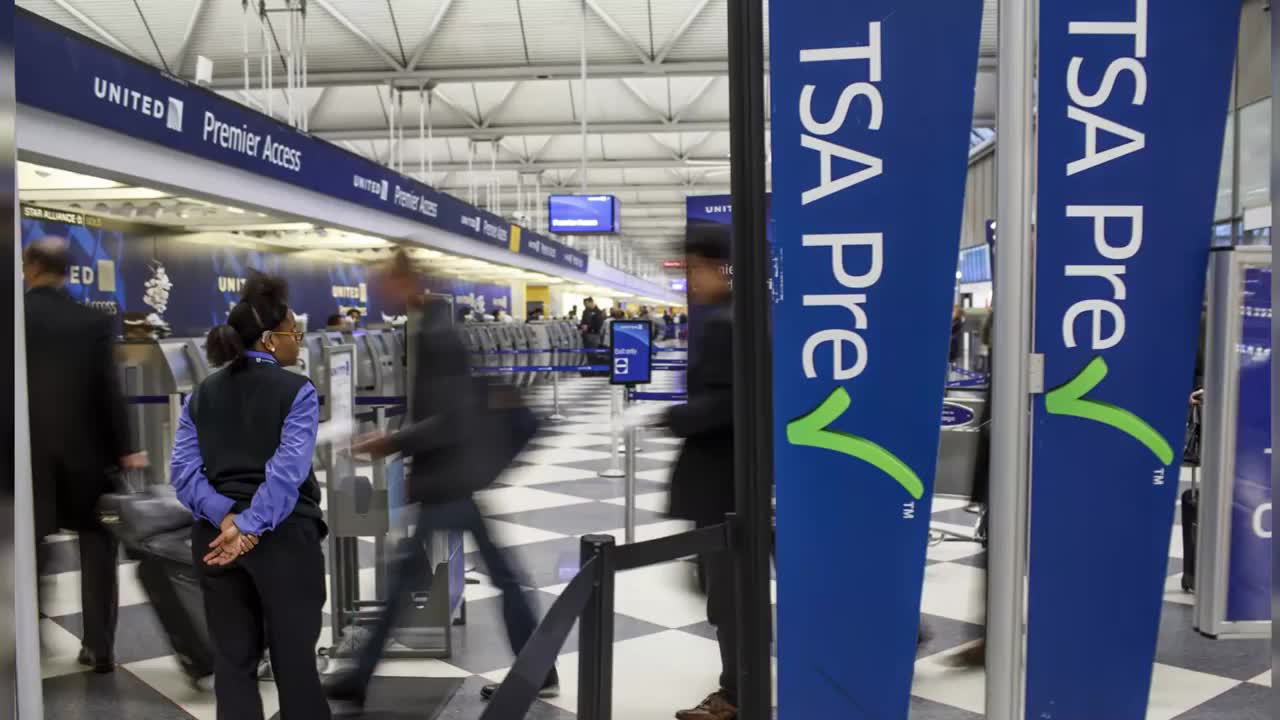
Miami International Airport TSA Wait Time Remain Short Under 15 Minutes Amid Shutdown Chaos
Security lines at Miami International Airport stayed manageable Tuesday with TSA wait times averaging under 15 minutes across most checkpoints, offering a bright spot for spring break travelers navigating the partial government shutdown that has snarled operations at many major U.S. hubs.

Sources: amid the Iran war, Asian bankers say rising power prices and energy security are becoming a bigger consideration in data center financing decisions (Bloomberg)
Bloomberg : Sources: amid the Iran war, Asian bankers say rising power prices and energy security are becoming a bigger consideration in data center financing decisions — The energy shock sparked by the Iran war is increasingly coming up in conversations about data center deals for Asian bankers …
Unleashing potential: Exploring generative AI’s role in banking - KPMG
<a href="https://news.google.com/rss/articles/CBMi6AFBVV95cUxPRFZfYkd5cy0yUnhXY015bDJZSERtcHlUa3drQ1I4SW1qNFJfTEhCaE9ZNnY4cXYwQmphZEdJaF9hRmNBaWUxQy10bTJWMkFrM3czUzZZdHZibFk4U1J2dUY3ZG1zR1FqSFZaczdfVnpzRk85TGVjXzE2Yk0xanhTNllnd1ZDZ0NSMnA5WlhmREEwMFgzQkoxUWNKeDUwakVsWi14ZkhSREZKTVZUWWxHbzRNaE9xTl85blRIdFIyZ3ctX1dRcDZQeDdEdklkaXR6S212c1p6UmNUMEdBNlhYSHNSNXpOTEpl?oc=5" target="_blank">Unleashing potential: Exploring generative AI’s role in banking</a> <font color="#6f6f6f">KPMG</font>
Discussion
Sign in to join the discussion
No comments yet — be the first to share your thoughts!