
n8n Review 2026: I Used It for 8 Months to Build AI Agents (Honest Verdict)
<p>Last March, a client from Dubai approached me with a nightmare project. They wanted an AI agent that could read emails, extract invoice data, validate it against their inventory system, and automatically create purchase orders. The catch? Their team had zero coding experience and wanted to maintain it themselves.</p> <p><a href="https://media2.dev.to/dynamic/image/width=800%2Cheight=%2Cfit=scale-down%2Cgravity=auto%2Cformat=auto/https%3A%2F%2Fnovatool.org%2Fwp-content%2Fuploads%2F2026%2F04%2Fnova-74918a0b-hero-1.jpg" class="article-body-image-wrapper"><img src="https://media2.dev.to/dynamic/image/width=800%2Cheight=%2Cfit=scale-down%2Cgravity=auto%2Cformat=auto/https%3A%2F%2Fnovatool.org%2Fwp-content%2Fuploads%2F2026%2F04%2Fnova-74918a0b-hero-1.jpg" alt="a very tall building with a sky
Last March, a client from Dubai approached me with a nightmare project. They wanted an AI agent that could read emails, extract invoice data, validate it against their inventory system, and automatically create purchase orders. The catch? Their team had zero coding experience and wanted to maintain it themselves.
Photo by Declan Sun via Unsplash
I'd been using Zapier for simple automations, but this needed something more powerful. That's when I discovered n8n. Eight months and twelve client projects later, I'm ready to share everything I learned about this tool.
What Actually Is n8n?
Think of n8n as a digital assembly line builder. Instead of writing code, you drag and drop boxes (called nodes) onto a canvas. Each box does one thing - maybe it reads an email, or talks to ChatGPT, or updates a spreadsheet. You connect these boxes with lines to create workflows.
The "AI agent" part comes from connecting AI services like OpenAI, Claude, or local AI models to these workflows. So your agent can read data, think about it using AI, make decisions, and take actions automatically.
Unlike Zapier or Make.com, n8n is open-source. This means you can either use their cloud version or install it on your own server. For someone building client solutions, this flexibility is huge.
Setting Up n8n (The Real Experience)
I started with n8n Cloud because I needed something working fast. The signup took literally 2 minutes - just email, password, and I was in.
The interface opens to a blank canvas with a sidebar full of nodes. It looks intimidating at first. There's a "Manual Trigger" node already placed, which is where your workflow starts.
My first workflow was simple - I wanted to test connecting to OpenAI. I clicked the plus icon next to Manual Trigger, searched for "OpenAI" in the node library, and dragged it onto the canvas. Then I connected them with a line by dragging from one node's output to the other's input.
Here's where I hit my first wall. The OpenAI node needed an API key, but n8n's credential system was confusing. I clicked "Credentials" in the top menu, then "Create New," selected "OpenAI API" from a long dropdown list. After pasting my API key and testing the connection, it finally worked.
Total setup time for a basic workflow: about 30 minutes (including figuring out the credentials).
For self-hosting, I tried it later on a DigitalOcean droplet. The Docker installation took about an hour, mostly waiting for downloads. If you're not comfortable with Linux commands, stick with the cloud version.
What I Actually Built With It
Let me walk you through that Dubai client project because it shows n8n's real capabilities.
The workflow started with an Email Trigger node watching their Gmail inbox for messages with "Invoice" in the subject. When an email arrived, it would:
-
Extract any PDF attachments using n8n's built-in file handling
-
Send the PDF to OpenAI's vision model to extract invoice data (vendor, amount, items, dates)
-
Format this data and check it against their Google Sheets inventory database
-
If items matched and amounts were reasonable, create a purchase order in their ERP system
-
Send a Slack notification to the purchasing team
-
Reply to the original email confirming receipt
This workflow has 23 nodes total. Building it took me 3 days, mostly because I kept running into edge cases. What if the PDF is corrupted? What if OpenAI returns malformed data? What if their ERP system is down?
The results were impressive though. The client went from manually processing 40-50 invoices per week (taking about 2 hours daily) to having 90% processed automatically. They saved roughly 8-10 hours per week.
The best part? I trained their operations manager to modify the workflow in about 2 hours. She can now adjust the validation rules and add new vendors without calling me.
What Surprised Me (Good and Bad)
The Good Surprises:
n8n's error handling is fantastic. When a node fails, you can see exactly what went wrong and even replay failed executions with different data. This saved me countless hours debugging client workflows.
The HTTP Request node is incredibly powerful. I've used it to connect to APIs that don't have dedicated nodes. With a bit of trial and error, you can integrate almost any web service.
Code nodes are a game-changer. When the visual interface isn't enough, you can drop in JavaScript or Python code. This bridges the gap between no-code and full programming.
The community is surprisingly helpful. Their Discord has actual developers answering questions, not just sales people.
The Bad Surprises:
Performance can be sluggish with complex workflows. One client workflow with 40+ nodes takes 3-4 minutes to complete a single execution. For real-time use cases, this is problematic.
The AI integrations feel half-baked sometimes. The OpenAI node works great, but trying to connect newer services like Anthropic's Claude often requires using the HTTP node instead of dedicated integrations.
Version control is a nightmare. If you accidentally break a workflow, rolling back requires manual export/import of JSON files. There's no "undo" button, which is insane for a tool this complex.
Documentation is inconsistent. Some nodes have detailed examples, others just list parameters without context. I spent way too much time trial-and-erroring basic configurations.
Pricing Breakdown (What You Actually Need)
n8n offers several pricing tiers, and choosing wrong can get expensive fast.
Starter ($20/month): 2,500 workflow executions, 2 active workflows. This is only useful for testing. My simplest client workflows trigger 50-100 times daily.
Pro ($50/month): 10,000 executions, 10 workflows, basic support. This works for small businesses with simple needs. Most of my clients end up here initially.
Advanced ($150/month): 50,000 executions, 50 workflows, priority support, advanced nodes. This is the sweet spot for serious AI agent deployments.
Enterprise ($500+/month): Custom limits, dedicated support, advanced security. Only worth it for large organizations.
Here's the catch: executions count every time any node runs. A workflow with 10 nodes counts as 10 executions. That Dubai client project? Each invoice processing uses about 23 executions. With 200 invoices per month, they need at least the Pro plan.
For self-hosting, the software is free, but you'll pay for server costs. A decent DigitalOcean droplet runs about $20-40/month, plus your time managing it.
Who Should Use This (And Who Shouldn't)
Perfect for:
Small business owners who want custom AI automation but can't afford a full development team. If you're processing repetitive data and want AI to help, n8n is excellent.
Freelancers building solutions for clients. The visual interface makes it easy to show clients how their workflows work, and the self-hosting option means no vendor lock-in.
Teams with basic technical skills who want to maintain their own automations. My clients love being able to tweak workflows without calling me every time.
Avoid if:
You need real-time performance. n8n workflows can take several seconds to minutes, making them unsuitable for live chat bots or instant responses.
You're completely non-technical. Despite being "no-code," n8n requires logical thinking and patience. If setting up email filters seems complicated, this tool will frustrate you.
You need enterprise-grade reliability. I've seen workflows randomly fail due to temporary API issues or cloud hiccups. There's no built-in redundancy.
You want plug-and-play AI agents. n8n requires building everything from scratch. If you just want to deploy a chatbot, use something like Chatfuel instead.
My Honest Verdict After Real Projects
After 8 months and 12 client projects, n8n has become my go-to tool for custom AI automation. It's not perfect, but it hits a sweet spot between power and usability.
The biggest win is client independence. Instead of maintaining dozens of custom scripts, I can hand over visual workflows that clients understand and modify themselves. This has changed my business model from ongoing maintenance contracts to project-based work.
The biggest frustration is reliability. I've learned to build error handling into every workflow because something always goes wrong. Network timeouts, API changes, service outages - n8n workflows need constant babysitting initially.
For building AI agents specifically, n8n excels at data processing workflows but struggles with conversational AI. If your "agent" needs to chat with users, look elsewhere. But if you want an agent that processes documents, analyzes data, and takes actions across multiple systems, n8n is fantastic.
Alternatives Worth Considering
Make.com (formerly Integromat): More polished interface, better error handling, but more expensive and less flexible. Great if you want something that "just works" and don't mind paying extra.
Zapier: Much simpler but way less powerful. Perfect for basic automations like "new email creates Trello card" but can't handle complex AI workflows.
Microsoft Power Automate: If you're already in the Microsoft ecosystem, this integrates seamlessly with Office 365. The AI connectors are decent, but it's more expensive and Microsoft-centric.
For pure AI agent building, consider Voiceflow for conversational agents or Bubble for full applications with AI features. They're more specialized but easier for specific use cases.
Final Thoughts
n8n isn't the easiest no-code tool, but it might be the most capable. If you're willing to invest time learning it properly, you can build surprisingly sophisticated AI automation.
Related: How I Built My First AI Agent from Scratch in 2 Hours (Complete 2026 Guide)
Related: I Built 5 AI Agents with Claude’s New Builder Tool – Here’s What Actually Works in 2026
Related: I Built My First AI Agent in 2 Hours Using n8n (Complete Step-by-Step Guide 2026)
The key is starting small. Don't try to replicate my 23-node invoice processing workflow on day one. Build something simple first - maybe an AI that reads RSS feeds and posts summaries to Slack. Once you understand how nodes connect and data flows between them, more complex projects become manageable.
For freelancers specifically, n8n has been a business game-changer. I can build custom AI solutions that would normally require weeks of coding in just a few days. The visual interface makes client presentations easy, and the open-source nature means no vendor lock-in concerns.
Just remember: n8n is a power tool, not a magic wand. You'll still need to think through your automation logic, handle edge cases, and monitor your workflows. But if you're ready for that responsibility, it's one of the most powerful no-code platforms available in 2026.
How long does it take to learn n8n properly?Plan for 2-3 weeks of regular practice to get comfortable. I spent about 20 hours over my first month building test workflows before taking on client projects. The learning curve is steeper than Zapier but much gentler than actual programming.
Can n8n handle high-volume workflows?Yes and no. Individual workflows can process thousands of records, but execution speed is limited. My largest workflow processes 500 items in about 15 minutes. For truly high-volume needs (thousands per minute), you'll need custom coding or specialized tools.
What happens if n8n Cloud goes down?Your workflows stop until service resumes. This is why I recommend self-hosting for critical business processes. I've experienced 2-3 outages lasting 30 minutes to 2 hours each over 8 months of use.
Do I need coding skills to use n8n effectively?Not strictly, but basic logical thinking helps enormously. Understanding concepts like variables, conditional statements, and data types makes everything easier. I'd say it requires "computational thinking" more than actual coding skills.
How much should I budget for AI API costs on top of n8n?This varies wildly based on usage. My clients typically spend $50-200/month on OpenAI API calls for moderate AI processing. Always set up usage limits in your AI provider's dashboard to avoid surprise bills.
DEV Community
https://dev.to/nova_gg/n8n-review-2026-i-used-it-for-8-months-to-build-ai-agents-honest-verdict-kifSign in to highlight and annotate this article

Conversation starters
Daily AI Digest
Get the top 5 AI stories delivered to your inbox every morning.
More about
claudemodelavailable
Blazor WASM's Deputy Thread Model Will Break JavaScript Interop - Here's Why That Matters
<h2> The Problem </h2> <p>Microsoft is changing how .NET runs inside WebAssembly. When you enable threading with <code><WasmEnableThreads>true</WasmEnableThreads></code>, the entire .NET runtime moves off the browser's main thread and onto a background Web Worker — what they call the <strong>"Deputy Thread" model</strong>.</p> <p>This sounds like a good idea on paper. The UI stays responsive. .NET gets real threads. Everyone wins.</p> <p>Except it breaks JavaScript interop. Not in a subtle, edge-case way. It breaks it <em>fundamentally</em>.</p> <h2> What Actually Happens </h2> <p>In traditional Blazor WASM (no threading), .NET and JavaScript share the same thread. When JavaScript calls <code>DotNet.invokeMethod</code>, the CPU jumps from the JS stack to the C# stack and back. It's fast. I
The hidden cost of GPT-4o: what every SaaS founder should know about per-user LLM spend it
<p>So you're running a SaaS that leans on an LLM. You check your OpenAI bill at the end of the month, it's a few hundred bucks, you shrug and move on. As long as it's not five figures, who cares, right?</p> <p>Wrong. That total is hiding a nasty secret: you're probably losing money on some of your users.</p> <p>I'm not talking about the obvious free-tier leeches. I'm talking about paying customers who are costing you more in API calls than they're giving you in subscription fees. You're literally paying for them to use your product.</p> <p><strong>The problem with averages</strong></p> <p>Let's do some quick, dirty math. GPT-4o pricing settled at around $3/1M tokens for input and $10/1M for output. It's cheap, but it's not free.</p> <p>Say you have a summarization feature. A user pastes in
The Wrong Way to Use AI for Debugging (And the Mental Model That Actually Works)
<p>Same AI tool. Same codebase access. Same staging incident. Three experienced engineers spent hours and couldn't find the root cause. I found it in about 20 minutes — and I barely knew what half the tools did.</p> <p>This isn't a story about juniors being better than seniors. It's about a mental model for AI collaboration that anyone can use — and why the "obvious" way most people use AI actually holds them back.</p> <h2> The Incident </h2> <p>A message hits the team Slack channel:</p> <blockquote> <p>"Staging is broken. We're investigating."</p> </blockquote> <p>The error:<br> </p> <div class="highlight js-code-highlight"> <pre class="highlight plaintext"><code>alembic current ERROR: Can't locate revision identified by 'ba29cdc8739d' FAILED: Can't locate revision identified by 'ba29cdc8
Knowledge Map
Connected Articles — Knowledge Graph
This article is connected to other articles through shared AI topics and tags.
More in Products
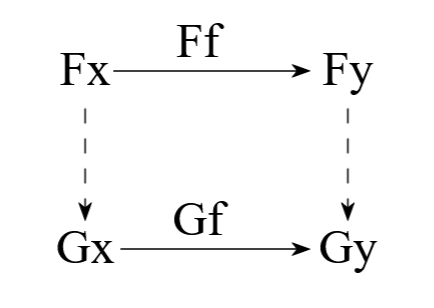
Why natural transformations?
This post is aimed primarily at people who know what a category is in the extremely broad strokes, but aren't otherwise familiar or comfortable with category theory. One of mathematicians' favourite activities is to describe compatibility between the structures of mathematical artefacts. Functions translate the structure of one set to another, continuous functions do the same for topological spaces, and so on... Many among these "translations" have the nice property that their character is preserved by composition. At some point, it seems that some mathematicians noticed that they: 1. kept defining intuitively similar properties for these different structures 2. had wayyyyyy too much time on their hands So they generalised this concept into a unified theory. Categories consist of objects m
Blazor WASM's Deputy Thread Model Will Break JavaScript Interop - Here's Why That Matters
<h2> The Problem </h2> <p>Microsoft is changing how .NET runs inside WebAssembly. When you enable threading with <code><WasmEnableThreads>true</WasmEnableThreads></code>, the entire .NET runtime moves off the browser's main thread and onto a background Web Worker — what they call the <strong>"Deputy Thread" model</strong>.</p> <p>This sounds like a good idea on paper. The UI stays responsive. .NET gets real threads. Everyone wins.</p> <p>Except it breaks JavaScript interop. Not in a subtle, edge-case way. It breaks it <em>fundamentally</em>.</p> <h2> What Actually Happens </h2> <p>In traditional Blazor WASM (no threading), .NET and JavaScript share the same thread. When JavaScript calls <code>DotNet.invokeMethod</code>, the CPU jumps from the JS stack to the C# stack and back. It's fast. I
The Wrong Way to Use AI for Debugging (And the Mental Model That Actually Works)
<p>Same AI tool. Same codebase access. Same staging incident. Three experienced engineers spent hours and couldn't find the root cause. I found it in about 20 minutes — and I barely knew what half the tools did.</p> <p>This isn't a story about juniors being better than seniors. It's about a mental model for AI collaboration that anyone can use — and why the "obvious" way most people use AI actually holds them back.</p> <h2> The Incident </h2> <p>A message hits the team Slack channel:</p> <blockquote> <p>"Staging is broken. We're investigating."</p> </blockquote> <p>The error:<br> </p> <div class="highlight js-code-highlight"> <pre class="highlight plaintext"><code>alembic current ERROR: Can't locate revision identified by 'ba29cdc8739d' FAILED: Can't locate revision identified by 'ba29cdc8
Setting Up a Production-Ready Laravel Stack: Nginx, PHP 8.4, MySQL, Valkey & Supervisor
<p>A Laravel application running on your local machine with <code>php artisan serve</code> and a SQLite database is a fundamentally different beast from a Laravel application serving thousands of requests per minute in production. The gap between development and production is not just about code. It is about infrastructure: a properly tuned web server, an optimized PHP runtime, a robust database engine, a fast cache layer, and a process manager that keeps your queue workers alive.</p> <p>Building this stack manually is a rite of passage for many developers, but it is also a minefield of configuration mistakes, security oversights, and wasted hours. Deploynix provisions this entire stack automatically when you create an App Server, configured with production-grade defaults that reflect year
Discussion
Sign in to join the discussion
No comments yet — be the first to share your thoughts!