

Multi-Agent Memory from a Computer Architecture Perspective: Visions and Challenges Ahead
arXiv:2603.10062v2 Announce Type: replace-cross Abstract: As LLM agents evolve into collaborative multi-agent systems, their memory requirements grow rapidly in complexity. This position paper frames multi-agent memory as a computer architecture problem. We distinguish shared and distributed memory paradigms, propose a three-layer memory hierarchy (I/O, cache, and memory), and identify two critical protocol gaps: cache sharing across agents and structured memory access control. We argue that the most pressing open challenge is multi-agent memory consistency. Our architectural framing provides a foundation for building reliable, scalable multi-agent systems.
View PDF HTML (experimental)
Abstract:As LLM agents evolve into collaborative multi-agent systems, their memory requirements grow rapidly in complexity. This position paper frames multi-agent memory as a computer architecture problem. We distinguish shared and distributed memory paradigms, propose a three-layer memory hierarchy (I/O, cache, and memory), and identify two critical protocol gaps: cache sharing across agents and structured memory access control. We argue that the most pressing open challenge is multi-agent memory consistency. Our architectural framing provides a foundation for building reliable, scalable multi-agent systems.
Subjects:
Hardware Architecture (cs.AR); Artificial Intelligence (cs.AI); Multiagent Systems (cs.MA)
Cite as: arXiv:2603.10062 [cs.AR]
(or arXiv:2603.10062v2 [cs.AR] for this version)
https://doi.org/10.48550/arXiv.2603.10062
arXiv-issued DOI via DataCite
Submission history
From: Zhongming Yu [view email] [v1] Mon, 9 Mar 2026 21:16:12 UTC (2,243 KB) [v2] Mon, 30 Mar 2026 22:50:29 UTC (2,243 KB)
Sign in to highlight and annotate this article

Conversation starters
Daily AI Digest
Get the top 5 AI stories delivered to your inbox every morning.
More about
announceperspectiveagent
Unlocking the Potential of Prompt-Tuning in Federated Learning
A new paper from Vector Faculty Member Xiaoxiao Li presents a new approach combining generalized and personalized learning into an efficient system capable of handling data heterogeneity. Called shared and [ ] The post Unlocking the Potential of Prompt-Tuning in Federated Learning appeared first on Vector Institute for Artificial Intelligence .

Vector researchers presenting more than 98 papers at NeurIPS 2024
Leading researchers from Vector are presenting groundbreaking research at this year s Conference on Neural Information Processing Systems (NeurIPS). The conference, taking place December 10-15 in Vancouver and online, showcases innovative [ ] The post Vector researchers presenting more than 98 papers at NeurIPS 2024 appeared first on Vector Institute for Artificial Intelligence .

OpenAI’s gigantic new funding round renews fears about the company’s profitability and cash burn
Welcome to AI Decoded , Fast Company ’s weekly newsletter that breaks down the most important news in the world of AI. I’m Mark Sullivan, a senior writer at Fast Company, covering emerging tech, AI, and tech policy. This week, I’m focusing on OpenAI’s gigantic new funding round and valuation. I also look at a recent leak around Anthropic’s models, and at backlash to ads placed in GitHub Copilot. Sign up to receive this newsletter every week via email here . And if you have comments on this issue and/or ideas for future ones, drop me a line at [email protected], and follow me on X (formerly Twitter) @thesullivan . OpenAI closes $122 billion funding round at $852 billion valuation OpenAI has closed what may be the largest private funding round ever, raising $122 billion (well more tha
Knowledge Map
Connected Articles — Knowledge Graph
This article is connected to other articles through shared AI topics and tags.
More in Releases


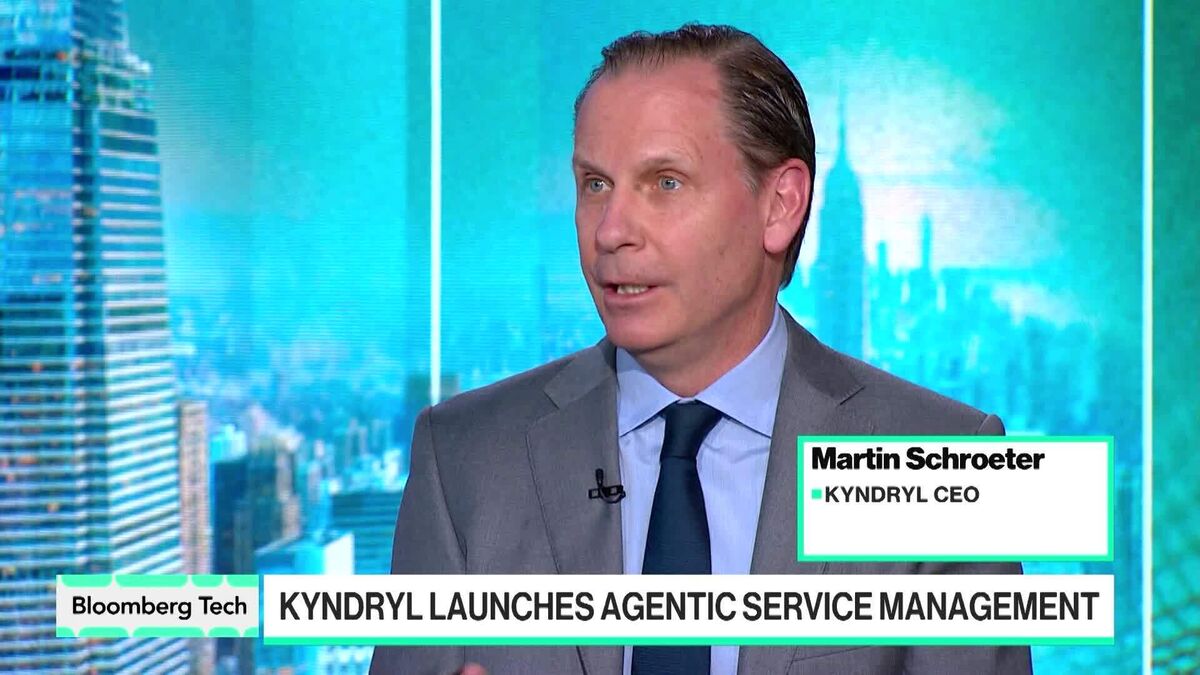
AI Needs to Be Controlled Properly: Kyndryl CEO
Kyndryl is launching a new service to help companies manage AI agents and get better returns from their investment on the tech. Kyndryl CEO Martin Schroeter joins Tim Stenovec on “Bloomberg Tech.” (Source: Bloomberg)
AI Needs to Be Controlled Properly: Kyndryl CEO
Kyndryl is launching a new service to help companies manage AI agents and get better returns from their investment on the tech. Kyndryl CEO Martin Schroeter joins Tim Stenovec on “Bloomberg Tech.” (Source: Bloomberg)
Discussion
Sign in to join the discussion
No comments yet — be the first to share your thoughts!