

Y Combinator’s CEO says he ships 37,000 lines of AI code per day. A developer looked under the hood
We love a good old social media roast, and Y Combinator CEO Garry Tan found himself on the business end of a doozie Wednesday. Tan, who in a past life worked as an engineering manager at Palantir and has more recently been a vocal proponent for AI acceleration, bragged that he and his AI coding agents have been deploying 37,000 lines of code per day across five separate projects. “Absolutely insane week for agentic engineering,” Tan wrote in an X post on Monday, adding in a follow-up post that he was on a 72-day shipping streak. Absolutely insane week for agentic engineering 37K LOC per day across 5 projects Still speeding up pic.twitter.com/VR3utsduYx Garry Tan (@garrytan) March 30, 2026 Two days later, a Polish game developer and senior software engineer who goes by the username Gregorei
We love a good ol’ social media roast, and Y Combinator CEO Garry Tan found himself on the business end of a doozie Wednesday.
Tan, who in a past life worked as an engineering manager at Palantir and has more recently been a vocal proponent for AI acceleration, bragged that he and his AI coding agents have been deploying 37,000 lines of code per day across five separate projects. “Absolutely insane week for agentic engineering,” Tan wrote in an X post on Monday, adding in a follow-up post that he was on a 72-day shipping streak.
Two days later, a Polish game developer and senior software engineer who goes by the username Gregorein decided to have a closer look at the actual results of all that shipping and took a peek at Tan’s AI-focused blog. “Here’s what 78,400 lines of AI slop code actually looks like in production,” Gregorein wrote on X.
Gregorein–who has an MSc in Computer Science, a Polish engineering title, and 13 years in the industry–found numerous examples of bloat and inefficiencies in Tan’s site code, and used a single (Anthropic) Claude session to review the files he downloaded from the website to confirm his observations, which are these:
-
Tan/AI built the website so that when a user visits, their browser makes 169 server requests for various assets totaling 6.42 megabytes in size. For comparison, the minimalist Hacker News homepage (also run by Y Combinator) makes seven requests for data totaling just 12 kilobytes.
-
The website ships 28 actual test files (code developers use to reality-check their work) straight to every visitor’s browser. That’s 300 kilobytes of pure developer scaffolding that users never asked for.
-
It loads 78 different JavaScript controllers for features like AI image generation, voice extraction, video tools, etc., none of which appear on the homepage. The browser still has to download all of them “just in case.”
-
The site’s logo is an illustration of a bear. The site downloads the logo in eight different formats, including a completely empty 0-byte file that somehow made it to production, Gregorein found.
-
The website uses huge, uncompressed old-school PNGs (some nearly 2 megabytes each), even though the browser literally asks for modern tiny formats. Two images alone waste about 4 MB; with newer formats they could have been just 300KB.
-
Gregorein also found duplicate page content, an empty CSS (Cascading Style Sheets) file, a huge rich-text editor loaded on a read-only page, missing image descriptions, and analytics code that deliberately routes through a proxy to dodge people’s ad blockers (with a comment in the code admitting it), Gregorein reports.
-
Gregorein notes that his review included only the front-end code viewable in the browser, not the back-end and database code. Even without touching the back end, the public-facing output (the website user experience) makes it clear that Tan’s website is full of obvious bloat, waste, and rookie mistakes.
The larger point is that while AI coding tools make it easy to pump out lots of code, it’s really (still) the quality of the code that matters. Quantity, in other words, doesn’t necessarily equal quality. Sure, non-coders can use plain language to direct an AI tool to quickly build websites or apps or new features, but if that code goes into production without proper scrutiny and testing, it can cause obvious functional failures, create security vulnerabilities, or introduce issues that surface later and force engineers to track down and fix the underlying code.
“Just following the math from Garry’s own screenshot: each (code) commit can be roughly estimated at 2K lines added and 450 removed,” Gregorein says in a DM to Fast Company Thursday. When individual commits change that much, quality tends to degrade exponentially, he says, and each generation requires more and more rewriting to stablize the build.
“Right now we’re in a moment where AI lets you generate code faster than any human can review it, and the answer from people like Garry seems to be ‘so stop reviewing’,” Gregorein says. “It does sound like Facebook’s ‘move fast and break things’, which didn’t age well either.”
Sign in to highlight and annotate this article

Conversation starters
Daily AI Digest
Get the top 5 AI stories delivered to your inbox every morning.
More about
productcompanyfeature
According to Microsoft Copilot Terms of Use, updated in Oct. 2025, "Copilot is for entertainment purposes only" and "Don t rely on Copilot for important advice" (Jowi Morales/Tom s Hardware)
Jowi Morales / Tom's Hardware : According to Microsoft Copilot Terms of Use, updated in Oct. 2025, Copilot is for entertainment purposes only and Don't rely on Copilot for important advice These might be boilerplate disclaimers, but they kind of contradict the company's ads and marketing.

Inside The Second International AI Safety Report with Writers Stephen Clare and Stephen Casper - AI Policy Podcast - CSIS | Center for Strategic and International Studies
Inside The Second International AI Safety Report with Writers Stephen Clare and Stephen Casper - AI Policy Podcast CSIS | Center for Strategic and International Studies
Knowledge Map
Connected Articles — Knowledge Graph
This article is connected to other articles through shared AI topics and tags.
More in Products
According to Microsoft Copilot Terms of Use, updated in Oct. 2025, "Copilot is for entertainment purposes only" and "Don t rely on Copilot for important advice" (Jowi Morales/Tom s Hardware)
Jowi Morales / Tom's Hardware : According to Microsoft Copilot Terms of Use, updated in Oct. 2025, Copilot is for entertainment purposes only and Don't rely on Copilot for important advice These might be boilerplate disclaimers, but they kind of contradict the company's ads and marketing.

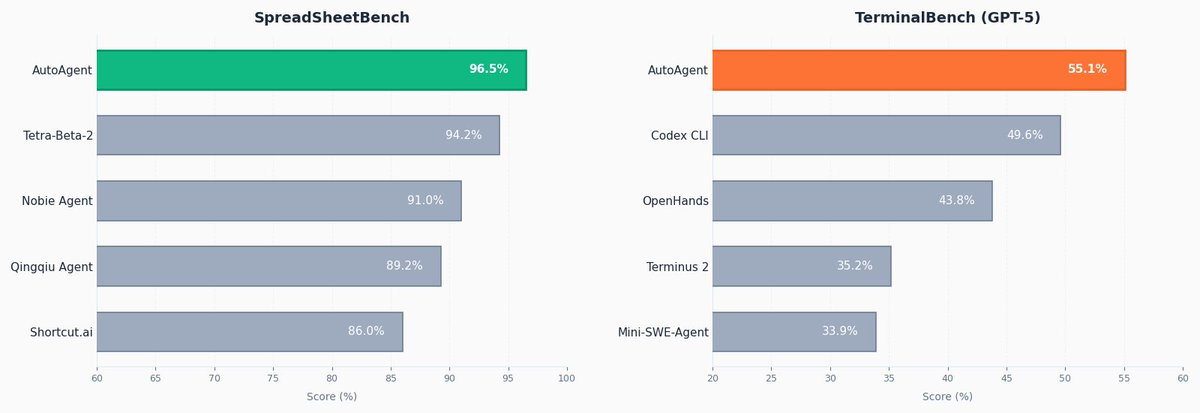
Meet AutoAgent : The Open-Source Library That Lets an AI Engineer and Optimize Its Own Agent Harness Overnight
There s a particular kind of tedium that every AI engineer knows intimately: the prompt-tuning loop. You write a system prompt, run your agent against a benchmark, read the failure traces, tweak the prompt, add a tool, rerun. Repeat this a few dozen times and you might move the needle. It s grunt work dressed up in [ ] The post Meet AutoAgent : The Open-Source Library That Lets an AI Engineer and Optimize Its Own Agent Harness Overnight appeared first on MarkTechPost .
Discussion
Sign in to join the discussion
No comments yet — be the first to share your thoughts!