
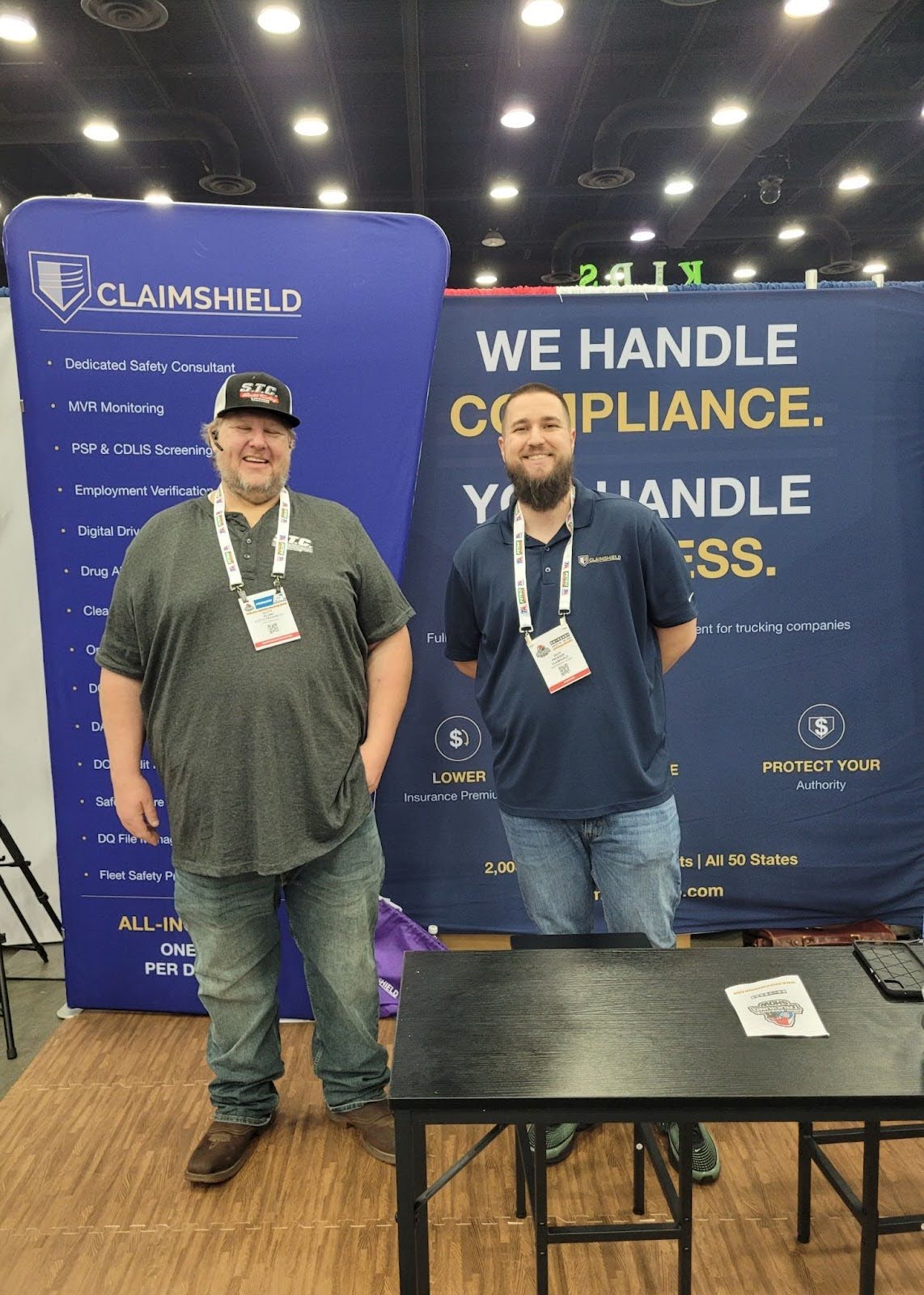
ClaimShield on the Evolving Role of Safety and Compliance in Supporting Small Carrier Success
ClaimShield, a safety and compliance solutions provider, aligns its work with the operational realities of these businesses by expanding access to structured, reliable compliance systems designed specifically for smaller fleets.
Small carriers account for a meaningful share of the U.S. trucking ecosystem. More than 90% of carriers operate with fewer than 20 trucks, forming the backbone of freight movement across regions and industries. Within this environment, ClaimShield, a safety and compliance solutions provider, aligns its work with the operational realities of these businesses by expanding access to structured, reliable compliance systems designed specifically for smaller fleets.
This focus becomes clearer when looking at the broader trucking landscape, which, according to ClaimShield, remains highly fragmented despite its central role in national logistics. The firm notes that scale varies from one operator to the next, yet the expectations placed on carriers, particularly around safety and compliance, remain largely uniform. Industry data shows that single-truck operators represent the largest segment of the market, underscoring just how decentralized the sector truly is.
ClaimShield frames its approach within this context. "Compliance tends to work the same way for everyone," says Gavin Robley, co-CEO of ClaimShield. "Whether a carrier runs a single truck or a larger fleet, each one still moves through the same safety, documentation, and oversight requirements. The scale may differ, but the expectations remain familiar across the board."
That consistency in expectations, however, does not mean the experience of meeting them is the same. According to ClaimShield, smaller carriers often face operational pressures because their teams manage so many responsibilities at once. A single day may involve dispatching loads, coordinating drivers, communicating with customers, and overseeing finances, leaving limited bandwidth for the administrative demands that accompany compliance. "As a result, compliance becomes one of many priorities competing for attention, even when carriers know it's important," Robley states.
ClaimShield also observes that regulatory requirements can add complexity, as rules shift across jurisdictions and evolve over time. Staying aligned with these expectations involves ongoing monitoring, documentation, and interpretation, areas that, in the company's view, often require time and expertise that smaller operators may not always have available.
As demands accumulate, ClaimShield notes that a recurring challenge can begin to surface for some carriers. Growth goals may encourage teams to strengthen their safety and compliance practices, yet building and maintaining those systems often requires resources that may already be stretched. This dynamic can make it harder to prioritize long-term improvements, even when the intention to do so is clear.
Over time, the company observes that gaps in documentation, monitoring, or training may develop if competing responsibilities take precedence. When this happens, carriers can experience added operational or financial strain, reinforcing the importance of having structured processes that support consistency as the business evolves.
These pressures are not merely administrative. Industry research shows that one in four auto accidents resulting in a nuclear verdict involves a commercial trucking company, with such verdicts defined as exceeding $10 million. ClaimShield believes that these outcomes contribute to rising insurance pressures and broader economic effects, as commercial auto liability costs have generally trended upward. The firm emphasizes that in this context, compliance becomes more than a regulatory requirement; it becomes a mechanism that supports financial resilience and risk mitigation.
Co-CEO Zach Dugger connects this to a larger industry narrative. He says, "Safety has a way of influencing outcomes far beyond the immediate moment. Over time, it contributes to how a company is perceived, how it operates, and how it sustains itself." His insight illustrates how safety practices integrate into the broader lifecycle of a business, shaping internal culture, external relationships, and long-term stability.
Amid this landscape, ClaimShield positions itself as an enabler of access. Its approach centers on extending enterprise-level compliance capabilities to smaller carriers through a combination of technology and dedicated advisory support. The company's process begins with a comprehensive intake of data and documentation, allowing for a detailed assessment of a carrier's current compliance posture. From there, structured systems are introduced to address gaps, establish processes, and create a foundation that supports ongoing adherence to regulatory requirements.
This emphasis on continuity distinguishes the model. "We treat compliance as an ongoing system rather than a series of isolated tasks," Dugger remarks. Real-time monitoring of driver records, proactive alerts, and structured training programs tailored to the trucking environment help carriers maintain alignment. Digital modules provide consistent learning opportunities, while corrective training addresses specific incidents or violations. According to the leadership team, each carrier is supported by a dedicated consultant, enabling continuity in communication and a deeper understanding of operational nuances.
That foundation sets the stage for addressing another persistent challenge: the variability of regulatory requirements across jurisdictions. Requirements may shift across states or evolve through policy updates, creating an environment where staying informed becomes an ongoing responsibility. ClaimShield incorporates this dimension into its model by continuously updating its systems and processes, allowing carriers to remain aligned without dedicating additional internal resources to monitoring changes.
This approach reflects a broader philosophy centered on accessibility. While small carriers represent ClaimShield's current focus, its underlying objective extends beyond a single segment. The emphasis remains on addressing areas where structured compliance support can create meaningful operational clarity, regardless of fleet size. By focusing on an underserved portion of the market, ClaimShield aims to contribute to a more inclusive framework where safety and compliance resources are more evenly distributed.
International Business Times
https://www.ibtimes.com/claimshield-evolving-role-safety-compliance-supporting-small-carrier-success-3800624Sign in to highlight and annotate this article

Conversation starters
Daily AI Digest
Get the top 5 AI stories delivered to your inbox every morning.
More about
compliancesafety

Amazon Bedrock Guardrails supports cross-account safeguards with centralized control and management
Organizational safeguards are now generally available in Amazon Bedrock Guardrails, enabling centralized enforcement and management of safety controls across multiple AWS accounts within an AWS Organization.

MCP Observability: Logging, Auditing, and Debugging Agent-Server Interactions in Production
Your agent ran overnight. One workflow failed halfway through. Three tool calls completed successfully. Two didn't. You're not sure in which order. What do you actually have to debug with? For most MCP setups, the honest answer is: not much. Server logs are sparse. Client-side tracing is application-specific. Audit trails are nonexistent. And because MCP interactions happen through a protocol layer, standard API debugging tools don't apply cleanly. This is the observability gap in production MCP deployments — and it compounds as you scale to multi-agent, multi-server architectures. Why MCP Observability Is Different Standard API observability is a solved problem. You instrument the HTTP layer, capture request/response pairs, export to your logging stack, and query when things go wrong. MCP
Knowledge Map
Connected Articles — Knowledge Graph
This article is connected to other articles through shared AI topics and tags.
More in Laws & Regulation

The FAA’s “Temporary” Flight Restriction for Drones is a Blatant Attempt to Criminalize Filming ICE
Legal intern Raj Gambhir was the principal author of this post. The Trump administration has restricted the First Amendment right to record law enforcement by issuing an unprecedented nationwide flight restriction preventing private drone operators, including professional and citizen journalists, from flying drones within half a mile of any ICE or CBP vehicle. In January, EFF and media organizations including The New York Times and The Washington Post responded to this blatant infringement of the First Amendment by demanding that the FAA lift this flight restriction . Over two months later, we’re still waiting for the FAA to respond to our letter. The First Amendment guarantees the right to record law enforcement. As we have seen with the extrajudicial killings of George Floyd , Renée Good
Discussion
Sign in to join the discussion
No comments yet — be the first to share your thoughts!