

AutoPK: Leveraging LLMs and a Hybrid Similarity Metric for Advanced Retrieval of Pharmacokinetic Data from Complex Tables and Documents
arXiv:2510.00039v2 Announce Type: replace Abstract: Pharmacokinetics (PK) plays a critical role in drug development and regulatory decision-making for human and veterinary medicine, directly affecting public health through drug safety and efficacy assessments. However, PK data are often embedded in complex, heterogeneous tables with variable structures and inconsistent terminologies, posing significant challenges for automated PK data retrieval and standardization. AutoPK, a novel two-stage framework for accurate and scalable extraction of PK data from complex scientific tables. In the first stage, AutoPK identifies and extracts PK parameter variants using large language models (LLMs), a hybrid similarity metric, and LLM-based validation. The second stage filters relevant rows, converts th
View PDF HTML (experimental)
Abstract:Pharmacokinetics (PK) plays a critical role in drug development and regulatory decision-making for human and veterinary medicine, directly affecting public health through drug safety and efficacy assessments. However, PK data are often embedded in complex, heterogeneous tables with variable structures and inconsistent terminologies, posing significant challenges for automated PK data retrieval and standardization. AutoPK, a novel two-stage framework for accurate and scalable extraction of PK data from complex scientific tables. In the first stage, AutoPK identifies and extracts PK parameter variants using large language models (LLMs), a hybrid similarity metric, and LLM-based validation. The second stage filters relevant rows, converts the table into a key-value text format, and uses an LLM to reconstruct a standardized table. Evaluated on a real-world dataset of 605 PK tables, including captions and footnotes, AutoPK shows significant improvements in precision and recall over direct LLM baselines. For instance, AutoPK with LLaMA 3.1-70B achieved an F1-score of 0.92 on half-life and 0.91 on clearance parameters, outperforming direct use of LLaMA 3.1-70B by margins of 0.10 and 0.21, respectively. Smaller models such as Gemma 3-27B and Phi 3-12B with AutoPK achieved 2-7 fold F1 gains over their direct use, with Gemma's hallucination rates reduced from 60-95% down to 8-14%. Notably, AutoPK enabled open-source models like Gemma 3-27B to outperform commercial systems such as GPT-4o Mini on several PK parameters. AutoPK enables scalable and high-confidence PK data extraction, making it well-suited for critical applications in veterinary pharmacology, drug safety monitoring, and public health decision-making, while addressing heterogeneous table structures and terminology and demonstrating generalizability across key PK parameters. Code and data: this https URL
Comments: Published in IEEE ICTAI 2025
Subjects:
Databases (cs.DB); Artificial Intelligence (cs.AI); Information Retrieval (cs.IR)
Cite as: arXiv:2510.00039 [cs.DB]
(or arXiv:2510.00039v2 [cs.DB] for this version)
https://doi.org/10.48550/arXiv.2510.00039
arXiv-issued DOI via DataCite
Submission history
From: Hossein Sholehrasa [view email] [v1] Fri, 26 Sep 2025 22:05:32 UTC (709 KB) [v2] Thu, 2 Apr 2026 17:48:52 UTC (706 KB)
Sign in to highlight and annotate this article

Conversation starters
Daily AI Digest
Get the top 5 AI stories delivered to your inbox every morning.
More about
llamamodellanguage model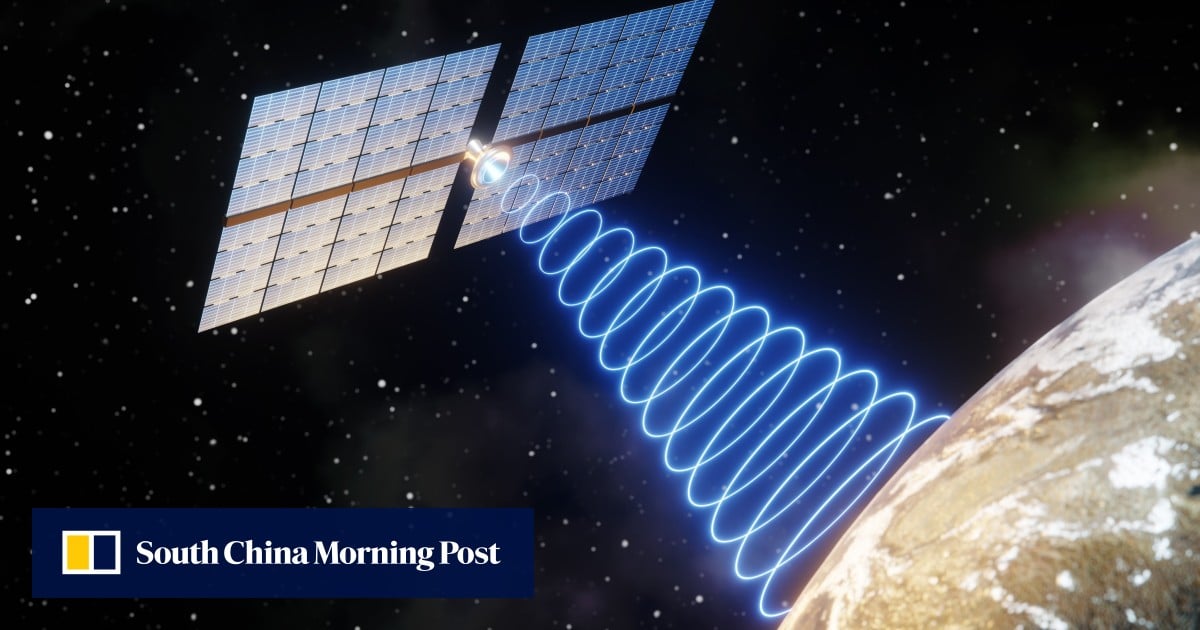
China reveals military capabilities in new space solar power plant design
A senior Chinese scientist has outlined the potential military applications of space-based solar power technology, offering a rare glimpse into how energy beamed from orbit could also support surveillance and electronic warfare. Duan Baoyan, a leading architect of China’s “Zhuri” space solar power initiative, wrote in a paper published in Scientia Sinica Informationis last month, that his team had revamped the design of the giant orbital infrastructure. In addition to energy transmission, the...

Knowledge Map
Connected Articles — Knowledge Graph
This article is connected to other articles through shared AI topics and tags.
More in Models

I let Gemini in Google Maps plan my day and it went surprisingly well
You may be familiar with Gemini as the thing that's in every Google service you use - whether you want it or not. While it's been a constant, sometimes unwelcome presence in Gmail for at least the past year, it's a relatively new addition to Maps. And you know what? It's kind of great. To [ ]

Unlocking the Depths of Acting: A Journey Through Methodologies
Unlocking the Depths of Acting: A Journey Through Methodologies Acting is often perceived as a simple act of imitation or surface-level performance. Many believe that to act is merely to mimic emotions or behaviors seen in others. This misconception can lead to a shallow understanding of what it truly means to embody a character. However, effective acting training relies on structured methodologies that delve far beyond the superficial. It is through these techniques that actors cultivate a character's inner truth and external behavior, transforming mere performance into a profound art form. The Misconceptions of Acting Before we dive into the methodologies, it’s essential to address common misconceptions surrounding the craft: Acting is Just Mimicry : Many assume that acting is merely abo
Discussion
Sign in to join the discussion
No comments yet — be the first to share your thoughts!