
TGIF2: Extended Text-Guided Inpainting Forgery Dataset & Benchmark
arXiv:2603.28613v1 Announce Type: cross Abstract: Generative AI has made text-guided inpainting a powerful image editing tool, but at the same time a growing challenge for media forensics. Existing benchmarks, including our text-guided inpainting forgery (TGIF) dataset, show that image forgery localization (IFL) methods can localize manipulations in spliced images but struggle not in fully regenerated (FR) images, while synthetic image detection (SID) methods can detect fully regenerated images but cannot perform localization. With new generative inpainting models emerging and the open problem — Hannes Mareen, Dimitrios Karageorgiou, Paschalis Giakoumoglou, Peter Lambert, Symeon Papadopoulos, Glenn Van Wallendael
View PDF HTML (experimental)
Abstract:Generative AI has made text-guided inpainting a powerful image editing tool, but at the same time a growing challenge for media forensics. Existing benchmarks, including our text-guided inpainting forgery (TGIF) dataset, show that image forgery localization (IFL) methods can localize manipulations in spliced images but struggle not in fully regenerated (FR) images, while synthetic image detection (SID) methods can detect fully regenerated images but cannot perform localization. With new generative inpainting models emerging and the open problem of localization in FR images remaining, updated datasets and benchmarks are needed. We introduce TGIF2, an extended version of TGIF, that captures recent advances in text-guided inpainting and enables a deeper analysis of forensic robustness. TGIF2 augments the original dataset with edits generated by FLUX.1 models, as well as with random non-semantic masks. Using the TGIF2 dataset, we conduct a forensic evaluation spanning IFL and SID, including fine-tuning IFL methods on FR images and generative super-resolution attacks. Our experiments show that both IFL and SID methods degrade on FLUX.1 manipulations, highlighting limited generalization. Additionally, while fine-tuning improves localization on FR images, evaluation with random non-semantic masks reveals object bias. Furthermore, generative super-resolution significantly weakens forensic traces, demonstrating that common image enhancement operations can undermine current forensic pipelines. In summary, TGIF2 provides an updated dataset and benchmark, which enables new insights into the challenges posed by modern inpainting and AI-based image enhancements. TGIF2 is available at this https URL.
Comments: 33 pages, accepted at Journal on Information Security
Subjects:
Computer Vision and Pattern Recognition (cs.CV); Artificial Intelligence (cs.AI); Cryptography and Security (cs.CR); Multimedia (cs.MM)
Cite as: arXiv:2603.28613 [cs.CV]
(or arXiv:2603.28613v1 [cs.CV] for this version)
https://doi.org/10.48550/arXiv.2603.28613
arXiv-issued DOI via DataCite (pending registration)
Submission history
From: Hannes Mareen PhD [view email] [v1] Mon, 30 Mar 2026 15:59:16 UTC (8,157 KB)
Sign in to highlight and annotate this article

Conversation starters
Daily AI Digest
Get the top 5 AI stories delivered to your inbox every morning.
More about
researchpaperarxiv
HIVE 3.0: IIT Mandi TIH Debuts MI-RA Research Lab to Drive India’s Multimodal AI Future - CXOToday.com
<a href="https://news.google.com/rss/articles/CBMivwFBVV95cUxOakRHMlNiS0VSTlVxeHpPaWZpNHdQMmJwb2VEV09naU1UX3A5ekp0dDRrdWE0ZHA1TnZtUkxUVDFfWGZiV21teGVJMGRMNFFwU08yeGkyLTN3QjhQbkNIY0Y3NHZaenBuY0cyWDF5SEV6eW1qVWRjcnJtMmt6cEtTekhXTkFhb1daZDMzbnJrVFRXU3RTZGpqZXBkMkJ0SzIzNWg3WldpMUFtQ0lhRGY5aG9JMTdPYS1NUFp0Z0ZGZw?oc=5" target="_blank">HIVE 3.0: IIT Mandi TIH Debuts MI-RA Research Lab to Drive India’s Multimodal AI Future</a> <font color="#6f6f6f">CXOToday.com</font>
IIT Mandi Advances Multimodal AI Research - BW Education
<a href="https://news.google.com/rss/articles/CBMijAFBVV95cUxOU0s3Rm5WNFRzb2JPRjcwUFRNRXZQV3RDM2RHR1pwN3NhTm1RTEhEdWtXMVdvWGdzdldhTzRmV2UyUXBhbENwSGR4S2hzOV9lRWcyS3dPOVhLT3VzR0FrdFg2M19Sc0tJNTR5LURQdzlkVzRHa1FDRjBPUHpZN2N3emVjMTFFMHhGRmdCTA?oc=5" target="_blank">IIT Mandi Advances Multimodal AI Research</a> <font color="#6f6f6f">BW Education</font>

Losito named IBM Italia general manager - Telecompaper
<a href="https://news.google.com/rss/articles/CBMiigFBVV95cUxNRTQ0RzVrcHJsVXo0THF3UllROGwyam1FNl9RWlV2dzJFRGtGMktoTGlYVUR5dU1WX1JSTkExQlNSVEFSWktVQVJSazFUUTJyV2tadUlraVlGM3M3WHNZNFNodm5DeVBvTXFkaDNkNXJ4SzF0RnphNGxOYlFGaFRtR241R2M0NFhUakE?oc=5" target="_blank">Losito named IBM Italia general manager</a> <font color="#6f6f6f">Telecompaper</font>
Knowledge Map
Connected Articles — Knowledge Graph
This article is connected to other articles through shared AI topics and tags.
More in Research Papers
Losito named IBM Italia general manager - Telecompaper
<a href="https://news.google.com/rss/articles/CBMiigFBVV95cUxNRTQ0RzVrcHJsVXo0THF3UllROGwyam1FNl9RWlV2dzJFRGtGMktoTGlYVUR5dU1WX1JSTkExQlNSVEFSWktVQVJSazFUUTJyV2tadUlraVlGM3M3WHNZNFNodm5DeVBvTXFkaDNkNXJ4SzF0RnphNGxOYlFGaFRtR241R2M0NFhUakE?oc=5" target="_blank">Losito named IBM Italia general manager</a> <font color="#6f6f6f">Telecompaper</font>
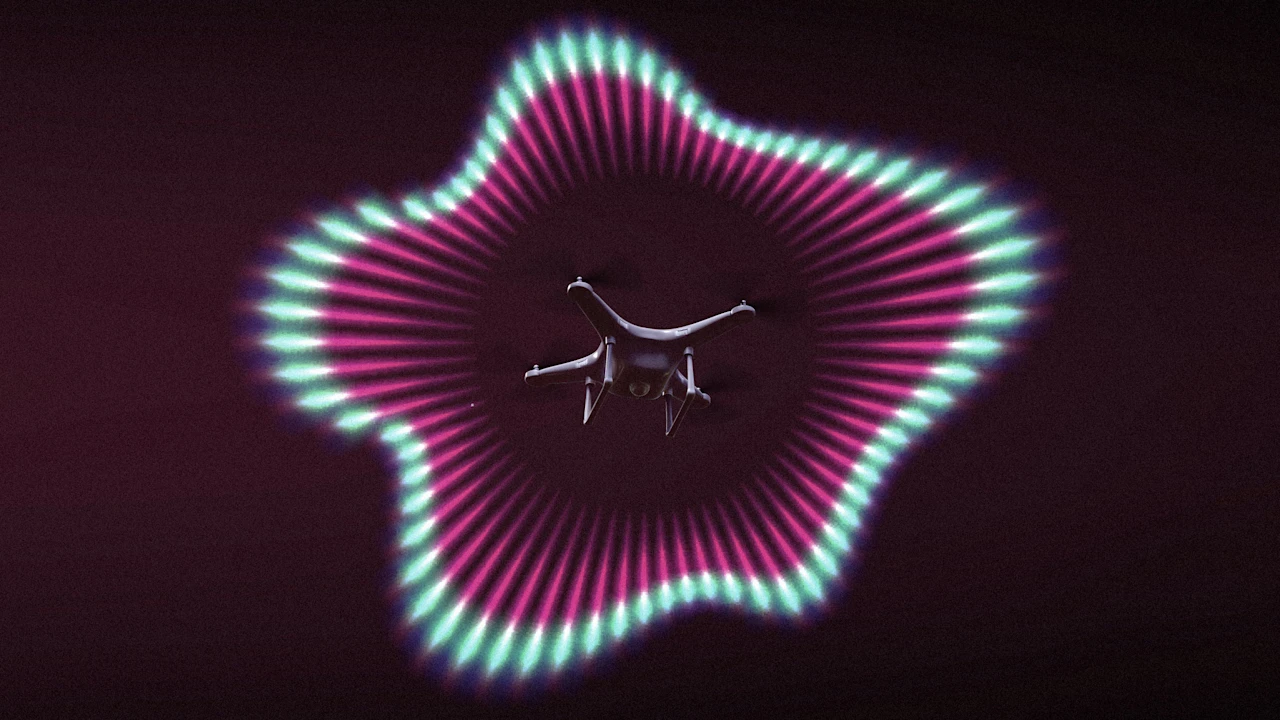
How AI-powered echolocation is giving small drones night vision
To help small aerial robots navigate in the dark and other low-visibility environments, my colleagues and I developed an ultrasound-based perception system inspired by bat echolocation. Current robots rely heavily on cameras or light detection and ranging , known as lidar, or both. But these sensors fail in visually challenging conditions, such as smoke, fog, dust, snow, or complete darkness. I’m a scientific engineer who develops bio-inspired microrobots. To solve this challenge, my research team looked at nature’s experts at navigating in poor visibility: bats. They thrive in dark, damp, and dusty caves and can detect obstacles as thin as a human hair using echolocation while weighing as little as two paper clips. They emit sound waves and listen to weak echoes reflected from objects. Ho

"You've got a friend in me": Co-Designing a Peer Social Robot for Young Newcomers' Language and Cultural Learning
arXiv:2603.18804v3 Announce Type: replace-cross Abstract: Community literacy programs supporting young newcomer children in Canada face limited staffing and scarce one-to-one time, which constrains personalized English and cultural learning support. This paper reports on a co-design study with United for Literacy tutors that informed Maple, a table-top, peer-like Socially Assistive Robot (SAR) designed as a practice partner within tutor-mediated sessions. From shadowing and co-design interviews, we derived newcomer-specific requirements and added them in an integrated prototype that uses short story-based activities, multi-modal scaffolding and embedded quizzes that support attention while producing tutor-actionable formative signals. We contribute system design implications for tutor-in-t
Exploring Sidewalk Sheds in New York City through Chatbot Surveys and Human Computer Interaction
arXiv:2601.23095v2 Announce Type: replace Abstract: Sidewalk sheds are a common feature of the streetscape in New York City, reflecting ongoing construction and maintenance activities. However, policymakers and local business owners have raised concerns about reduced storefront visibility and altered pedestrian navigation. Although sidewalk sheds are widely used for safety, their effects on pedestrian visibility and movement are not directly measured in current planning practices. To address this, we developed an AI-based chatbot survey that collects image-based annotations and route choices from pedestrians, linking these responses to specific shed design features, including clearance height, post spacing, and color. This AI chatbot survey integrates a large language model (e.g., Google's
Discussion
Sign in to join the discussion
No comments yet — be the first to share your thoughts!