
\textit{Versteasch du mi?} Computational and Socio-Linguistic Perspectives on GenAI, LLMs, and Non-Standard Language
arXiv:2603.28213v1 Announce Type: new Abstract: The design of Large Language Models and generative artificial intelligence has been shown to be "unfair" to less-spoken languages and to deepen the digital language divide. Critical sociolinguistic work has also argued that these technologies are not only made possible by prior socio-historical processes of linguistic standardisation, often grounded in European nationalist and colonial projects, but also exacerbate epistemologies of language as "monolithic, monolingual, syntactically standardized systems of meaning". In our paper, we draw on earl — Verena Platzgummer, John McCrae, Sina Ahmadi
View PDF HTML (experimental)
Abstract:The design of Large Language Models and generative artificial intelligence has been shown to be "unfair" to less-spoken languages and to deepen the digital language divide. Critical sociolinguistic work has also argued that these technologies are not only made possible by prior socio-historical processes of linguistic standardisation, often grounded in European nationalist and colonial projects, but also exacerbate epistemologies of language as "monolithic, monolingual, syntactically standardized systems of meaning". In our paper, we draw on earlier work on the intersections of technology and language policy and bring our respective expertise in critical sociolinguistics and computational linguistics to bear on an interrogation of these arguments. We take two different complexes of non-standard linguistic varieties in our respective repertoires--South Tyrolean dialects, which are widely used in informal communication in South Tyrol, Italy, as well as varieties of Kurdish--as starting points to an interdisciplinary exploration of the intersections between GenAI and linguistic variation and standardisation. We discuss both how LLMs can be made to deal with nonstandard language from a technical perspective, and whether, when or how this can contribute to "democratic and decolonial digital and machine learning strategies", which has direct policy implications.
Subjects:
Computation and Language (cs.CL)
Cite as: arXiv:2603.28213 [cs.CL]
(or arXiv:2603.28213v1 [cs.CL] for this version)
https://doi.org/10.48550/arXiv.2603.28213
arXiv-issued DOI via DataCite (pending registration)
Submission history
From: Sina Ahmadi [view email] [v1] Mon, 30 Mar 2026 09:34:41 UTC (57 KB)
Sign in to highlight and annotate this article

Conversation starters
Daily AI Digest
Get the top 5 AI stories delivered to your inbox every morning.
More about
researchpaperarxiv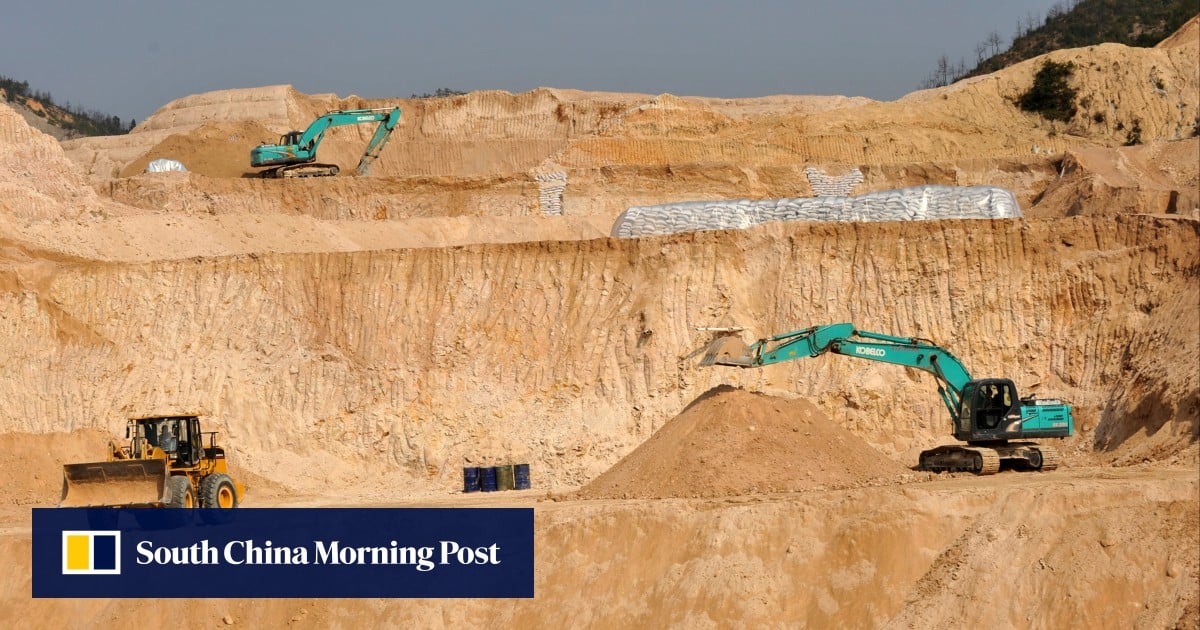
Europe urged to ‘learn to fight for itself’ in case US-China truce collapses
European governments breathed a sigh of relief in October when the US and China sealed a fragile trade truce that paused more sweeping Chinese rare earth restrictions and papered over a Sino-Dutch row over chipmaker Nexperia. Now, however, the European Union is being urged to come up with a battle plan should the ceasefire fail or expire. A spike in superpower tensions could expose the EU to Chinese export controls, potentially pulverising its military support for Ukraine, its own efforts to...
![[D] TurboQuant author replies on OpenReview](https://images.unsplash.com/photo-1504711434969-e33886168f5c?w=600&q=80)
[D] TurboQuant author replies on OpenReview
<!-- SC_OFF --><div class="md"><p>I wanted to follow up to <a href="https://www.reddit.com/r/MachineLearning/comments/1s7m7rn/comment/odaect4/?utm_source=share&utm_medium=web3x&utm_name=web3xcss&utm_term=1&utm_content=share_button">yesterday's thread</a> and see if anyone wanted to weigh in on it. This work is far outside of my niche, but it strikes me as an attempt to reframe the issue instead of addressing concerns head on. </p> <p>OpenReview link for reference: <a href="https://openreview.net/forum?id=tO3ASKZlok">https://openreview.net/forum?id=tO3ASKZlok</a></p> <blockquote> <p>In response to recent commentary regarding our paper, "TurboQuant," we provide the following technical clarifications to correct the record.</p> <p>TurboQuant did not derive its core method from

Five CMU Faculty Members Named 2026 Sloan Research Fellows
<p> <img loading="lazy" src="https://www.cmu.edu/news/sites/default/files/styles/listings_desktop_1x_/public/2026-02/sloan-collage-2000%20copy.jpg.webp?itok=Ih-KH3Na" width="900" height="508" alt="2026 Sloan Awardees"> </p> Five Carnegie Mellon University faculty members are among the 126 recipients of 2026 Sloan Research Fellowships, which honor early career scholars whose achievements put them among the best scientific minds working today.
Knowledge Map
Connected Articles — Knowledge Graph
This article is connected to other articles through shared AI topics and tags.
More in Research Papers
[D] TurboQuant author replies on OpenReview
<!-- SC_OFF --><div class="md"><p>I wanted to follow up to <a href="https://www.reddit.com/r/MachineLearning/comments/1s7m7rn/comment/odaect4/?utm_source=share&utm_medium=web3x&utm_name=web3xcss&utm_term=1&utm_content=share_button">yesterday's thread</a> and see if anyone wanted to weigh in on it. This work is far outside of my niche, but it strikes me as an attempt to reframe the issue instead of addressing concerns head on. </p> <p>OpenReview link for reference: <a href="https://openreview.net/forum?id=tO3ASKZlok">https://openreview.net/forum?id=tO3ASKZlok</a></p> <blockquote> <p>In response to recent commentary regarding our paper, "TurboQuant," we provide the following technical clarifications to correct the record.</p> <p>TurboQuant did not derive its core method from

Carnegie Mellon Researchers Rethink Chronic Pain
<p> <img loading="lazy" src="https://www.cmu.edu/news/sites/default/files/styles/listings_desktop_1x_/public/2026-02/260123D_WTM_Yttri_Lab_RD002.jpg.webp?itok=DozEPS-g" width="900" height="508" alt="Eric Yttri"> </p> Across neuroscience, biomedical engineering and artificial intelligence, researchers from Carnegie Mellon University are exploring how pain is measured, understood and treated to support safer, more effective care.
Five CMU Faculty Members Named 2026 Sloan Research Fellows
<p> <img loading="lazy" src="https://www.cmu.edu/news/sites/default/files/styles/listings_desktop_1x_/public/2026-02/sloan-collage-2000%20copy.jpg.webp?itok=Ih-KH3Na" width="900" height="508" alt="2026 Sloan Awardees"> </p> Five Carnegie Mellon University faculty members are among the 126 recipients of 2026 Sloan Research Fellowships, which honor early career scholars whose achievements put them among the best scientific minds working today.
Discussion
Sign in to join the discussion
No comments yet — be the first to share your thoughts!