
A Robust Low-Rank Prior Model for Structured Cartoon-Texture Image Decomposition with Heavy-Tailed Noise
arXiv:2603.27579v1 Announce Type: new Abstract: Cartoon-texture image decomposition is a fundamental yet challenging problem in image processing. A significant hurdle in achieving accurate decomposition is the pervasive presence of noise in the observed images, which severely impedes robust results. To address the challenging problem of cartoon-texture decomposition in the presence of heavy-tailed noise, we in this paper propose a robust low-rank prior model. Our approach departs from conventional models by adopting the Huber loss function as the data-fidelity term, rather than the traditional — Weihao Tang, Hongjin He
View PDF HTML (experimental)
Abstract:Cartoon-texture image decomposition is a fundamental yet challenging problem in image processing. A significant hurdle in achieving accurate decomposition is the pervasive presence of noise in the observed images, which severely impedes robust results. To address the challenging problem of cartoon-texture decomposition in the presence of heavy-tailed noise, we in this paper propose a robust low-rank prior model. Our approach departs from conventional models by adopting the Huber loss function as the data-fidelity term, rather than the traditional $\ell_2$-norm, while retaining the total variation norm and nuclear norm to characterize the cartoon and texture components, respectively. Given the inherent structure, we employ two implementable operator splitting algorithms, tailored to different degradation operators. Extensive numerical experiments, particularly on image restoration tasks under high-intensity heavy-tailed noise, efficiently demonstrate the superior performance of our model.
Comments: This paper introduces a robust model for cartoon-texture image decomposition with heavy-tailed noise. It has 11 figures and 4 tables
Subjects:
Computer Vision and Pattern Recognition (cs.CV); Optimization and Control (math.OC)
Cite as: arXiv:2603.27579 [cs.CV]
(or arXiv:2603.27579v1 [cs.CV] for this version)
https://doi.org/10.48550/arXiv.2603.27579
arXiv-issued DOI via DataCite (pending registration)
Submission history
From: Hongjin He [view email] [v1] Sun, 29 Mar 2026 08:36:23 UTC (19,358 KB)
Sign in to highlight and annotate this article

Conversation starters
Daily AI Digest
Get the top 5 AI stories delivered to your inbox every morning.

Knowledge Map
Connected Articles — Knowledge Graph
This article is connected to other articles through shared AI topics and tags.
More in Research Papers
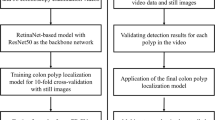
Artificial intelligence assisted colorectal lesion detection in private practices a randomized controlled study
npj Digital Medicine, Published online: 01 April 2026; doi:10.1038/s41746-026-02576-8 Artificial intelligence assisted colorectal lesion detection in private practices a randomized controlled study

Robust Multidimensional Chinese Remainder Theorem (MD-CRT) with Non-Diagonal Moduli and Multi-Stage Framework
arXiv:2604.00995v1 Announce Type: new Abstract: The Chinese remainder theorem (CRT) provides an efficient way to reconstruct an integer from its remainders modulo several integer moduli, and has been widely applied in signal processing and information theory. Its multidimensional extension (MD-CRT) generalizes this principle to integer vectors and integer matrix moduli, enabling reconstruction in multidimensional signal processing scenarios. However, since matrices are generally non-commutative, the multidimensional extension introduces new theoretical and algorithmic challenges. When all matrix moduli are diagonal, the system is equivalent to applying the one-dimensional CRT independently along each dimension. This work first investigates whether non-diagonal (non-separable) moduli offer
Spatial Upper Bound of Radiated Power in Active Antenna Systems
arXiv:2604.00846v1 Announce Type: new Abstract: The assessment of unwanted radiated emissions from Active Antenna Systems (AAS) has become a critical issue in adjacent-band coexistence scenarios. In this paper, we establish the existence of a deterministic spatial upper bound on the radiated power of active antenna arrays. We show that the maximum radiated power always occurs in the boresight direction, irrespective of frequency or signal nature (useful signal, nonlinear distortion, or noise), or instantaneous beamforming configuration, thereby defining a conservative spatial upper bound whose angular envelope is solely determined by the elementary radiating building block of the antenna architecture, i.e., the element or sub-array radiation pattern. Starting from a two-element array with
Learning Laplacian Forms for Graph Signal Processing via the Deformed Laplacian
arXiv:2604.00728v1 Announce Type: new Abstract: Learning the graph Laplacian from observed data is one of the most investigated and fundamental tasks in Graph Signal Processing (GSP). Different variants of the Laplacian, such as the combinatorial, signless or signed Laplacians have been considered depending on the type of features to be extracted from the data. The main contribution of this paper is the introduction of a parametric Laplacian, called the deformed Laplacian, defined as a quadratic matrix polynomial that provides a parametric dictionary for graph signal processing. The deformed Laplacian can be interpreted as the generator of a parametric linear reaction-diffusion dynamics on graphs, capturing the interplay between diffusive coupling and nodal reaction effects. It is a parame
Discussion
Sign in to join the discussion
No comments yet — be the first to share your thoughts!