
Artificial intelligence assisted colorectal lesion detection in private practices a randomized controlled study
npj Digital Medicine, Published online: 01 April 2026; doi:10.1038/s41746-026-02576-8 Artificial intelligence assisted colorectal lesion detection in private practices a randomized controlled study
Data availability
As required by the study's ethics vote, the datasets generated and analyzed during the current study are not publicly available due to privacy concerns but are available from the corresponding author on reasonable request. The underlying code for this study and training/validation datasets are not publicly available for proprietary reasons.
Code availability
The underlying code for this study and training/validation datasets are not publicly available for proprietary reasons.
References
- Bretthauer, M. et al. Effect of colonoscopy screening on risks of colorectal cancer and related death. N. Engl. J. Med. 387, 1547–1556 (2022).
Google Scholar
- Brenner, H., Stock, C. & Hoffmeister, M. Effect of screening sigmoidoscopy and screening colonoscopy on colorectal cancer incidence and mortality: Systematic review and meta-analysis of randomised controlled trials and observational studies. BMJ 348, g2467 (2014).
Google Scholar
- Fitzpatrick-Lewis, D. et al. Screening for colorectal cancer: A systematic review and meta-analysis. Clin. Colorectal Cancer 15, 298–313 (2016).
Google Scholar
- Barclay, R. L., Vicari, J. J., Doughty, A. S., Johanson, J. F. & Greenlaw, R. L. Colonoscopic withdrawal times and adenoma detection during screening colonoscopy. N. Engl. J. Med. 355, 2533–2541 (2006).
Google Scholar
- Shaukat, A. et al. Longer withdrawal time is associated with a reduced incidence of interval cancer after screening colonoscopy. Gastroenterology 149, 952–957 (2015).
Google Scholar
- Waldmann, E. et al. Interval cancer after colonoscopy in the Austrian National Screening Programme: Influence of physician and patient factors. Gut 70, 1309–1317 (2021).
Google Scholar
- Wang, P. et al. Effect of a deep-learning computer-aided detection system on adenoma detection during colonoscopy (CADe-DB trial): A double-blind randomised study. Lancet Gastroenterol. Hepatol. 5, 343–351 (2020).
Google Scholar
- Hassan, C. et al. New artificial intelligence system: First validation study versus experienced endoscopists for colorectal polyp detection. Gut 69, 799–800 (2020).
Google Scholar
- Antonelli, G., Rizkala, T., Iacopini, F. & Hassan, C. Current and future implications of artificial intelligence in colonoscopy. Ann. Gastroenterol. 36, 114–122 (2023).
Google Scholar
- Liu, P. et al. The single-monitor trial: an embedded CADe system increased adenoma detection during colonoscopy: a prospective randomized study. Ther. Adv. Gastroenterol. 13, 1756284820979165 (2020).
Google Scholar
- Lux, T. J. et al. Pilot study of a new freely available computer-aided polyp detection system in clinical practice. Int J. Colorectal Dis. https://doi.org/10.1007/s00384-022-04178-8 (2022).
Google Scholar
- Chino, A. et al. Performance evaluation of a computer-aided polyp detection system with artificial intelligence for colonoscopy. Dig Endosc. https://doi.org/10.1111/den.14578 (2023).
Google Scholar
- Wang, P. et al. Development and validation of a deep-learning algorithm for the detection of polyps during colonoscopy. Nat. Biomed. Eng. 2, 741–748 (2018).
Google Scholar
- Misawa, M. et al. Development of a computer-aided detection system for colonoscopy and a publicly accessible large colonoscopy video database (with video). Gastrointest. Endosc. 93, 960–967.e3 (2021).
Google Scholar
- Kröner, P. T. et al. Artificial intelligence in gastroenterology: A state-of-the-art review. World J. Gastroenterol. 27, 6794–6824 (2021).
Google Scholar
- Hassan, C. et al. Real-time computer-aided detection of colorectal neoplasia during colonoscopy: A systematic review and meta-analysis. Ann. Intern Med 176, 1209–1220 (2023).
Google Scholar
- Soleymanjahi, S. et al. Artificial intelligence–assisted colonoscopy for polyp detection: A systematic review and meta-analysis. Ann. Intern Med 177, 1652–1663 (2024).
Google Scholar
- Spadaccini, M. et al. Artificial intelligence and colorectal neoplasia detection performances in patients with positive fecal immunochemical test: Meta-analysis and systematic review. Dig. Endosc. 37, 815–823 (2025).
Google Scholar
- Zhao, S. et al. Magnitude, risk factors, and factors associated with adenoma miss rate of tandem colonoscopy: A systematic review and meta-analysis. Gastroenterology 156, 1661–1674.e11 (2019).
Google Scholar
- Yao, L. et al. Effect of an artificial intelligence-based quality improvement system on efficacy of a computer-aided detection system in colonoscopy: a four-group parallel study. Endoscopy 54, 757–768 (2022).
Google Scholar
- Aniwan, S. et al. Computer-aided detection, mucosal exposure device, their combination, and standard colonoscopy for adenoma detection: A randomized controlled trial. Gastrointest. Endosc. 97, 507–516 (2023).
Google Scholar
- Xu, H. et al. Artificial intelligence–assisted colonoscopy for colorectal cancer screening: A multicenter randomized controlled trial. Clin. Gastroenterol. Hepatol. 21, 337–346.e3 (2023).
Google Scholar
- Levy, I., Bruckmayer, L., Klang, E., Ben-Horin, S. & Kopylov, U. Artificial intelligence-aided colonoscopy does not increase adenoma detection rate in routine clinical practice. Am. J. Gastroenterol. 117, 1871–1873 (2022).
Google Scholar
- Ladabaum, U. et al. Computer-aided detection of polyps does not improve colonoscopist performance in a pragmatic implementation trial. Gastroenterology 164, 481–483.e6 (2023).
Google Scholar
- Ahmad, A. et al. Evaluation of a real-time computer-aided polyp detection system during screening colonoscopy: AI-DETECT study. Endoscopy 55, 313–319 (2023).
Google Scholar
- Wei, M. T. et al. Evaluation of computer-aided detection during colonoscopy in the community (AI-SEE): A multicenter randomized clinical trial. J. Am. Coll. Gastroenterol. | ACG https://doi.org/10.14309/ajg.0000000000002239 (2022).
Google Scholar
- Zimmermann-Fraedrich, K. et al. No effect of computer-aided diagnosis on colonoscopic adenoma detection in a large pragmatic multicenter randomized study. Am. J. Gastroenterol. https://doi.org/10.14309/ajg.0000000000003500 (2025).
Google Scholar
- Wei, M. T., Fay, S., Yung, D., Ladabaum, U. & Kopylov, U. Artificial intelligence-assisted colonoscopy in real-world clinical practice: A systematic review and meta-analysis. Clin. Transl. Gastroenterol. 15, e00671 (2024).
Google Scholar
- Bretthauer, M. et al. Use of computer-assisted detection (CADe) colonoscopy in colorectal cancer screening and surveillance: European Society of Gastrointestinal Endoscopy (ESGE) Position Statement. Endoscopy 57, 667–673 (2025).
Google Scholar
- Halvorsen, N. et al. Benefits, burden, and harms of computer aided polyp detection with artificial intelligence in colorectal cancer screening: Microsimulation modelling study. bmjmed 4, e001446 (2025).
Google Scholar
- Sultan, S. et al. AGA living clinical practice guideline on computer-aided detection–assisted colonoscopy. Gastroenterology 168, 691–700 (2025).
Google Scholar
- Troya, J. et al. Direct comparison of multiple computer-aided polyp detection systems. Endoscopy https://doi.org/10.1055/a-2147-0571 (2023).
Google Scholar
- Wang, P. et al. Real-time automatic detection system increases colonoscopic polyp and adenoma detection rates: A prospective randomised controlled study. Gut 68, 1813–1819 (2019).
Google Scholar
- Repici, A. et al. Efficacy of real-time computer-aided detection of colorectal neoplasia in a randomized trial. Gastroenterology 159, 512–520.e7 (2020).
Google Scholar
- Liu, W.-N. et al. Study on detection rate of polyps and adenomas in artificial-intelligence-aided colonoscopy. Saudi J. Gastroenterol. 26, 13–19 (2020).
Google Scholar
- Repici, A. et al. Artificial intelligence and colonoscopy experience: lessons from two randomised trials. Gut 71, 757–765 (2022).
Google Scholar
- Su, J.-R. et al. Impact of a real-time automatic quality control system on colorectal polyp and adenoma detection: a prospective randomized controlled study (with videos). Gastrointest. Endosc. 91, 415–424.e4 (2020).
Google Scholar
- Gimeno-García, A. Z. et al. Usefulness of a novel computer-aided detection system for colorectal neoplasia: A randomized controlled trial. Gastrointest. Endosc. 97, 528–536.e1 (2023).
Google Scholar
- Xu, L. et al. Artificial intelligence-assisted colonoscopy: A prospective, multicenter, randomized controlled trial of polyp detection. Cancer Med 10, 7184–7193 (2021).
Google Scholar
- Gong, D. et al. Detection of colorectal adenomas with a real-time computer-aided system (ENDOANGEL): A randomised controlled study. Lancet Gastroenterol. Hepatol. 5, 352–361 (2020).
Google Scholar
- Shaukat, A. et al. Computer-aided detection improves adenomas per colonoscopy for screening and surveillance colonoscopy: A randomized trial. Gastroenterology 163, 732–741 (2022).
Google Scholar
- Seager, A. et al. Polyp detection with colonoscopy assisted by the GI Genius artificial intelligence endoscopy module compared with standard colonoscopy in routine colonoscopy practice (COLO-DETECT): A multicentre, open-label, parallel-arm, pragmatic randomised controlled trial. Lancet Gastroenterol. Hepatol. 9, 911–923 (2024).
Google Scholar
- Yabuuchi, Y. et al. Effect of computer-aided detection during colonoscopy on adenoma detection rate in a community hospital setting: Randomized controlled trial. Dig. Endosc. 37, 1215–1223 (2025).
Google Scholar
- Desai, M. et al. Use of a novel artificial intelligence system leads to the detection of significantly higher number of adenomas during screening and surveillance colonoscopy: Results from a large, prospective, US multicenter, randomized clinical trial. Am. J. Gastroenterol. 119, 1383–1391 (2024).
Google Scholar
- Soleymanjahi, S. et al. Artificial intelligence–assisted colonoscopy for polyp detection. Ann. Intern Med. https://doi.org/10.7326/ANNALS-24-00981 (2024).
Google Scholar
- Lau, L. H. S. et al. Effect of real-time computer-aided polyp detection system (ENDO-AID) on adenoma detection in endoscopists-in-training: A randomized trial. Clin. Gastroenterol. Hepatol. 22, 630–641.e4 (2024).
Google Scholar
- Tiankanon, K. et al. Improvement of adenoma detection rate by two computer-aided colonic polyp detection systems in high adenoma detectors: a randomized multicenter trial. Endoscopy 56, 273–282 (2024).
Google Scholar
- Penz, D. et al. Association between endoscopist adenoma detection rate and serrated polyp detection: Retrospective analysis of over 200,000 screening colonoscopies. Endosc. Int. Open 12, E488–E497 (2024).
Google Scholar
- Vavricka, S. R. et al. Monitoring colonoscopy withdrawal time significantly improves the adenoma detection rate and the performance of endoscopists. Endoscopy 48, 256–262 (2016).
Google Scholar
- Brenner, H. et al. Trends in adenoma detection rates during the first 10 years of the German screening colonoscopy program. Gastroenterology 149, 356–366.e1 (2015).
Google Scholar
- Foroutan, F. et al. Computer aided detection and diagnosis of polyps in adult patients undergoing colonoscopy: a living clinical practice guideline. BMJ 388, e082656 (2025).
Google Scholar
- Budzyń, K. et al. Endoscopist deskilling risk after exposure to artificial intelligence in colonoscopy: A multicentre, observational study. Lancet Gastroenterol. Hepatol. 10, 896–903 (2025).
Google Scholar
- Prosenz, J. et al. Areas of improvement for colorectal cancer screening: Results of a screening initiative for 10,000 health care employees in Austria. Endosc. Int Open 12, E1425–E1433 (2024).
Google Scholar
- Waldmann, E. et al. Trends in quality of screening colonoscopy in Austria. Endoscopy 48, 1102–1109 (2016).
Google Scholar
- Maas, M. H. J. et al. A computer-aided detection system in the everyday setting of diagnostic, screening, and surveillance colonoscopy: an international, randomized trial. Endoscopy 56, 843–850 (2024).
Google Scholar
- German Guideline Program in Oncology (German Cancer Society, German Cancer Aid, AWMF): S3-Guideline Colorectal Cancer, long version 2.1, 2019, AWMF registrationnumber: 021-007OL, http://www.leitlinienprogrammonkologie.de/leitlinien/kolorektales-karzinom/ [cited: 15/07/24].
- van Toledo, D. E. F. W. M. et al. Serrated polyp detection and risk of interval post-colonoscopy colorectal cancer: A population-based study. Lancet Gastroenterol. Hepatol. 7, 747–754 (2022).
Google Scholar
- Waldmann, E. et al. Association of adenoma detection rate and adenoma characteristics with colorectal cancer mortality after screening colonoscopy. Clin. Gastroenterol. Hepatol. 19, 1890–1898 (2021).
Google Scholar
Download references
Acknowledgements
A.H. and W.G.Z. receive public funding for this work from the state government of Baden-Württemberg, Germany (Funding cluster Forum Gesundheitsstandort Baden-Württemberg, grant number 5-5409.0-001.01/15) to research and develop artificial intelligence applications for polyp detection in screening colonoscopy. Additional funding sources to support this work were the Eva Mayr-Stihl Foundation, Waiblingen, Germany, the Fischerwerke GmbH & Co. KG, Waldachtal, Germany, and the Dieter von Holtzbrinck Stiftung GmbH, Stuttgart, Germany. The authors acknowledge the support by Prof. J.F. Riemann, “Stiftung Lebensblicke” the Foundation for early detection of colon cancer.
Funding
Open Access funding enabled and organized by Projekt DEAL.
Author information
Author notes
- These authors contributed equally: Thomas J. Lux, Zita Saßmannshausen.
Authors and Affiliations
- Interventional and Experimental Endoscopy (InExEn), Internal Medicine II, University Hospital Würzburg, Würzburg, Germany
Thomas J. Lux, Zita Saßmannshausen, Ioannis Kafetzis, Michael Banck, Adrian Krenzer, Daniel Fitting, Boban Sudarevic, Joel Troya, Alexander Meining & Alexander Hann
- Artificial Intelligence and Knowledge Systems, Institute for Computer Science, Julius-Maximilians-Universität Würzburg, Würzburg, Germany
Michael Banck, Adrian Krenzer & Frank Puppe
- Gastroenterological practice Dres. Boeck/Haegele, Ulm, Germany
Wolfgang Boeck
- Gastroenterological practice Bad Saulgau, Bad Saulgau, Germany
Frank Passek
- Gastroenterological practice Heubach-Begetopoulos, Waiblingen, Germany
Tobias Heubach
- Gastroenterological practice Darmstadt, Darmstadt, Germany
Benjamin Simonis
- Gastroenterological practice Andernach, Andernach, Germany
Franz J. Heil
- Gastroenterological practice Dornstadt, Dornstadt, Germany
Leopold Ludwig
- Department of Internal Medicine and Gastroenterology, Katharinenhospital, Stuttgart, Germany
Wolfram G. Zoller
Authors
- Thomas J. Lux
- Zita Saßmannshausen
- Ioannis Kafetzis
- Michael Banck
- Adrian Krenzer
- Daniel Fitting
- Boban Sudarevic
- Joel Troya
- Wolfgang Boeck
- Frank Passek
- Tobias Heubach
- Benjamin Simonis
- Franz J. Heil
- Leopold Ludwig
- Frank Puppe
- Wolfram G. Zoller
- Alexander Meining
- Alexander Hann
Contributions
A.H. designed the study, drafted the manuscript, and developed the polyp detection system. T.J.L. designed the study, drafted the manuscript, and performed statistical analysis. Z.S. designed the study and drafted the manuscript. DF designed the study, drafted the manuscript, and developed the polyp detection system. I.K. performed statistical analysis. W.B. recruited patients, performed colonoscopy procedures, and/or participated in the data collection. F.P.a. recruited patients, performed colonoscopy procedures, and/or participated in the data collection. T.H. recruited patients, performed colonoscopy procedures, and/or participated in the data collection. B.S. recruited patients, performed colonoscopy procedures and/or participated in the data collection, and developed the polyp detection system. F.J.H. recruited patients, performed colonoscopy procedures, and/or participated in the data collection. W.G.Z. recruited patients, performed colonoscopy procedures, and/or participated in the data collection. M.B. developed the polyp detection system. A.K. developed the polyp detection system. J.T. developed the polyp detection system. F.P.u. developed the polyp detection system. L.L. critically revised the draft for important intellectual content. A.M. critically revised the draft for important intellectual content. All the authors revised and approved the final manuscript.
Corresponding author
Correspondence to Alexander Hann.
Ethics declarations
Competing interests
T.J.L.: Research Support: Gastroenterology Foundation, Interdisziplinäres Zentrum für klinische Forschung Würzburg. Honoraria for lectures: MPC Medical Professionalist GmbH. AM: Royalties: Ovesco Endoscopy AG, Consulting fees: Ovesco Endoscopy AG, Pentax Medical, Honoraria for lectures: Falk Foundation, AbbVie, Takeda Pharmaceutical, Advisory board: Luvos Heilerde. FPa: Consulting fees: Johnson&Johnson, Support for travel: AbbVie, Participation on a Data Safety Monitoring Board or Advisory Board: Johnson&Johnson. The remaining authors have no financial, professional, or personal conflicts of interest to disclose.
Additional information
Publisher’s note Springer Nature remains neutral with regard to jurisdictional claims in published maps and institutional affiliations.
Rights and permissions
Open Access This article is licensed under a Creative Commons Attribution 4.0 International License, which permits use, sharing, adaptation, distribution and reproduction in any medium or format, as long as you give appropriate credit to the original author(s) and the source, provide a link to the Creative Commons licence, and indicate if changes were made. The images or other third party material in this article are included in the article’s Creative Commons licence, unless indicated otherwise in a credit line to the material. If material is not included in the article’s Creative Commons licence and your intended use is not permitted by statutory regulation or exceeds the permitted use, you will need to obtain permission directly from the copyright holder. To view a copy of this licence, visit http://creativecommons.org/licenses/by/4.0/.
Reprints and permissions
About this article
Cite this article
Lux, T.J., Saßmannshausen, Z., Kafetzis, I. et al. Artificial intelligence assisted colorectal lesion detection in private practices a randomized controlled study. npj Digit. Med. (2026). https://doi.org/10.1038/s41746-026-02576-8
Download citation
- Received: 03 January 2025
- Accepted: 14 March 2026
- Published: 01 April 2026
- DOI: https://doi.org/10.1038/s41746-026-02576-8
Sign in to highlight and annotate this article

Conversation starters
Daily AI Digest
Get the top 5 AI stories delivered to your inbox every morning.
More about
studypublished

Developing psychosocial phenotypes to understand engagement with digital health technologies for heart failure
npj Digital Medicine, Published online: 04 April 2026; doi:10.1038/s41746-026-02571-z Developing psychosocial phenotypes to understand engagement with digital health technologies for heart failure

Knowledge Map
Connected Articles — Knowledge Graph
This article is connected to other articles through shared AI topics and tags.
More in Research Papers
![[D] ICML reviewer making up false claim in acknowledgement, what to do?](https://d2xsxph8kpxj0f.cloudfront.net/310419663032563854/konzwo8nGf8Z4uZsMefwMr/default-img-matrix-rain-CvjLrWJiXfamUnvj5xT9J9.webp)
[D] ICML reviewer making up false claim in acknowledgement, what to do?
In a rebuttal acknowledgement we received, the reviewer made up a claim that our method performs worse than baselines with some hyperparameter settings. We did do a comprehensive list of hyperparameter comparisons and the reviewer's claim is not supported by what's presented in the paper. In this case what can we do? submitted by /u/dontknowwhattoplay [link] [comments]

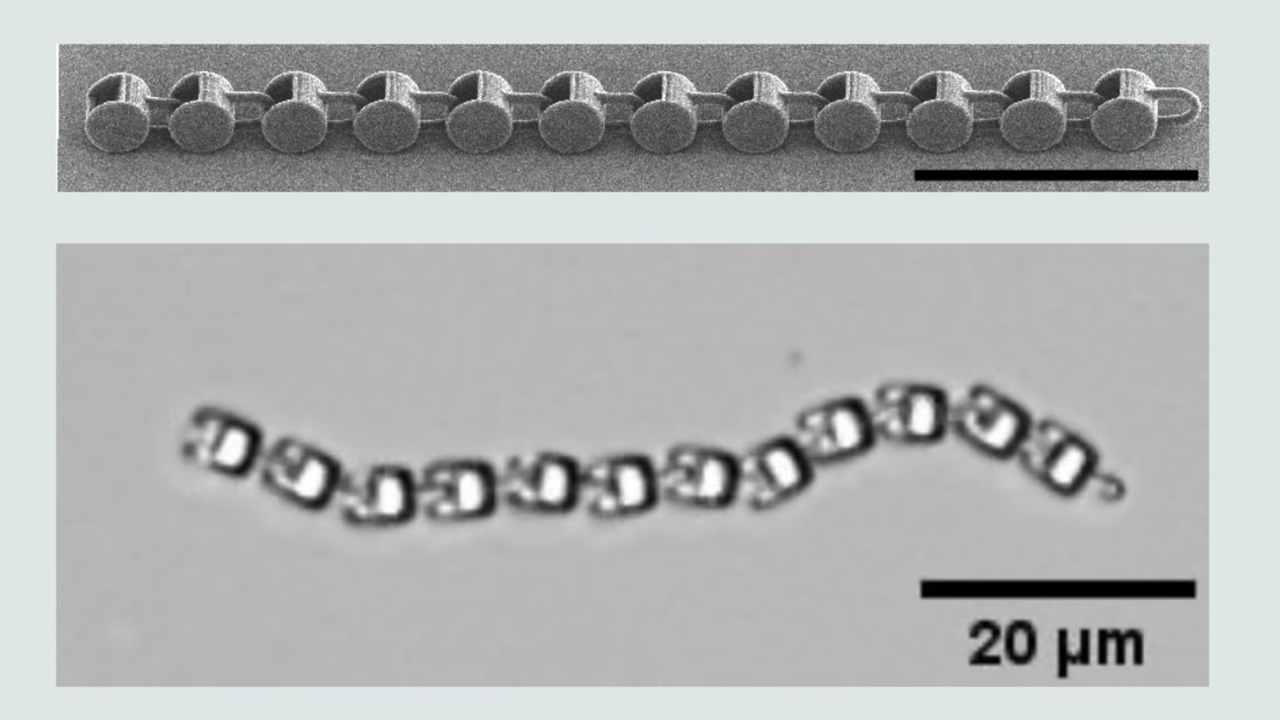
Researchers 3D print robot the size of a single-cell organism — devices move and navigate even without a ‘brain,’ uses their shape and the environment to get going
Researchers 3D print robot the size of a single-cell organism — devices move and navigate even without a ‘brain,’ uses their shape and the environment to get going
Developing psychosocial phenotypes to understand engagement with digital health technologies for heart failure
npj Digital Medicine, Published online: 04 April 2026; doi:10.1038/s41746-026-02571-z Developing psychosocial phenotypes to understand engagement with digital health technologies for heart failure
Discussion
Sign in to join the discussion
No comments yet — be the first to share your thoughts!