

Mimetic Alignment with ASPECT: Evaluation of AI-inferred Personal Profiles
arXiv:2603.26922v1 Announce Type: cross Abstract: AI agents that communicate on behalf of individuals need to capture how each person actually communicates, yet current approaches either require costly per-person fine-tuning, produce generic outputs from shallow persona descriptions, or optimize preferences without modeling communication style. We present ASPECT (Automated Social Psychometric Evaluation of Communication Traits), a pipeline that directs LLMs to assess constructs from a validated communication scale against behavioral evidence from workplace data, without per-person training. In — Ruoxi Shang, Dan Marshall, Edward Cutrell, Denae Ford
View PDF HTML (experimental)
Abstract:AI agents that communicate on behalf of individuals need to capture how each person actually communicates, yet current approaches either require costly per-person fine-tuning, produce generic outputs from shallow persona descriptions, or optimize preferences without modeling communication style. We present ASPECT (Automated Social Psychometric Evaluation of Communication Traits), a pipeline that directs LLMs to assess constructs from a validated communication scale against behavioral evidence from workplace data, without per-person training. In a case study with 20 participants (1,840 paired item ratings, 600 scenario evaluations), ASPECT-generated profiles achieved moderate alignment with self-assessments, and ASPECT-generated responses were preferred over generic and self-report baselines on aggregate, with substantial variation across individuals and scenarios. During the profile review phase, linked evidence helped participants identify mischaracterizations, recalibrate their own self-ratings, and negotiate context-appropriate representations. We discuss implications for building inspectable, individually scoped communication profiles that let individuals control how agents represent them at work.
Comments: 20 pages (including appendix), 5 figures, 5 tables
Subjects:
Human-Computer Interaction (cs.HC); Artificial Intelligence (cs.AI)
ACM classes: H.5.3; H.1.2
Cite as: arXiv:2603.26922 [cs.HC]
(or arXiv:2603.26922v1 [cs.HC] for this version)
https://doi.org/10.48550/arXiv.2603.26922
arXiv-issued DOI via DataCite (pending registration)
Submission history
From: Denae Ford [view email] [v1] Fri, 27 Mar 2026 18:55:44 UTC (6,336 KB)
Sign in to highlight and annotate this article

Conversation starters
Daily AI Digest
Get the top 5 AI stories delivered to your inbox every morning.
More about
researchpaperarxiv![[R] Looking for arXiv cs.LG endorser, inference monitoring using information geometry](https://d2xsxph8kpxj0f.cloudfront.net/310419663032563854/konzwo8nGf8Z4uZsMefwMr/default-img-earth-satellite-QfbitDhCB2KjTsjtXRYcf9.webp)
[R] Looking for arXiv cs.LG endorser, inference monitoring using information geometry
Hi r/MachineLearning , I’m looking for an arXiv endorser in cs.LG for a paper on inference-time distribution shift detection for deployed LLMs. The core idea: instead of monitoring input embeddings (which is what existing tools do), we monitor the statistical manifold of the model’s output distributions using Fisher-Rao geodesic distance. We then run adaptive CUSUM (Page-Hinkley) on the resulting z-score stream to catch slow drift that per-request spike detection misses entirely. The methodology is grounded in published work on information geometry (Figshare, DOIs available). We’ve validated the signal on real OpenAI API logprobs, CUSUM caught gradual domain drift in 7 steps with zero false alarms during warmup, while spike detection missed it entirely. If anyone with cs.LG endorsement is
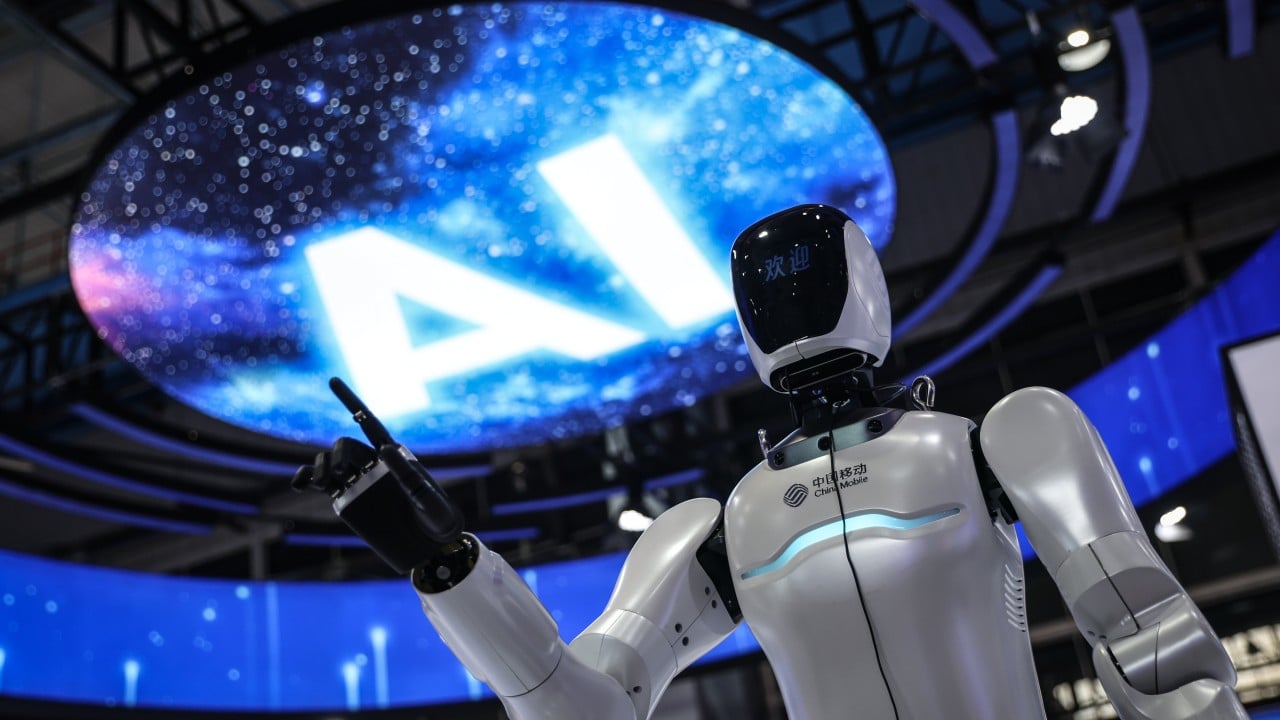
How can Beijing attract top-tier Chinese AI professionals based abroad?
Beijing should shift its strategy and improve ways to attract and retain top Chinese AI professionals as America’s accelerating integration of artificial intelligence into military and national security systems puts such talent in a bind. As geopolitical tensions rise, many highly skilled Chinese researchers working at US tech and research institutions are confronting a painful dilemma, according to Dai Mingjie, a researcher at the Institute of Public Policy at the Guangzhou-based South China...

Anthropic says Claude subscriptions will no longer support OpenClaw because it puts an 'outsized strain' on systems
Why It Matters The decision by Anthropic to stop supporting OpenClaw for Claude subscriptions is significant because it highlights the challenges of integrating third-party tools with AI systems. According to a report from Business Insider, Anthropic cited the "outsized strain" that tools like OpenClaw put on their systems as the reason for this move. This strain is likely due to the additional computational resources required to support these tools, which can impact the overall performance and reliability of the AI system. The impact of this decision will be felt by users who rely on OpenClaw to enhance their experience with Claude subscriptions. OpenClaw's founder has already expressed disappointment, stating that cutting support would be "a loss." This reaction is understandable, given
Knowledge Map
Connected Articles — Knowledge Graph
This article is connected to other articles through shared AI topics and tags.
More in Research Papers
[R] Looking for arXiv cs.LG endorser, inference monitoring using information geometry
Hi r/MachineLearning , I’m looking for an arXiv endorser in cs.LG for a paper on inference-time distribution shift detection for deployed LLMs. The core idea: instead of monitoring input embeddings (which is what existing tools do), we monitor the statistical manifold of the model’s output distributions using Fisher-Rao geodesic distance. We then run adaptive CUSUM (Page-Hinkley) on the resulting z-score stream to catch slow drift that per-request spike detection misses entirely. The methodology is grounded in published work on information geometry (Figshare, DOIs available). We’ve validated the signal on real OpenAI API logprobs, CUSUM caught gradual domain drift in 7 steps with zero false alarms during warmup, while spike detection missed it entirely. If anyone with cs.LG endorsement is


![[D] KDD Review Discussion](https://d2xsxph8kpxj0f.cloudfront.net/310419663032563854/konzwo8nGf8Z4uZsMefwMr/default-img-wave-pattern-4YWNKzoeu65vYpqRKWMiWf.webp)
[D] KDD Review Discussion
KDD 2026 (Feb Cycle) reviews will release today (4-April AoE), This thread is open to discuss about reviews and importantly celebrate successful reviews. Let us all remember that review system is noisy and we all suffer from it and this doesn't define our research impact. Let's all prioritise reviews which enhance our papers. Feel free to discuss your experiences submitted by /u/BomsDrag [link] [comments]
Discussion
Sign in to join the discussion
No comments yet — be the first to share your thoughts!