
Complementarity-Preserving Generative Theory for Multimodal ECG Synthesis: A Quantum-Inspired Approach
arXiv:2603.26695v1 Announce Type: cross Abstract: Multimodal deep learning has substantially improved electrocardiogram (ECG) classification by jointly leveraging time, frequency, and time-frequency representations. However, existing generative models typically synthesize these modalities independently, resulting in synthetic ECG data that are visually plausible yet physiologically inconsistent across domains. This work establishes a Complementarity-Preserving Generative Theory (CPGT), which posits that physiologically valid multimodal signal generation requires explicit preservation of cross- — Timothy Oladunni, Farouk Ganiyu-Adewumi, Clyde Baidoo, Kyndal Maclin
View PDF HTML (experimental)
Abstract:Multimodal deep learning has substantially improved electrocardiogram (ECG) classification by jointly leveraging time, frequency, and time-frequency representations. However, existing generative models typically synthesize these modalities independently, resulting in synthetic ECG data that are visually plausible yet physiologically inconsistent across domains. This work establishes a Complementarity-Preserving Generative Theory (CPGT), which posits that physiologically valid multimodal signal generation requires explicit preservation of cross-domain complementarity rather than loosely coupled modality synthesis. We instantiate CPGT through Q-CFD-GAN, a quantum-inspired generative framework that models multimodal ECG structure within a complex-valued latent space and enforces complementarity-aware constraints regulating mutual information, redundancy, and morphological coherence. Experimental evaluation demonstrates that Q-CFD-GAN reduces latent embedding variance by 82%, decreases classifier-based plausibility error by 26.6%, and restores tri-domain complementarity from 0.56 to 0.91, while achieving the lowest observed morphology deviation (3.8%). These findings show that preserving multimodal information geometry, rather than optimizing modality-specific fidelity alone, is essential for generating synthetic ECG signals that remain physiologically meaningful and suitable for downstream clinical machine-learning applications.
Subjects:
Signal Processing (eess.SP); Artificial Intelligence (cs.AI); Machine Learning (cs.LG); Image and Video Processing (eess.IV); Quantum Physics (quant-ph)
Cite as: arXiv:2603.26695 [eess.SP]
(or arXiv:2603.26695v1 [eess.SP] for this version)
https://doi.org/10.48550/arXiv.2603.26695
arXiv-issued DOI via DataCite
Submission history
From: Timothy Oladunni [view email] [v1] Mon, 16 Mar 2026 13:37:48 UTC (343 KB)
Sign in to highlight and annotate this article

Conversation starters
Daily AI Digest
Get the top 5 AI stories delivered to your inbox every morning.
More about
researchpaperarxiv
Reinforcement Learning Integrated Agentic RAG for Software Test Cases Authoring - Apple Machine Learning Research
<a href="https://news.google.com/rss/articles/CBMiggFBVV95cUxNQXFSVkZmQTJkNVRLWmFMRjJkZVRPSk1leEFOZk1BQ0ZrekV2eGdFWGFrZUZxMFEwVnM4ZHh5UXNsMTJwODdBbGprWVktcXRDVGp4M0thVjJHRU1qNUw0NjItekpqeVRSaUhZcUJ4MFVXUGFMTWlvcUNSZEFuQzNURmxB?oc=5" target="_blank">Reinforcement Learning Integrated Agentic RAG for Software Test Cases Authoring</a> <font color="#6f6f6f">Apple Machine Learning Research</font>

Polish govt approves draft law on AI regulation - Telecompaper
<a href="https://news.google.com/rss/articles/CBMilAFBVV95cUxQUzdvX1ktU3duVXpFQ3hhQllUaTNNaGtVbnRka1ZkSnFBb1VLbS1CSTdLRnJyZmFYUjBEczU3Y29nMTZzNGJGQi1lYl8zVzB5V0pXOTB0NW9xZ0Zkc0pkNTVfM3A4XzFZWEU0OXVmb0E5c3BlS0M1TnVHYjRKY2lvWmQxSDB1YTBLazNrMDZ1bExqT0hB?oc=5" target="_blank">Polish govt approves draft law on AI regulation</a> <font color="#6f6f6f">Telecompaper</font>

HIVE 3.0: IIT Mandi TIH Debuts MI-RA Research Lab to Drive India’s Multimodal AI Future - CXOToday.com
<a href="https://news.google.com/rss/articles/CBMivwFBVV95cUxOakRHMlNiS0VSTlVxeHpPaWZpNHdQMmJwb2VEV09naU1UX3A5ekp0dDRrdWE0ZHA1TnZtUkxUVDFfWGZiV21teGVJMGRMNFFwU08yeGkyLTN3QjhQbkNIY0Y3NHZaenBuY0cyWDF5SEV6eW1qVWRjcnJtMmt6cEtTekhXTkFhb1daZDMzbnJrVFRXU3RTZGpqZXBkMkJ0SzIzNWg3WldpMUFtQ0lhRGY5aG9JMTdPYS1NUFp0Z0ZGZw?oc=5" target="_blank">HIVE 3.0: IIT Mandi TIH Debuts MI-RA Research Lab to Drive India’s Multimodal AI Future</a> <font color="#6f6f6f">CXOToday.com</font>
Knowledge Map
Connected Articles — Knowledge Graph
This article is connected to other articles through shared AI topics and tags.
More in Research Papers

Oracle Layoffs Recast Costs To Back US$50b AI Infrastructure Bet - simplywall.st
<a href="https://news.google.com/rss/articles/CBMivwFBVV95cUxQNWpZb2ZQVDBIOGVZTTBtLThzaGwxS3NkMnJBSS1wek5pQlJXRWdTOEh5aTdPTE9Cd3JHdjZDeWRtVzdMUUdESHJOQXZDdGNVdGZtTTBhanpfb3UxQnRobVlzNGdVUXJLZWptV2V6NXlNSWllX3FxOU5XYTF0RkM2TnJIaFJkcVBFOGc2alBSLTZEeU85QU1oTjBrMVZSTl84dm9GeFl5OGtUMjc3LVd1dS1fcHZ1RG9HcV82T2JFWdIBxAFBVV95cUxOSE5XVXh0QkM4Yi1WbXNhWkJ2Z2dLRlBGNjAwaTcyNFJWMWRPdXo5WjRQQkRGTG9IamxxbmdhMHpsaEJ6RDQwZl9ENGl5WDc5a2lrTXZ1bVpFbGdsdndHYjFINnZPSnNKX1dZamszUXByR1BlRXF6d1pKOHpBU3M5UFhUSldlUWtIMlRNQzdvTk9haEJKeDI1ZEg0WWQ1SXYzLUZCWElQc3pzR19ucGExdVpnc2hBQXlQNVpOZFVBVzRkLXFE?oc=5" target="_blank">Oracle Layoffs Recast Costs To Back US$50b AI Infrastructure Bet</a> <font color="#6f6f6f">simplywall.st</font>
Riyadh conference to discuss role of AI in media industry - Arab News PK
<a href="https://news.google.com/rss/articles/CBMiVEFVX3lxTE1jdFVMUFA3R2RXM19JR1M1NnpjX210dUZuNkI3VWdQc0tzVVBZaXR3ZlNqUVFyZlB5aTMxOGI3OXFpdGpQX2RsOXF3UU5kaXlma2VpTQ?oc=5" target="_blank">Riyadh conference to discuss role of AI in media industry</a> <font color="#6f6f6f">Arab News PK</font>
Losito named IBM Italia general manager - Telecompaper
<a href="https://news.google.com/rss/articles/CBMiigFBVV95cUxNRTQ0RzVrcHJsVXo0THF3UllROGwyam1FNl9RWlV2dzJFRGtGMktoTGlYVUR5dU1WX1JSTkExQlNSVEFSWktVQVJSazFUUTJyV2tadUlraVlGM3M3WHNZNFNodm5DeVBvTXFkaDNkNXJ4SzF0RnphNGxOYlFGaFRtR241R2M0NFhUakE?oc=5" target="_blank">Losito named IBM Italia general manager</a> <font color="#6f6f6f">Telecompaper</font>
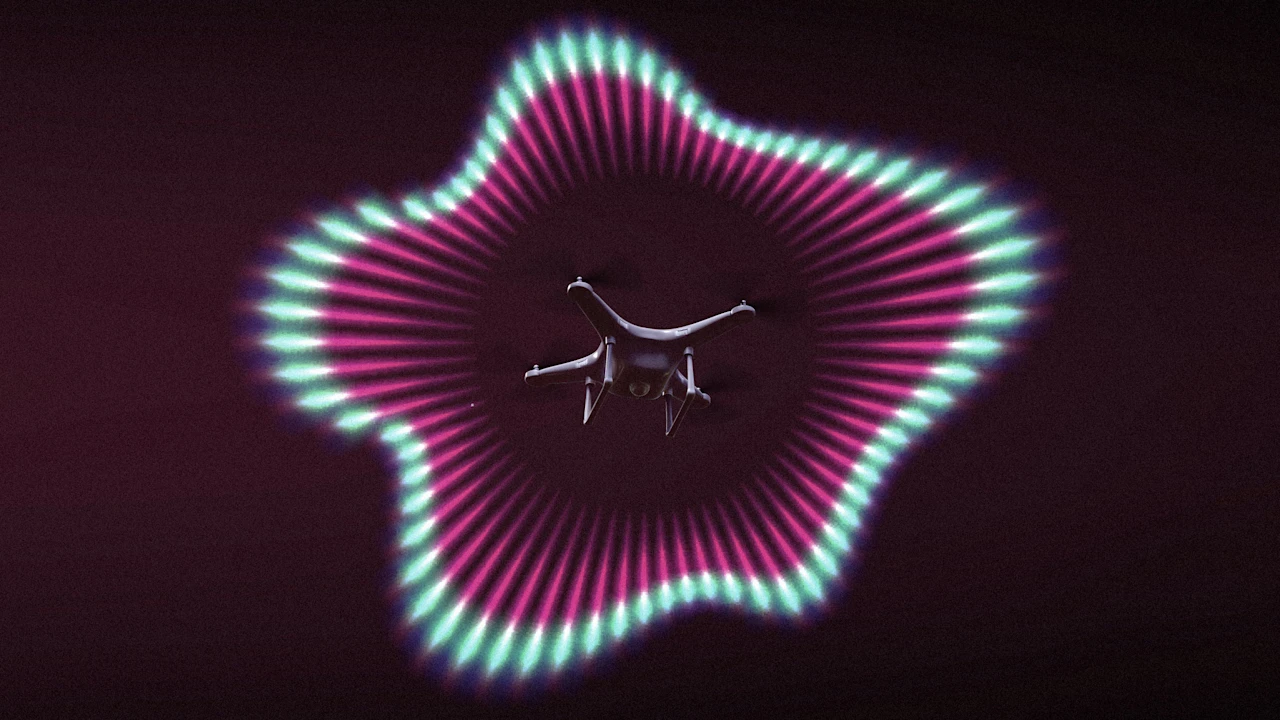
How AI-powered echolocation is giving small drones night vision
To help small aerial robots navigate in the dark and other low-visibility environments, my colleagues and I developed an ultrasound-based perception system inspired by bat echolocation. Current robots rely heavily on cameras or light detection and ranging , known as lidar, or both. But these sensors fail in visually challenging conditions, such as smoke, fog, dust, snow, or complete darkness. I’m a scientific engineer who develops bio-inspired microrobots. To solve this challenge, my research team looked at nature’s experts at navigating in poor visibility: bats. They thrive in dark, damp, and dusty caves and can detect obstacles as thin as a human hair using echolocation while weighing as little as two paper clips. They emit sound waves and listen to weak echoes reflected from objects. Ho
Discussion
Sign in to join the discussion
No comments yet — be the first to share your thoughts!