
QuitoBench: A High-Quality Open Time Series Forecasting Benchmark
arXiv:2603.26017v1 Announce Type: new Abstract: Time series forecasting is critical across finance, healthcare, and cloud computing, yet progress is constrained by a fundamental bottleneck: the scarcity of large-scale, high-quality benchmarks. To address this gap, we introduce \textsc{QuitoBench}, a regime-balanced benchmark for time series forecasting with coverage across eight trend$\times$seasonality$\times$forecastability (TSF) regimes, designed to capture forecasting-relevant properties rather than application-defined domain labels. The benchmark is built upon \textsc{Quito}, a billion-sc — Siqiao Xue, Zhaoyang Zhu, Wei Zhang, Rongyao Cai, Rui Wang, Yixiang Mu, Fan Zhou, Jianguo Li, Peng Di, Hang Yu
View PDF HTML (experimental)
Abstract:Time series forecasting is critical across finance, healthcare, and cloud computing, yet progress is constrained by a fundamental bottleneck: the scarcity of large-scale, high-quality benchmarks. To address this gap, we introduce \textsc{QuitoBench}, a regime-balanced benchmark for time series forecasting with coverage across eight trend$\times$seasonality$\times$forecastability (TSF) regimes, designed to capture forecasting-relevant properties rather than application-defined domain labels. The benchmark is built upon \textsc{Quito}, a billion-scale time series corpus of application traffic from Alipay spanning nine business domains. Benchmarking 10 models from deep learning, foundation models, and statistical baselines across 232,200 evaluation instances, we report four key findings: (i) a context-length crossover where deep learning models lead at short context ($L=96$) but foundation models dominate at long context ($L \ge 576$); (ii) forecastability is the dominant difficulty driver, producing a $3.64 \times$ MAE gap across regimes; (iii) deep learning models match or surpass foundation models at $59 \times$ fewer parameters; and (iv) scaling the amount of training data provides substantially greater benefit than scaling model size for both model families. These findings are validated by strong cross-benchmark and cross-metric consistency. Our open-source release enables reproducible, regime-aware evaluation for time series forecasting research.
Comments: project site: this https URL
Subjects:
Machine Learning (cs.LG)
Cite as: arXiv:2603.26017 [cs.LG]
(or arXiv:2603.26017v1 [cs.LG] for this version)
https://doi.org/10.48550/arXiv.2603.26017
arXiv-issued DOI via DataCite (pending registration)
Submission history
From: Siqiao Xue [view email] [v1] Fri, 27 Mar 2026 02:24:34 UTC (448 KB)
Sign in to highlight and annotate this article

Conversation starters
Daily AI Digest
Get the top 5 AI stories delivered to your inbox every morning.
More about
researchpaperarxiv
Losito named IBM Italia general manager - Telecompaper
<a href="https://news.google.com/rss/articles/CBMiigFBVV95cUxNRTQ0RzVrcHJsVXo0THF3UllROGwyam1FNl9RWlV2dzJFRGtGMktoTGlYVUR5dU1WX1JSTkExQlNSVEFSWktVQVJSazFUUTJyV2tadUlraVlGM3M3WHNZNFNodm5DeVBvTXFkaDNkNXJ4SzF0RnphNGxOYlFGaFRtR241R2M0NFhUakE?oc=5" target="_blank">Losito named IBM Italia general manager</a> <font color="#6f6f6f">Telecompaper</font>

IBM collaborates with ETH Zurich for decade-long quantum-AI research - verdict.co.uk
<a href="https://news.google.com/rss/articles/CBMia0FVX3lxTFBSRW5DU0xva0ZKQmRRQXpRcmpIZ0lZVHZ2a0dLQkZWc1prdC04dnNiWVJ1akk2YXdLWDlFRWhzRkNzaEJ6cW04VXFld3lTb184am1uOEJRbnFiTzl5eDZJWnBRbjlRcEZOUVZZ?oc=5" target="_blank">IBM collaborates with ETH Zurich for decade-long quantum-AI research</a> <font color="#6f6f6f">verdict.co.uk</font>
Google AI whitepaper: ‘Algorand is the perfect example of post-quantum computing’ – ALGO jumps 24% - AMBCrypto
<a href="https://news.google.com/rss/articles/CBMitgFBVV95cUxNekxZWGRzMEtITGhPeFJ3cGV0OUhTMEtYanN3eU93SlBsTVNZR3ZGbTlXVDE5Q1BZRE9ySzdIUXhpRmtCLUNjUE9TZU1SU2V0VWp4aHhVVml3SWpjZkoyMHRZWDZsSVRoSnI5R2JZMDNMYlVQTFkzVWl1WEV5MmRxSHpqVkx1NlBZZU81bkFsWENPc3pTUmtvbDdQV0Z4RF8tWFY0MGcwZlFzNzRiUkJ6QkZJdDhIQdIBuwFBVV95cUxNclE1NzRpNW5wa3l6ci1xSDY1eXhRemlLdFlxSDRYcXNRWENqd0ZLZXI3QVRXUGRBcVNRdm9ZTDhHX1VPOW9KdldZaWFoZ1hnV19DSWRvNjFlTFRqNEMxbl82TGRkM3ZIcjZtbjFzNGt0d1k2YUtKR2Q1aUtLU1ZNYmx4eFpGa2pUYkdrU1pHWl9OX3hnYk4wdElfODQ3QU9TTkVqamtiUXcxWEh1eTdBRFJ3Mk1FUVFUNXNj?oc=5" target="_blank">Google AI whitepaper: ‘Algorand is the perfect example of post-quantum computing’ – ALGO jumps 24%</a> <font color="#6f6f6f">AMBCrypto</font>
Knowledge Map
Connected Articles — Knowledge Graph
This article is connected to other articles through shared AI topics and tags.
More in Research Papers
Losito named IBM Italia general manager - Telecompaper
<a href="https://news.google.com/rss/articles/CBMiigFBVV95cUxNRTQ0RzVrcHJsVXo0THF3UllROGwyam1FNl9RWlV2dzJFRGtGMktoTGlYVUR5dU1WX1JSTkExQlNSVEFSWktVQVJSazFUUTJyV2tadUlraVlGM3M3WHNZNFNodm5DeVBvTXFkaDNkNXJ4SzF0RnphNGxOYlFGaFRtR241R2M0NFhUakE?oc=5" target="_blank">Losito named IBM Italia general manager</a> <font color="#6f6f6f">Telecompaper</font>
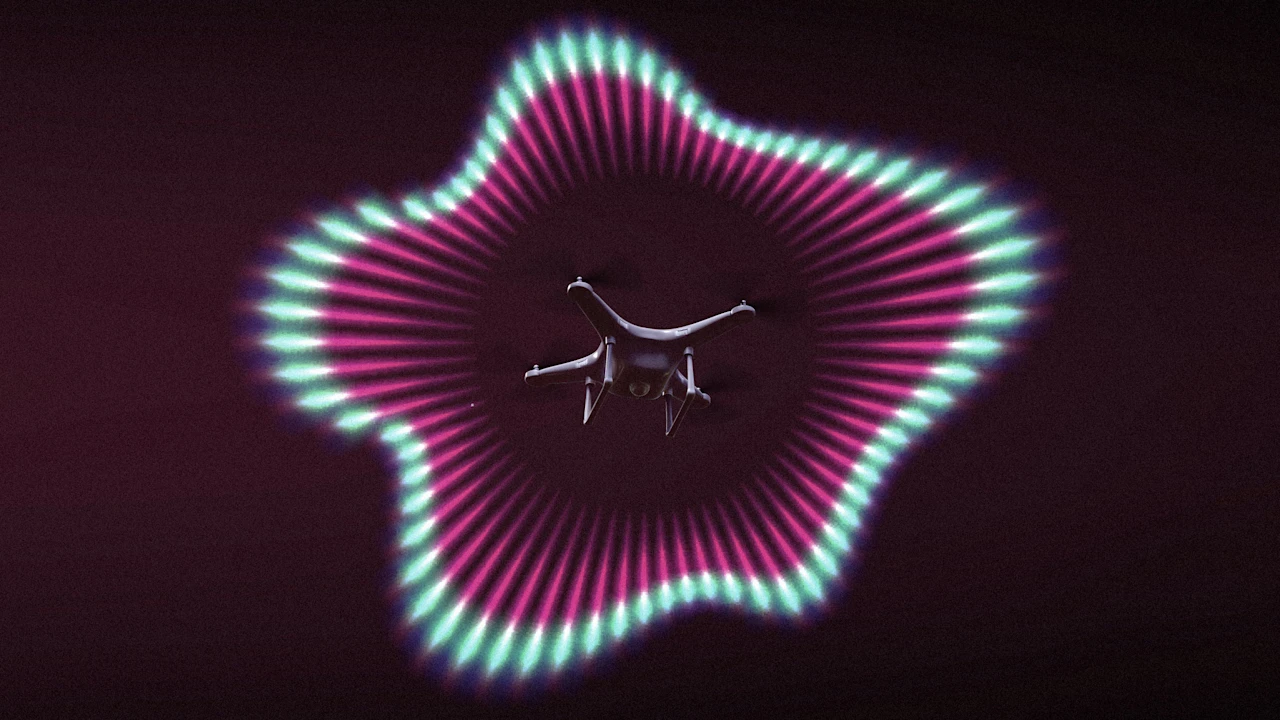
How AI-powered echolocation is giving small drones night vision
To help small aerial robots navigate in the dark and other low-visibility environments, my colleagues and I developed an ultrasound-based perception system inspired by bat echolocation. Current robots rely heavily on cameras or light detection and ranging , known as lidar, or both. But these sensors fail in visually challenging conditions, such as smoke, fog, dust, snow, or complete darkness. I’m a scientific engineer who develops bio-inspired microrobots. To solve this challenge, my research team looked at nature’s experts at navigating in poor visibility: bats. They thrive in dark, damp, and dusty caves and can detect obstacles as thin as a human hair using echolocation while weighing as little as two paper clips. They emit sound waves and listen to weak echoes reflected from objects. Ho

"You've got a friend in me": Co-Designing a Peer Social Robot for Young Newcomers' Language and Cultural Learning
arXiv:2603.18804v3 Announce Type: replace-cross Abstract: Community literacy programs supporting young newcomer children in Canada face limited staffing and scarce one-to-one time, which constrains personalized English and cultural learning support. This paper reports on a co-design study with United for Literacy tutors that informed Maple, a table-top, peer-like Socially Assistive Robot (SAR) designed as a practice partner within tutor-mediated sessions. From shadowing and co-design interviews, we derived newcomer-specific requirements and added them in an integrated prototype that uses short story-based activities, multi-modal scaffolding and embedded quizzes that support attention while producing tutor-actionable formative signals. We contribute system design implications for tutor-in-t
Exploring Sidewalk Sheds in New York City through Chatbot Surveys and Human Computer Interaction
arXiv:2601.23095v2 Announce Type: replace Abstract: Sidewalk sheds are a common feature of the streetscape in New York City, reflecting ongoing construction and maintenance activities. However, policymakers and local business owners have raised concerns about reduced storefront visibility and altered pedestrian navigation. Although sidewalk sheds are widely used for safety, their effects on pedestrian visibility and movement are not directly measured in current planning practices. To address this, we developed an AI-based chatbot survey that collects image-based annotations and route choices from pedestrians, linking these responses to specific shed design features, including clearance height, post spacing, and color. This AI chatbot survey integrates a large language model (e.g., Google's
Discussion
Sign in to join the discussion
No comments yet — be the first to share your thoughts!