
Event-based Facial Keypoint Alignment via Cross-Modal Fusion Attention and Self-Supervised Multi-Event Representation Learning
arXiv:2509.24968v2 Announce Type: replace Abstract: Event cameras offer unique advantages for facial keypoint alignment under challenging conditions, such as low light and rapid motion, due to their high temporal resolution and robustness to varying illumination. However, existing RGB facial keypoint alignment methods do not perform well on event data, and training solely on event data often leads to suboptimal performance because of its limited spatial information. Moreover, the lack of comprehensive labeled event datasets further hinders progress in this area. To address these issues, we pro — Donghwa Kang, Junho Kim, Dongwoo Kang
View PDF HTML (experimental)
Abstract:Event cameras offer unique advantages for facial keypoint alignment under challenging conditions, such as low light and rapid motion, due to their high temporal resolution and robustness to varying illumination. However, existing RGB facial keypoint alignment methods do not perform well on event data, and training solely on event data often leads to suboptimal performance because of its limited spatial information. Moreover, the lack of comprehensive labeled event datasets further hinders progress in this area. To address these issues, we propose a novel framework based on cross-modal fusion attention (CMFA) and self-supervised multi-event representation learning (SSMER) for event-based facial keypoint alignment. Our framework employs CMFA to integrate corresponding RGB data, guiding the model to extract robust facial features from event input images. In parallel, SSMER enables effective feature learning from unlabeled event data, overcoming spatial limitations. Extensive experiments on our real-event E-SIE dataset and a synthetic-event version of the public WFLW-V benchmark show that our approach consistently surpasses state-of-the-art methods across multiple evaluation metrics.
Comments: 14 pages, 10 figures
Subjects:
Computer Vision and Pattern Recognition (cs.CV)
Cite as: arXiv:2509.24968 [cs.CV]
(or arXiv:2509.24968v2 [cs.CV] for this version)
https://doi.org/10.48550/arXiv.2509.24968
arXiv-issued DOI via DataCite
Submission history
From: DongHwa Kang [view email] [v1] Mon, 29 Sep 2025 16:00:50 UTC (7,382 KB) [v2] Fri, 27 Mar 2026 18:02:39 UTC (9,097 KB)
Sign in to highlight and annotate this article

Conversation starters
Daily AI Digest
Get the top 5 AI stories delivered to your inbox every morning.
More about
researchpaperarxiv
Closing the responsibility gap: allocating responsibility according to prerequisite control and expectations for personal benefits
Some authors argue that responsibility gaps can open up when no one has sufficient control over negative outcomes. With recent developments in Artificial Intelligence, the responsibility gap is thought to have grown since AI technologies can produce negative outcomes over which people do not have sufficient control. This paper aims to close the responsibility gap by recommending allocating responsibility according to a strategy constituted by two conditions: in scenarios where no one seems to be responsible for negative outcomes, responsibility should be primarily allocated to people who have (1) intentionally and voluntarily exercised prerequisite control that causally makes the current situation uncontrolled, and (2) expected personal benefits when exercising the prerequisite control. Th

Remote Work: The New Normal, Though Divides Remain
Remote and hybrid work have become a permanent feature of the UK labour market, with up to 44% of working adults now operating outside traditional office settings, according to the UK Remote Work Report 2026 by MyPerfectCV. The firm’s research highlights a fundamental shift in how and where people work, with flexible arrangements moving from […] The post Remote Work: The New Normal, Though Divides Remain appeared first on DIGIT .

AI gossip
Generative AI chatbots like OpenAI's ChatGPT and Google's Gemini routinely make things up. They "hallucinate" historical events and figures, legal cases, academic papers, non-existent tech products and features, biographies, and news articles. Recently, some have argued that these hallucinations are better understood as bullshit. Chatbots produce streams of text that look truth-apt without concern for the truthfulness of what this text says. But can they also gossip? We argue that they can. After some definitions and scene-setting, we focus on a recent example to clarify what AI gossip looks like before considering some distinct harms — what we call "technosocial harms" — that follow from it.
Knowledge Map
Connected Articles — Knowledge Graph
This article is connected to other articles through shared AI topics and tags.
More in Research Papers

Blocking the Internet Archive Won’t Stop AI, But It Will Erase the Web’s Historical Record
<div class="field field--name-body field--type-text-with-summary field--label-hidden"><div class="field__items"><div class="field__item even"><p>Imagine a newspaper publisher announcing it will no longer allow libraries to keep copies of its paper. </p> <p><span>That’s effectively what’s begun happening online in the last few months. The Internet Archive—the world’s largest digital library—has preserved newspapers since it went online </span><a href="https://en.wikipedia.org/wiki/Wayback_Machine"><span>in the mid-1990s</span></a><span>. The Archive’s mission is to preserve the web and make it accessible to the public. To that end, the organization operates the Wayback Machine, which now contains </span><a href="https://blog.archive.org/trillion/"><span>more than one trillion archived web p

Report: 95% of Organisations do not Have Full Trust in Cybersecurity Vendors
The report examines one of cybersecurity’s most urgent and overlooked necessities: trust. Sophos, a global security solutions firm, have published their findings from a vendor-agnostic study, based on responses from 5,000 organisations across 17 countries. The Cybersecurity Trust Reality 2026 report reveals a critical challenge facing CISOs: Trust in cybersecurity vendors is fragile, difficult to […] The post Report: 95% of Organisations do not Have Full Trust in Cybersecurity Vendors appeared first on DIGIT .
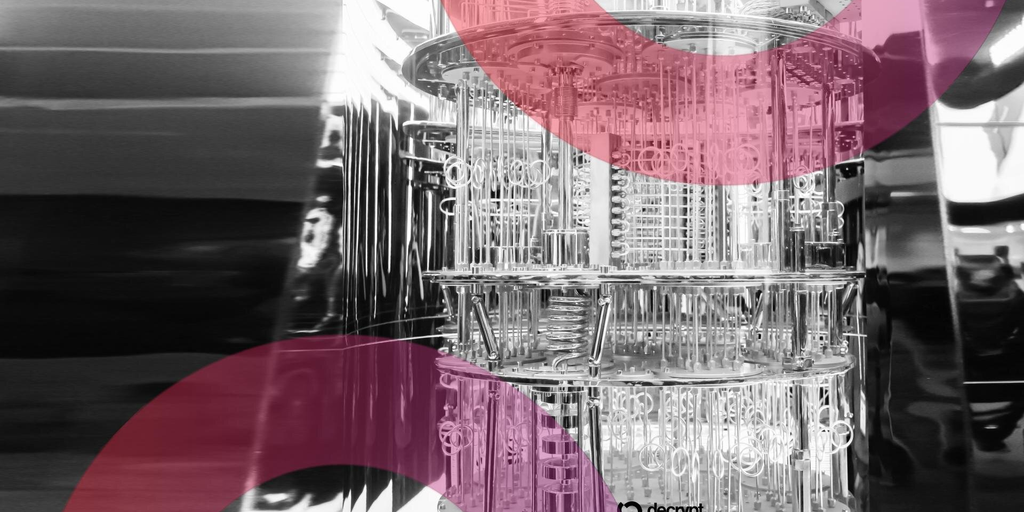

A quantum computer may need just 10,000 qubits to empty your crypto wallets, researchers say
The research shows quantum computers may break bitcoin and ether wallet encryption with far fewer qubits than previously thought, accelerating the push toward post-quantum security.
Discussion
Sign in to join the discussion
No comments yet — be the first to share your thoughts!