

VLM-SAFE: Vision-Language Model-Guided Safety-Aware Reinforcement Learning with World Models for Autonomous Driving
arXiv:2505.16377v2 Announce Type: replace-cross Abstract: Autonomous driving policy learning with reinforcement learning (RL) is fundamentally limited by low sample efficiency, weak generalization, and a dependence on unsafe online trial-and-error interactions. Although safe RL introduces explicit constraints or costs, existing methods often fail to capture the semantic meaning of safety in real driving scenes, leading to conservative behaviors in simple cases and insufficient risk awareness in complex ones. To address this issue, we propose VLM-SAFE, an offline safe RL framework that follows — Yansong Qu, Zilin Huang, Zihao Sheng, Jiancong Chen, Yue Leng, Samuel Labi, Sikai Chen
View PDF
Abstract:Autonomous driving policy learning with reinforcement learning (RL) is fundamentally limited by low sample efficiency, weak generalization, and a dependence on unsafe online trial-and-error interactions. Although safe RL introduces explicit constraints or costs, existing methods often fail to capture the semantic meaning of safety in real driving scenes, leading to conservative behaviors in simple cases and insufficient risk awareness in complex ones. To address this issue, we propose VLM-SAFE, an offline safe RL framework that follows a human cognitive loop of observe-imagine-evaluate-act. Starting from offline driving data, VLM-SAFE observes traffic scenarios and leverages a vision-language model (VLM) to provide semantic safety signals grounded in scene understanding. A learned world model then imagines future trajectories from the observed context, enabling the agent to reason about possible consequences without interacting with the real environment. Rather than using imagined rollouts solely for return estimation, VLM-SAFE further evaluates these predicted futures with VLM-based safety guidance, explicitly coupling future anticipation with semantic risk assessment. The resulting safety-aware imagined experience is finally used to optimize the policy via actor-critic learning, such that actions are chosen based on both predicted outcomes and their safety implications. By tightly integrating observation, imagination, evaluation, and action into a unified closed loop, VLM-SAFE enables safer and more efficient offline policy learning for autonomous driving. Extensive experiments in simulation show that VLM-SAFE achieves improved safety, stronger robustness under traffic-density shift, and a better safety-performance trade-off than representative baselines.
Comments: N/A
Subjects:
Robotics (cs.RO); Artificial Intelligence (cs.AI)
Cite as: arXiv:2505.16377 [cs.RO]
(or arXiv:2505.16377v2 [cs.RO] for this version)
https://doi.org/10.48550/arXiv.2505.16377
arXiv-issued DOI via DataCite
Submission history
From: Yansong Qu [view email] [v1] Thu, 22 May 2025 08:29:59 UTC (1,737 KB) [v2] Sat, 28 Mar 2026 21:45:35 UTC (2,252 KB)
Sign in to highlight and annotate this article

Conversation starters
Daily AI Digest
Get the top 5 AI stories delivered to your inbox every morning.
More about
researchpaperarxiv
Research across 1,372 participants and 9K+ trials details "cognitive surrender", where most subjects had minimal AI skepticism and accepted faulty AI reasoning (Kyle Orland/Ars Technica)
Kyle Orland / Ars Technica : Research across 1,372 participants and 9K+ trials details cognitive surrender , where most subjects had minimal AI skepticism and accepted faulty AI reasoning When it comes to large language model-powered tools, there are generally two broad categories of users.
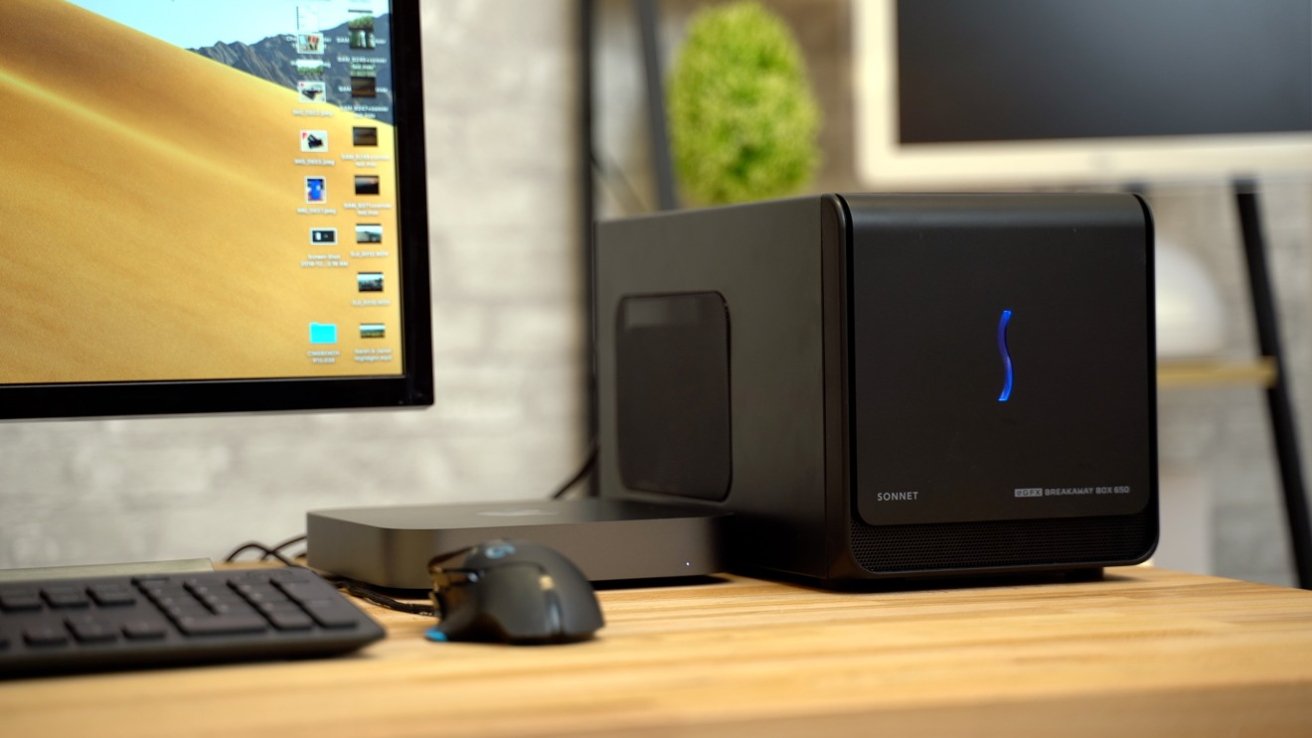
Apple reportedly signed a 3rd-party driver, by Tiny Corp, for AMD or Nvidia eGPUs for Apple Silicon Macs; it s meant for AI research, not accelerating graphics (AppleInsider)
AppleInsider : Apple reportedly signed a 3rd-party driver, by Tiny Corp, for AMD or Nvidia eGPUs for Apple Silicon Macs; it's meant for AI research, not accelerating graphics Apple has signed a driver for AMD or Nvidia eGPUs connected to Apple Silicon but there are some big caveats, and it won't improve your graphics.

Knowledge Map
Connected Articles — Knowledge Graph
This article is connected to other articles through shared AI topics and tags.
More in Research Papers
![[D] KDD Review Discussion](https://d2xsxph8kpxj0f.cloudfront.net/310419663032563854/konzwo8nGf8Z4uZsMefwMr/default-img-wave-pattern-4YWNKzoeu65vYpqRKWMiWf.webp)
[D] KDD Review Discussion
KDD 2026 (Feb Cycle) reviews will release today (4-April AoE), This thread is open to discuss about reviews and importantly celebrate successful reviews. Let us all remember that review system is noisy and we all suffer from it and this doesn't define our research impact. Let's all prioritise reviews which enhance our papers. Feel free to discuss your experiences submitted by /u/BomsDrag [link] [comments]

The CEO Building the Most Powerful AI on Earth Just Admitted It Will Destroy Half Your Industry.
January 26, 2026. Dario Amodei published a 20,000-word essay warning that AI will displace 50% of entry-level white-collar jobs in 1–5… Continue reading on Towards AI »

New Rowhammer attack can grant kernel-level control on Nvidia workstation GPUs
A study from researchers at UNC Chapel Hill and Georgia Tech shows that GDDR6-based Rowhammer attacks can grant kernel-level access to Linux systems equipped with GPUs based on Nvidia's Ampere and Ada Lovelace architectures. The vulnerability appears significantly more severe than what was outlined in a paper last year. Read Entire Article
Discussion
Sign in to join the discussion
No comments yet — be the first to share your thoughts!