
AMD Zen 6 'Venice' ES chips break cover with up to 192 cores, 32 per CCD, in early stress test — Kenya, Congo, Nigeria platforms leaked
AMD Zen 6 'Venice' ES chips break cover with up to 192 cores, 32 per CCD, in early stress test — Kenya, Congo, Nigeria platforms leaked
(Image credit: AMD)
Engineering samples of AMD's upcoming EPYC Zen 6 datacenter CPUs, codenamed Venice, have cropped up online. Uncovered by Olrak29_ on X, six different test results were published on OpenBenchmark.org, including some CPU specifications._
Go deeper with TH Premium: CPU
Sample 100-000001056-09 was tested on the Kenya platform featuring 128 cores, four CCDs, and two IODs. Lastly, three samples were tested on the Nigeria platform featuring two CPUs per setup. Sample 100-0002138-02 featuring 64 cores, two CCDs, two IODs, sample 100-000001056-03 featuring 128 cores, four CCDs, two IODs, and sample 100-000001051-08 featuring 192 cores with eight CCDs and two IODs.
Article continues below
Congo PlatformAMD Eng Sample 100-000001053-03 192C/384T8CCD + 2IODhttps://t.co/tTahcspJY0AMD Eng Sample 100-000001863-02 64C/128T2CCD + 2IODhttps://t.co/EpLr9zZJkMMarch 29, 2026
Kenya PlatformAMD Eng Sample 100-000001056-09 128C/256T4CCD + 2IODhttps://t.co/DWjhZo3eEVMarch 29, 2026
Nigeria Platform 2P2x AMD Eng Sample: 100-000002138-02 64C/128T2x(2CCD + 2IOD)https://t.co/I2OtpWx1mm2x AMD Eng Sample: 100-000001056-03 128C/256T2x(4CCD + 2IOD)https://t.co/oDkSGh3smf2 x AMD Eng Sample: 100-000001051-08 192C/384T2x(8CCD + 2IOD)https://t.co/faY1JbX4FBMarch 29, 2026
The CCD count of all the aforementioned samples reveals that these chips use likely use Zen 6c cores and come with higher-density CCDs compared to Zen 5. The 64-core and 128-core models come with 32 cores per CCD, while the 192-core trims use 24 cores per CCD. These numbers back up previous reports of Zen 6 improving the number of cores available on each CCD. AMD has yet to detail Zen 6 CCDs, but rumors suggest they'll come with up to 12 Zen 6 cores. Regardless, there's a high likelihood that space-optimized Zen 6c cores are at play here.
Unfortunately, some of the Openbenchmark listings are no longer available, but we were able to get clock speeds for one of the 64-core chips, which peaked at 3.54GHz.
Zen 6 is AMD's next-generation CPU architecture set to release in 2027, featuring up to 256 cores for the flagship datacenter parts. Venice will run on AMD's upcoming SP7 socket and feature significant improvements to memory bandwidth compared to Turin. One of the architecture's highlights is the jump in core count for both Zen 6 and Zen 6c. Zen 6 cores will reportedly be housed in 12-core CCDs, and Zen 6c cores will be housed in 32-core CCDs, respectively. AMD is also allegedly boosting L3 cache capacity to 48MB for Zen as well.
We've yet to hear any official news about Zen 6 in consumer platforms, codenamed Olympic Ridge. In generations past, AMD would introduce its consumer range before turning its attention to the data center. However, the company has only committed to a 2026 release for Venice, not for Olympic Ridge, so we could see the Epyc chips first as AMD tries to capitalize on renewed data center demand.
Follow Tom's Hardware on Google News, or add us as a preferred source, to get our latest news, analysis, & reviews in your feeds.
Aaron Klotz is a contributing writer for Tom’s Hardware, covering news related to computer hardware such as CPUs, and graphics cards.
Sign in to highlight and annotate this article

Conversation starters
Daily AI Digest
Get the top 5 AI stories delivered to your inbox every morning.
More about
platform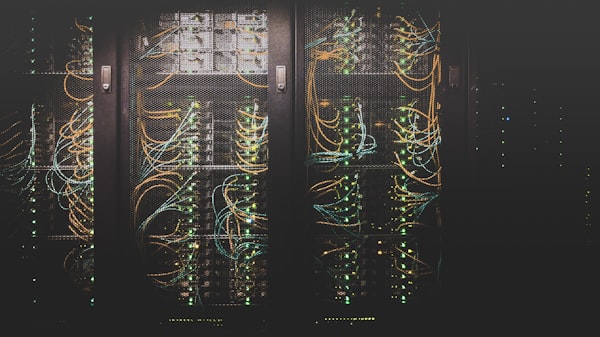
Building an Engineering & Security News Aggregator (10 Sources, No APIs)
<p>We built a curated engineering and security news aggregator that pulls from 10 high-signal sources, deduplicates content, and updates every 6 hours.</p> <p>No paid APIs. No scraping. No login. Just clean, structured news for developers.</p> <p>This post breaks down exactly how it works.</p> <h2> What This Is </h2> <p>A lightweight news wire combining:</p> <ul> <li>Hacker News </li> <li>Lobsters </li> <li>InfoQ </li> <li>Cloudflare Blog </li> <li>Krebs on Security </li> <li>The Hacker News (Security) </li> <li>NIST NVD (vulnerabilities) </li> <li>GitHub Blog </li> <li>OpenAI Blog </li> <li>Anthropic Research </li> </ul> <p>The goal: <strong>high-quality signal, zero noise, zero cost</strong>.</p> <h2> Why Build This? </h2> <p>Most engineering/news aggregators fail in one of these ways:</

How YouTube Works: Video Streaming Architecture Deep Dive
<h1> How YouTube Works: Video Streaming Architecture Deep Dive </h1> <p>Every minute, over 500 hours of video content gets uploaded to YouTube. Every day, billions of hours of video are watched across the globe. Behind this staggering scale lies one of the most sophisticated distributed systems ever built, handling everything from video ingestion and processing to real-time delivery and personalized recommendations.</p> <p>Understanding YouTube's architecture isn't just academic curiosity. The patterns and principles powering YouTube's video streaming infrastructure have become the foundation for countless modern applications, from enterprise video platforms to live streaming services. Whether you're building the next TikTok competitor or designing internal video training systems, these ar
🔬 3D Science Lab — Interactive 3D STEM Education with 40+ Experiments Built Using Next.js and Three.js
<h2> Making Science Interactive </h2> <p>Traditional science education relies on static textbook diagrams and 2D illustrations. But science happens in three dimensions. I built <strong>3D Science Lab</strong> to make STEM education immersive — allowing students to interact with experiments in 3D, rotate models, zoom in on details, and truly understand the science behind what they see.</p> <h2> What is 3D Science Lab? </h2> <p>3D Science Lab is an interactive web platform featuring <strong>40+ 3D science experiments</strong> across four core disciplines:</p> <ul> <li> <strong>Physics</strong> — mechanics, optics, waves, electricity</li> <li> <strong>Chemistry</strong> — molecular structures, reactions, periodic table in 3D</li> <li> <strong>Biology</strong> — cell structures, organ systems,
Knowledge Map
Connected Articles — Knowledge Graph
This article is connected to other articles through shared AI topics and tags.
More in Products
Stop Writing Zod Schemas by Hand: What I Learned After 40 API Endpoints
<p>*</p> <p>I have a confession to make.</p> <p>I spent three hours debugging a Zod schema on a Friday night. Not because the validation was complex. Not because the business logic was tricky.</p> <p><strong>Because the backend team renamed <code>avatar</code> to <code>avatar_url</code> in a deeply nested object. And I missed it.</strong></p> <p>Three hours. For a single field name change.</p> <p>If you work with TypeScript and APIs, you know the drill. You have:</p> <ol> <li>Your TypeScript types</li> <li>Your Zod schemas for runtime validation </li> <li>The actual JSON data from your API</li> </ol> <p><strong>Three versions of the same data shape.</strong> All have to stay in sync.</p> <p>And when something changes, you get to play detective. Scrolling through JSON responses, comparing f
Sun Shrimp Welfare
The supposition that we live in a "goldilocks zone" is frankly just nonsense built up by an anthropocentric need to feel self-important, like Copernicus I am here to rescue us from a self-absorbed disaster of thought. Indeed, what is required for life to form is the ability to create complex structures with causal persistence times above a threshold. With this in mind we are able to find many areas where organisms could persist, if we just had the eyes to see them, namely the Sun! The surface of the Sun is frankly massive, mjx-container[jax="CHTML"] { line-height: 0; } mjx-container [space="1"] { margin-left: .111em; } mjx-container [space="2"] { margin-left: .167em; } mjx-container [space="3"] { margin-left: .222em; } mjx-container [space="4"] { margin-left: .278em; } mjx-container [space
I built a Mac app after getting surprised by my Claude bill
<p>A few weeks ago I had one of those dumb founder moments.</p> <p>I was happily using Claude and other LLM tools to build faster, ship faster, and tell myself it was all worth it because I was being "productive".</p> <p>Then I looked at the bill.</p> <p>It was not catastrophic. It was worse than that. It was the kind of number that makes you feel mildly stupid because you know exactly how it happened.</p> <p>A hundred little prompts. Background usage. Testing loops. Switching between tools. "Just one more run." It adds up fast when you are building every day.</p> <p>What annoyed me most was not even the cost. It was the invisibility.</p> <p>I could see CPU usage. Memory usage. Battery usage. Network usage. But the thing I was suddenly paying real money for, tokens, was basically invisible
DeepSource for JavaScript/TypeScript Projects
<p><strong>DeepSource gives JavaScript and TypeScript projects a static analysis platform that goes well beyond what ESLint covers on its own.</strong> Its JavaScript analyzer detects over 100 issues across bug risks, security vulnerabilities, anti-patterns, and performance problems - with Autofix generating ready-to-apply code changes for many of those findings. For teams already running ESLint locally, DeepSource adds a CI/CD layer with a dashboard, PR comments, and automated remediation that turns code review into something closer to an automated workflow.</p> <p>This guide covers everything needed to set up DeepSource for JavaScript and TypeScript projects - from the initial <code>.deepsource.toml</code> configuration to React, Next.js, and Node.js-specific rules, security issue detect
Discussion
Sign in to join the discussion
No comments yet — be the first to share your thoughts!