

Upstart Wall Street research firm says it sent an analyst to Strait of Hormuz. Here’s what they learned
Citrini Research said it dispatched an analyst to Oman's Musandam Peninsula, where he traveled by boat to observe shipping activity firsthand.
A satellite view of the Strait of Hormuz, a strategic waterway between Iran and Oman that links the Persian Gulf to the Arabian Sea.
Gallo Images | Getty Images
As the world's oil traders parsed satellite images and official statements for clues on the fate of the Strait of Hormuz, one research firm seems to have taken a different approach: It claims that it sent an analyst directly into the conflict zone.
Citrini Research, which issued a market-shaking bearish call on artificial intelligence earlier this year, said it dispatched an analyst to Oman's Musandam Peninsula, where the person traveled by boat to observe shipping activity firsthand amid escalating tensions between Iran and the U.S. What the analyst claims to have found challenges the dominant narrative gripping global markets that the critical oil artery is effectively shut.
Instead, the analyst, who remains anonymous due to the sensitivity of the activity, found that vessels are still moving through the strait, with traffic picking up in recent days to roughly 15 ships per day, according to the firm's report posted on Substack. While far below normal levels, the flow suggests the disruption is partial and evolving rather than absolute.
"Tankers passing through four or five a day, completely dark on AIS. The volume, they said, is higher than what the data suggests, and it's been accelerating in the past couple days through the Qeshm channel," Citrini's post said.
AIS is a ship-tracking system that broadcasts a vessel's location, speed, identity and route. Citrini asserts that the actual shipping volume is higher than reported data as many ships turn off their transponders and are not visible on official tracking systems.
Citrini didn't immediately respond to CNBC's request for comments.
Based on the Substack post, the analyst's interviews with fishermen, smugglers and regional officials point to a system in which Iran is selectively allowing ships to pass. Tankers are required to secure approval before transiting waters near Iranian territory, creating what the firm described as a "functional checkpoint" rather than a blockade, Citrini said in its post.
"This should drive home that what we've described as our view of the conflict is nuanced – it doesn't fit neatly into 'strait open crude down' or 'strait closed crude parabolic,'" the firm said.
To be sure, the findings are based on a single field trip and anecdotal accounts that are difficult to independently verify, particularly given limited transparency in the region.
The firm expects a more prolonged disruption that embeds a lasting risk premium into oil markets. That view underpins a preference for longer-dated crude exposure, with the firm favoring December 2026 WTI contracts over the front month.
"We think the disruption is longer and the new normal involves a permanent risk premium, but that we'll likely see as high as 50% of pre-conflict traffic within the next 4-6 weeks," Citrini said.
CNBC Technology
https://www.cnbc.com/2026/04/06/wall-street-firm-sends-analyst-to-the-strait-of-hormuz-heres-what-they-found-out.htmlSign in to highlight and annotate this article

Conversation starters
Daily AI Digest
Get the top 5 AI stories delivered to your inbox every morning.
More about
research
China Is Willing to Coordinate on AI Governance
View the official memo here. China has consistently signaled a willingness to engage on global AI governance since at least 2017. This memo compiles key statements from the Chinese government and prominent figures demonstrating their desire to coordinate on the problem of AI. Chinese Vice Premier Ding Xuexiang, at the 2025 World Economic Forum, said: [ ] The post China Is Willing to Coordinate on AI Governance appeared first on Machine Intelligence Research Institute .
Knowledge Map
Connected Articles — Knowledge Graph
This article is connected to other articles through shared AI topics and tags.
More in Countries
China Is Willing to Coordinate on AI Governance
View the official memo here. China has consistently signaled a willingness to engage on global AI governance since at least 2017. This memo compiles key statements from the Chinese government and prominent figures demonstrating their desire to coordinate on the problem of AI. Chinese Vice Premier Ding Xuexiang, at the 2025 World Economic Forum, said: [ ] The post China Is Willing to Coordinate on AI Governance appeared first on Machine Intelligence Research Institute .

World's largest battery maker is taking EV tech to the seas
The company, which commands 37% of the global electric vehicle battery market and 22% of the energy storage segment, has already equipped roughly 900 ships with its batteries. Most of these are small, nearshore vessels that operate along China's coastlines, at ports, or on inland waterways. Read Entire Article

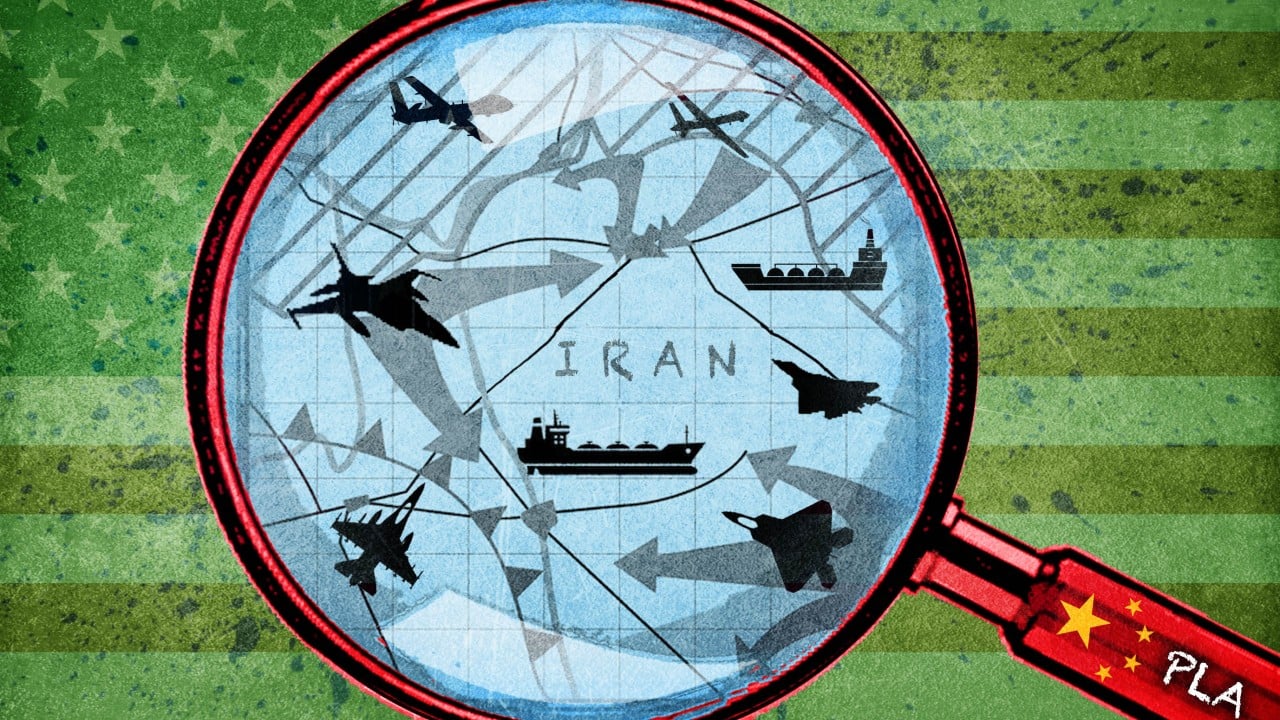
How lessons from Iran war could shape mainland China’s calculus on Taiwan
Whether it wraps up quickly or drags on, the repercussions of the US-Israeli war on Iran will echo for years, reshaping warfare, geopolitics, energy security and global perceptions of American tactical and strategic power. In the first of a three-part series, Mark Magnier looks at how the Iran war may alter Beijing’s approach to potential conflict over Taiwan, asymmetrical weaponry and the United States as an adversary. The US military is formidable, well-disciplined, projects deadly force...
Discussion
Sign in to join the discussion
No comments yet — be the first to share your thoughts!