
‘Treasure trove’ of antiviral proteins could inspire powerful molecular tools
‘Treasure trove’ of antiviral proteins could inspire powerful molecular tools
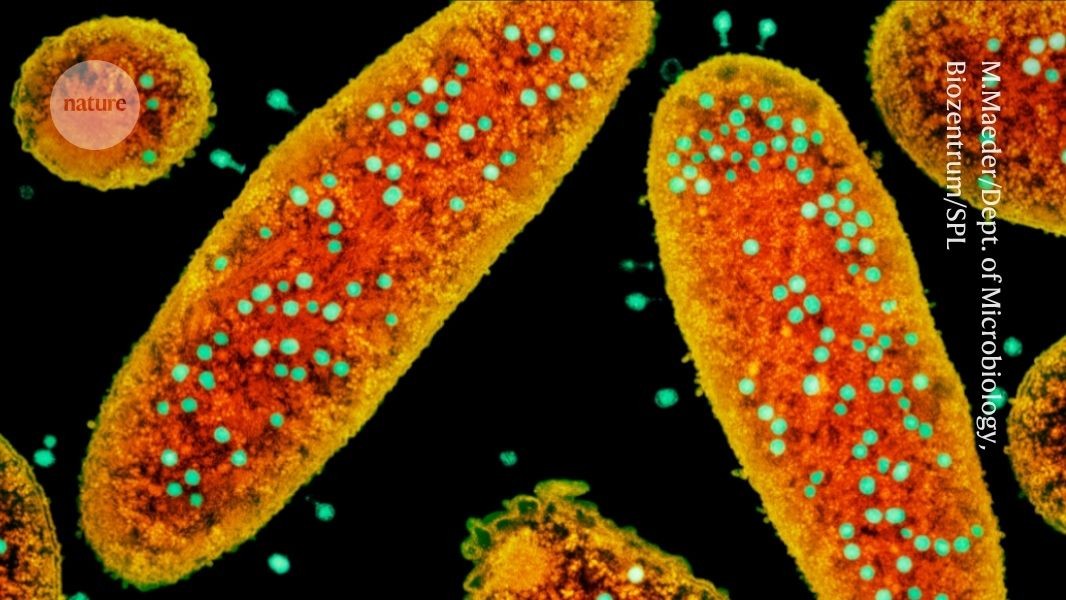
Escherichia coli produce a diverse array of proteins to help protect them against bacteriophages (green). Credit: M. Maeder/Dept of Microbiology, Biozentrum/SPL
Bacteria have been fighting off viruses using a huge arsenal of molecular weaponry that scientists did not know about — until now.
In studies published in Science today, two research teams describe the machine-learning algorithms they developed to screen bacterial genomes and identify proteins that are involved in protecting the microorganisms against viral invaders. Their analyses identified hundreds of thousands of potential antiviral proteins, which researchers could harness to develop innovative biotechnologies.
“This is a treasure trove for any biochemist,” says José Antonio Escudero, a microbiologist at the CSIC National Center for Biotechnology in Madrid, who was not involved in either study.
Previous discoveries of antiviral immune systems in bacteria include the gene-editing system CRISPR–Cas9 and DNA-snipping proteins called restriction enzymes. Researchers have repurposed both systems to create molecular tools for genetic engineering.
“There’s a hope that maybe there’s a next generation of molecular tools that would come from some of these new systems,” says Michael Laub, a microbiologist at the Massachusetts Institute of Technology in Cambridge and a co-author on one of the studies1.
Protein defences
When looking at the genome of a bacterium, “most of it is still dark matter”, says Escudero. “There are many things that we don’t know how they work or what they are.”
Previous studies had confirmed that bacteria use more than 250 proteins to protect themselves from viral infections. Researchers had suggested that the true bacterial immune system was much larger and more diverse than this, “But the big question was how much diversity and how can we actually predict it at scale?”, says Aude Bernheim, a microbiologist at the Pasteur Institute in Paris and a co-author on one of the papers2.
Bacteria use a decoy defence molecule to set a trap for viruses
In their study2, Bernheim and her colleagues trained deep-learning models on protein and genomic data to predict antiviral systems. Their goal was to identify the “full breadth of diversity of bacterial immunity”, says Bernheim. The analysis estimated that, on average, 1.5% of genes in a bacterial genome correspond to proteins that are involved in antiviral immunity — three times more than previous estimates. And more than 85% of the predicted protein families were not previously associated with immunity. Laboratory experiments on two bacterial species — Escherichia coli and Streptomyces albus — confirmed the presence of 12 ‘antiphage’ systems that ward off viruses called bacteriophages that infect bacteria. The systems had not previously been linked to antiviral defence.
In their paper, Laub and his colleagues1 designed a separate machine-learning tool called DefensePredictor, which predicts bacterial immune proteins on the basis of gene and protein data from 17,000 bacterial genomes.
When tested on 69 diverse strains of E. coli, DefensePredictor identified 624 proteins as defence-related immune systems, more than 100 of which were previously unknown. In lab experiments, Laub and his colleagues confirmed the defence activity in 42 cases.
Both studies come to the same conclusion: that researchers have been “massively underestimating the number of defence systems”, says Laub. The research “brings to light how many systems are out there still to be characterized”, he adds.
The discoveries include “hundreds of genes that we didn’t know were related”, says Escudero.
Sign in to highlight and annotate this article

Conversation starters
Daily AI Digest
Get the top 5 AI stories delivered to your inbox every morning.
Knowledge Map
Connected Articles — Knowledge Graph
This article is connected to other articles through shared AI topics and tags.



Discussion
Sign in to join the discussion
No comments yet — be the first to share your thoughts!