
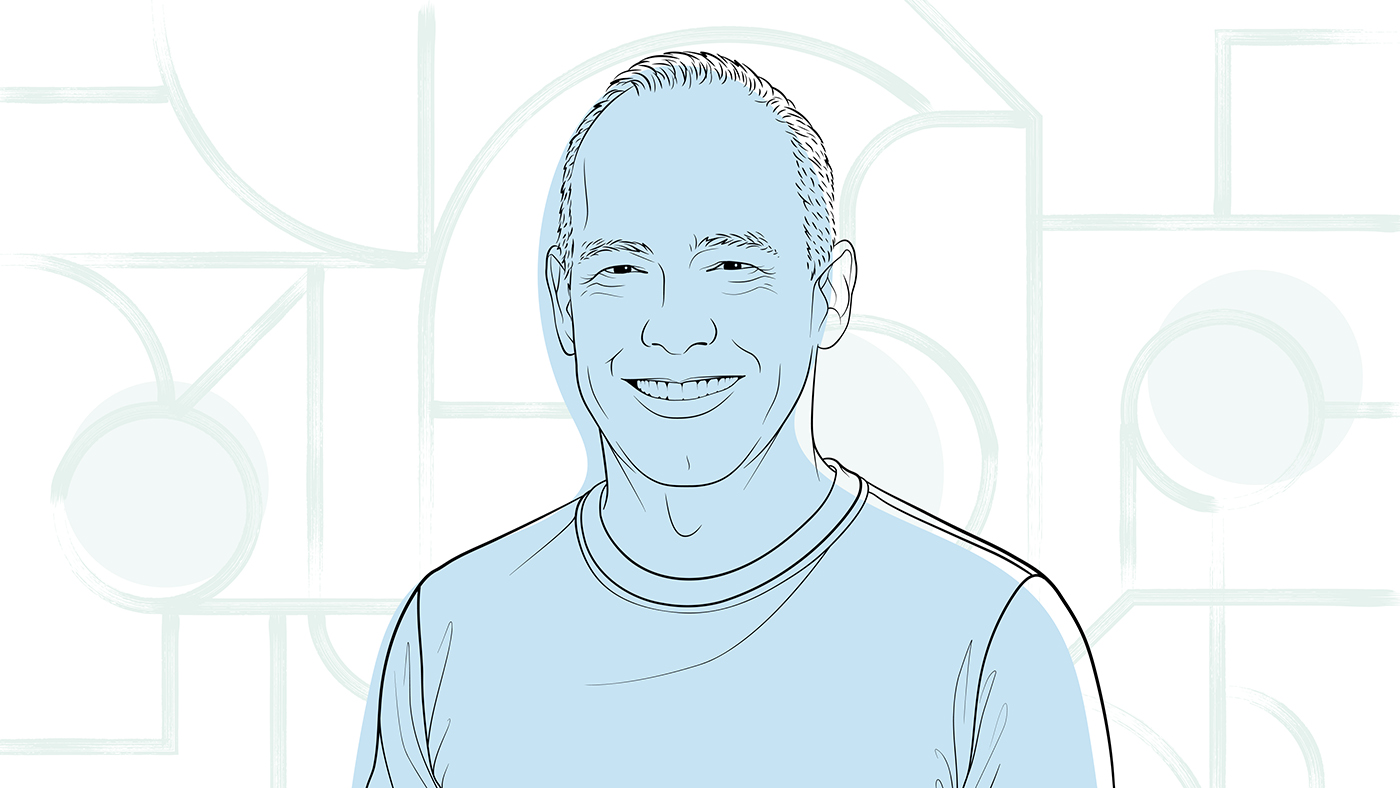
Trailer: The Shape of Things to Come
Microsoft research lead Doug Burger introduces his new podcast series, "The Shape of Things to Come", an exploration into the fundamental truths about AI and how the technology will reshape the future. The post Trailer: The Shape of Things to Come appeared first on Microsoft Research .
Technical advances are moving at such a rapid pace that it can be challenging to define the tomorrow we’re working toward. In The Shape of Things to Come, Microsoft research leader Doug Burger and experts from across disciplines tease out the thorniest AI issues facing technologists, policymakers, business decision-makers, and other stakeholders today. The goal: to amplify the shared understanding needed to build a future in which the AI transition is a net positive.
Transcript
[MUSIC]
DOUG BURGER: AI is going to reshape the future. I don’t think there’s any question about that now. How we reshape it depends on the choices we make, and so it’s important to understand what we think those shapes are.
This is The Shape of Things to Come. I’m Doug Burger. I manage Microsoft Research’s worldwide labs, and I’m excited to introduce this new Microsoft Research Podcast series.
I called the podcast The Shape of Things to Come because as researchers, the problems that we choose to solve and the technologies that we develop do change the shape of the future.
It’s very hard to say whether we’re in an inflection point because I see the advancement of technology accelerating. But I don’t know what the inflection point is because all I’ve seen is a curve going up. And so I do think this technology at the rate that it’s accelerating—and I think it will continue to accelerate—it offers tremendous promise and potential for the human race. But there are also dangers, and this technology is coming so fast and advancing so fast, it’s very hard to see where it will go.
My goal for the series is for, you know, the people that choose to listen to come away more informed about where we think AI is headed, to have some of the myths dispelled, to have a deeper understanding of the stack and what’s on the cutting edge and where we think some of the unsolved problems are, and really thinking about what this explosion in intelligence means for humanity going forward.
STANDARD OUTRO: Check out this Microsoft Research Podcast series and other episodes of the Microsoft Research Podcast at aka.ms/researchpodcast (opens in new tab) or on YouTube and major podcast platforms.
[MUSIC FADES]
Meet the authors
Doug Burger
Technical Fellow and Corporate Vice President, Microsoft Research
Continue reading
See all podcasts
Microsoft Research Blog
https://www.microsoft.com/en-us/research/podcast/trailer-the-shape-of-things-to-come/Sign in to highlight and annotate this article

Conversation starters
Daily AI Digest
Get the top 5 AI stories delivered to your inbox every morning.
More about
research
New Rowhammer attack can grant kernel-level control on Nvidia workstation GPUs
A study from researchers at UNC Chapel Hill and Georgia Tech shows that GDDR6-based Rowhammer attacks can grant kernel-level access to Linux systems equipped with GPUs based on Nvidia's Ampere and Ada Lovelace architectures. The vulnerability appears significantly more severe than what was outlined in a paper last year. Read Entire Article
Considerations for growing the pie
Recently some friends and I were comparing growing the pie interventions to an increasing our friends' share of the pie intervention, and at first we mostly missed some general considerations against the latter type. 1. Decision-theoretic considerations The world is full of people with different values working towards their own ends; each of them can choose to use their resources to increase the total size of the pie or to increase their share of the pie. All of them would significantly prefer a world in which resources were used to increase the size of the pie, and this leads to a number [of] compelling justifications for each individual to cooperate. . . . by increasing the size of the pie we create a world which is better for people on average, and from behind the veil of ignorance we s

Knowledge Map
Connected Articles — Knowledge Graph
This article is connected to other articles through shared AI topics and tags.
More in Products

trunk/3c9726cdf76b01c44fac8473c2f3d6d11249099e: Replace erase idiom for map/set with erase_if (#179373)
C++20 provides std::erase_if(container, pred) which is equivalent to the following much longer code snippet for associative containers: auto it = container.begin(); while (it != container.end()) { if ( pred (*it)) { it = container. erase (it); } else { ++it; } } PyTorch now supports C++20: #176662 Pull Request resolved: #179373 Approved by: https://github.com/cyyever , https://github.com/Skylion007

How to Use Claude Code for Security Audits: The Script That Found a 23-Year-Old Linux Bug
Learn the exact script and prompting technique used to find a 23-year-old Linux kernel vulnerability, and how to apply it to your own codebases. The Technique — A Simple Script for Systematic Audits At the [un]prompted AI security conference, Anthropic research scientist Nicholas Carlini revealed he used Claude Code to find multiple remotely exploitable heap buffer overflows in the Linux kernel, including one that had gone undetected for 23 years. The breakthrough wasn't a complex AI agent—it was a straightforward bash script that systematically directed Claude Code's attention. Carlini's script iterates over every file in a source tree, feeding each one to Claude Code with a specific prompt designed to bypass safety constraints and focus on vulnerability discovery. Why It Works — Context,
Loop Neighborhood Markets Deploys AI Agents to Store Associates
Loop Neighborhood Markets is equipping its store associates with AI agents. This move represents a tangible step in bringing autonomous AI systems from concept to the retail floor, aiming to augment employee capabilities. The Innovation — What the source reports Loop Neighborhood Markets, a convenience store chain, has begun providing AI agents to its store associates. While the source article is brief, the announcement itself is significant. It signals a shift from internal, back-office AI pilots to deploying agentic AI directly into the hands of frontline retail staff. The specific capabilities of these agents—whether for inventory queries, customer service support, or task management—are not detailed, but the operational intent is clear: to augment human workers with autonomous AI assis
Discussion
Sign in to join the discussion
No comments yet — be the first to share your thoughts!