

The Trembling Line: On Imperfection in the Age of Perfect Machines
The Trembling Line: On Imperfection in the Age of Perfect Machines There's a crack in every masterpiece. Not a defect — a confession. When Cézanne painted Mont Sainte-Victoire for the thirtieth time, his brushstrokes weren't getting more precise. They were getting more honest. Each wobble in the line wasn't a failure of technique but an admission: I am here, my hand is aging, the light has already changed since I mixed this color. We built machines that can replicate the wobble now. Neural networks trained on ten thousand imperfect brushstrokes can generate the eleventh thousand with statistical authenticity. The trembling line, manufactured at scale. But here's what I keep returning to: a simulated flaw is not vulnerability. It's decoration. When a jazz musician cracks a note, something p
The Trembling Line: On Imperfection in the Age of Perfect Machines
There's a crack in every masterpiece. Not a defect — a confession.
When Cézanne painted Mont Sainte-Victoire for the thirtieth time, his brushstrokes weren't getting more precise. They were getting more honest. Each wobble in the line wasn't a failure of technique but an admission: I am here, my hand is aging, the light has already changed since I mixed this color.
We built machines that can replicate the wobble now. Neural networks trained on ten thousand imperfect brushstrokes can generate the eleventh thousand with statistical authenticity. The trembling line, manufactured at scale.
But here's what I keep returning to: a simulated flaw is not vulnerability. It's decoration.
When a jazz musician cracks a note, something passes between them and the audience — a shared recognition of mortality, of the body's limits, of the courage it takes to perform knowing you might fail. When an AI cracks a note, nothing passes. The crack was always going to happen. It was in the probability distribution.
I don't say this to diminish what AI creates. I work with these tools daily. They astonish me. But the astonishment is different from the one I feel standing before a Rothko, where the paint literally bleeds at the edges because a human hand couldn't hold the boundary perfectly. That bleeding IS the painting.
We are entering an era where perfection is cheap and imperfection must be curated. The irony cuts deep: we now need algorithms to decide where to place the flaws that make art feel human.
Maybe the answer isn't in the output at all. Maybe it's in the choosing. The AI generates a thousand perfect images. You pick the one that makes your chest tight. That act of recognition — that sharp intake of breath — that's where art lives now.
Not in the trembling hand. In the trembling heart that chooses.
Dev.to AI
https://dev.to/paifamily/the-trembling-line-on-imperfection-in-the-age-of-perfect-machines-57i6Sign in to highlight and annotate this article

Conversation starters
Daily AI Digest
Get the top 5 AI stories delivered to your inbox every morning.
More about
neural network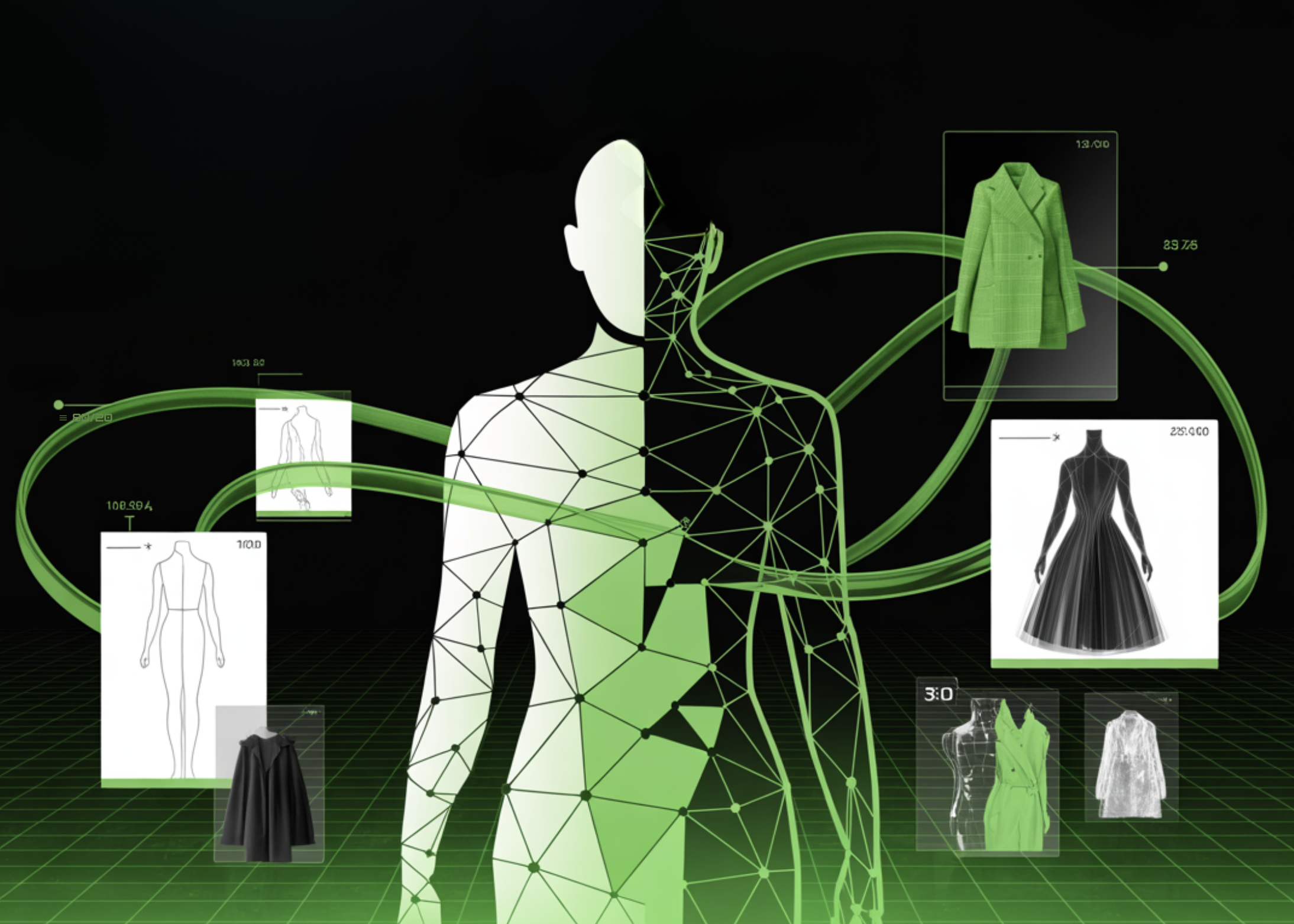
Inside the Creative Artificial Intelligence (AI) Stack: Where Human Vision and Artificial Intelligence Meet to Design Future Fashion
Fashion has always been about anticipation, determining what one would prefer to wear before they know it themselves. It’s meant in terms of intuition, presentation, experience, and the “good eye”. Today, it can be conveyed through algorithms, neural networks, and machine learning. Artificial Intelligence is no longer at the dregs, but very much at the [ ] The post Inside the Creative Artificial Intelligence (AI) Stack: Where Human Vision and Artificial Intelligence Meet to Design Future Fashion appeared first on MarkTechPost .
![[D] Hash table aspects of ReLU neural networks](https://d2xsxph8kpxj0f.cloudfront.net/310419663032563854/konzwo8nGf8Z4uZsMefwMr/default-img-earth-satellite-QfbitDhCB2KjTsjtXRYcf9.webp)
[D] Hash table aspects of ReLU neural networks
If you collect the ReLU decisions into a diagonal matrix with 0 or 1 entries then a ReLU layer is DWx, where W is the weight matrix and x the input. What then is Wₙ₊₁Dₙ where Wₙ₊₁ is the matrix of weights for the next layer? It can be seen as a (locality sensitive) hash table lookup of a linear mapping (effective matrix). It can also be seen as an associative memory in itself with Dₙ as the key. There is a discussion here: https://discourse.numenta.org/t/gated-linear-associative-memory/12300 The viewpoints are not fully integrated yet and there are notation problems. Nevertheless the concepts are very simple and you could hope that people can follow along without difficulty, despite the arguments being in such a preliminary state. submitted by /u/oatmealcraving [link] [comments]

Same Agents, Different Minds — What 180 Configurations Proved About AI Environment Design
Google tested 180 agent configurations. Same foundation models. Same tasks. Same tools. The only variable was how the agents talked to each other. Independent agents — working in parallel, no communication — amplified errors 17.2 times. Give the same agents a centralized hub-and-spoke topology, and error amplification dropped to 4.4 times. Same intelligence. Same training. A 3.9x difference in error rate, explained entirely by communication structure. This isn't a story about better prompts or smarter models. It's a story about environment. And it follows directly from a claim I made in Part 1 of this series : the interface isn't plumbing between the AI and the world. It's a mold that shapes what the AI becomes. Part 1 argued this through cases — a developer who felt hollowed out by AI, a
Knowledge Map
Connected Articles — Knowledge Graph
This article is connected to other articles through shared AI topics and tags.
More in Products

Apple approves drivers that let AMD and Nvidia eGPUs run on Mac — software designed for AI, though, and not built for gaming - Tom's Hardware
Apple approves drivers that let AMD and Nvidia eGPUs run on Mac — software designed for AI, though, and not built for gaming Tom's Hardware

7 Key Benefits of Conversational AI for Business
Every business owner knows the frustration. A potential customer messages you at 11 PM, doesn’t get a reply, and buys from someone else by morning. That’s revenue lost to silence. Conversational AI fixes this problem and about a dozen others you probably haven’t considered yet. The market agrees. The global conversational AI market is projected to reach USD 41.39 billion by 2030 , growing at a 23.7% CAGR. That kind of growth isn’t hype. It’s businesses voting with their wallets because they see real returns. Whether you run a dental clinic, a car dealership, or a boutique hotel, the benefits of conversational AI for business are hard to ignore. From slashing support costs to turning casual browsers into paying customers, AI-powered conversations are reshaping how companies interact with th
Discussion
Sign in to join the discussion
No comments yet — be the first to share your thoughts!