
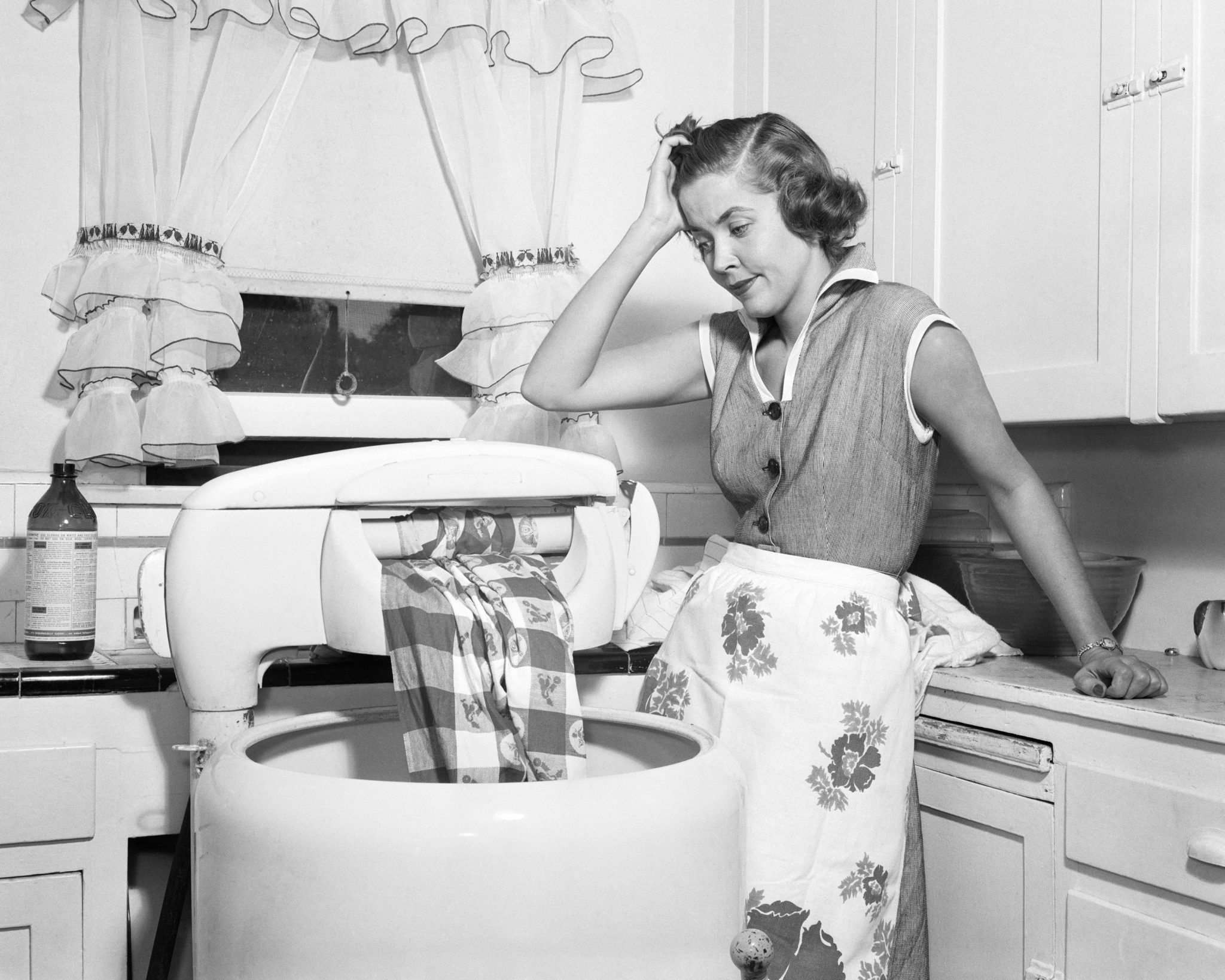
The more women earn, the more housework they do: inside the paradox a Wharton economist calls ‘an existential problem for men’
"I think it is an existential problem for men to learn to step into new roles and to actually pull their weight at home," Corinne Low told Fortune.
He doesn’t know where the toilet paper is. He doesn’t know who the pediatrician is. He has never planned a meal, started a load of laundry, or thought about what time school pickup is. And somehow, none of that is considered a problem. Weaponized incompetence, or the practice of being so helpless that the labor simply falls on someone else, has long been a feature of domestic life.
But Wharton economist Corinne Low has spent years researching the data proving what many women have quietly suspected: It isn’t a quirk, a personality flaw, or a bad habit particular to certain men. It is, at this point, a structural constant. And it’s getting worse as women enter the workforce in greater numbers than their male counterparts and outearn them in greater numbers.
Low, an associate professor of business economics and public policy at the Wharton School, who has been at Wharton since 2014, is the author of Having It All: What Data Tells Us About Women’s Lives and Getting the Most Out of Yours. The book details her research on how the division of labor in the household overwhelmingly falls on women’s shoulders, even as women continue to earn more. For Low, not only have we long moved past the idea of a stay-at-home wife waiting for her breadwinning husband to come home from work, and the Marge Simpsons and Betty Drapers of the world, but we are now entering a cultural dynamic where women outearn, outwork, and outperform their male counterparts, and still are putting in more labor at home.
“Men’s time doing housework is about the same as it was in the 1970s,” she told Fortune, “and that’s true whether or not the woman earns more money or the man earns more money.” That stagnation, she argued, is the central reason women feel as if progress has stalled, because it has, at least on one side of the equation.
The assumption, based on classical economic theory, was that as women earned more, the domestic scales would naturally balance out. More income meant more leverage, the thinking went, and more ability to negotiate a fairer split of the cooking, cleaning, laundry, childcare, pet care—the whole to-do list and mental load of running a household. And despite this, Low said, that hasn’t changed even though external factors on labor have.
Working in the office and working at home
Even when a wife outearns her husband, she still does almost twice as much cooking and cleaning as her lower-earning partner. Low used a real-world scenario from her research: a couple consisting of a nurse and an Uber driver, where the woman earns four times as much per hour as the man, and yet she still carries the heavier domestic load while he logs more hours at work. “The programming is there,” Low explained, describing how deeply ingrained gender expectations lead men to equate contribution with paid work hours, even when the math argues against it: “It would actually be more helpful if he stayed home, took the kids off from day care so she could pick up a shift as a nurse, and the whole household would be richer.”
There’s also been a dramatic transformation in how Americans parent. Parenting time has exploded since the 1990s, and the burden has not been shared equally. “Working moms today are spending more time with their kids than stay-at-home moms when we were kids,” she said. Men have increased their parenting involvement somewhat, but Low said that doesn’t equate to the effort moms are putting in. When men cite dropping kids off at day care or trading off bedtime stories as evidence they are doing their part, the data, Low said, tells a different story. Because overall parenting time has risen so dramatically for everyone, “the gap with their wives has actually widened instead of narrowed. But when it comes to that more routine household drudgery, men’s time has not changed at all.”
Now, with AI reshaping labor markets and displacing the higher-paying, male-dominated jobs in tech and adjacent fields, Low sees the stakes getting higher. The old household logic of he earns more, so she handles more at home, is being upended. Low argued that the cultural infrastructure to absorb that shift doesn’t yet exist. That result is corroborated by new economic data proving the trend of the stay-at-home boyfriend is here to stay—and likely permanently. Laura Ullrich, director of economic research at Indeed Hiring Lab, recently authored a report showing for the third time ever, women outnumber men in the workforce, and unlike the past two times (the 2008 financial crisis and COVID-19), this time it’s here to stay.
For Low, that’s troubling because men (who do go to work) are opting for largely male-dominated roles that may not fit today’s workforce—and are keeping the same mentality at home. “I think it is an existential problem for men to learn to step into new roles and to actually pull their weight at home,” she said. “Because suddenly she’s her household’s breadwinner, but he’s claiming he’s useless in the kitchen, and he doesn’t know where the toilet paper is. He doesn’t know who the kid’s pediatrician is.”
When Fortune likened her comments to weaponized incompetence, Low, 41, couldn’t help but agree. Perhaps she is emblematic of Having It All: She spoke with Fortune while on vacation at Disney World, watching her 10-month-old while her 8-year-old was on a ride with her wife.
The consequences of that weaponized incompetence, Low argued, are evident in marriage and birth rates. As women’s earning power grows, their tolerance for an unequal domestic arrangement is shrinking. “When I have my own paycheck, and now I’m seeing men who have been laid off or their jobs have been displaced, why am I going to accept that he’s not going to pull his weight around the house? That doesn’t work for me,” Low said.
What concerns her most is that the current moment is reshuffling economic roles without doing the deeper cultural work. “What I’d like to see is that we are actually reshaping gender roles more deeply, and not just reshaping earning power,” she said. “What’s shifting is earning power, but the deeper gender roles actually aren’t being reshaped.” Until that changes, women will keep doing what Low describes as playing the career game on the hardest possible difficulty setting, with no cheat codes and none of the behind-the-scenes support that makes it look easy for everyone else.
Fortune Tech
https://fortune.com/2026/04/01/wharton-economist-women-outearning-outworking-men-domestic-labor/Sign in to highlight and annotate this article

Conversation starters
Daily AI Digest
Get the top 5 AI stories delivered to your inbox every morning.
Knowledge Map
Connected Articles — Knowledge Graph
This article is connected to other articles through shared AI topics and tags.



Discussion
Sign in to join the discussion
No comments yet — be the first to share your thoughts!