

The Full-Stack Factory: How Digital Architectures are Re-Engineering the Textile Supply Chain
In the world of software development, we obsess over latency, vertical scaling, and the elimination of technical debt. We build CI/CD pipelines to ensure that code moves from a developer’s IDE to a production server with zero friction. But what happens when the "production environment" isn't a cloud server, but a physical manufacturing floor? The global textile industry is currently undergoing its most significant "version update" in a century. For decades, the industry operated on a fragmented, "monolithic" architecture—slow, prone to bugs (defects), and incredibly difficult to scale ethically. Today, a new breed of FashionTech is emerging, treating the supply chain as a programmable stack. This article explores the technical transition from fragmented outsourcing to Vertical Integration
In the world of software development, we obsess over latency, vertical scaling, and the elimination of technical debt. We build CI/CD pipelines to ensure that code moves from a developer’s IDE to a production server with zero friction. But what happens when the "production environment" isn't a cloud server, but a physical manufacturing floor?
The global textile industry is currently undergoing its most significant "version update" in a century. For decades, the industry operated on a fragmented, "monolithic" architecture—slow, prone to bugs (defects), and incredibly difficult to scale ethically. Today, a new breed of FashionTech is emerging, treating the supply chain as a programmable stack.
This article explores the technical transition from fragmented outsourcing to Vertical Integration, and how AI-driven data loops are turning physical looms into smart nodes.
1. The "Legacy Code" of Fashion: Why the Old Model is Breaking
To understand where we are going, we have to look at the "Legacy System." Traditionally, a clothing brand in a hub like New York or London would operate as a decoupled entity from its production.
-
The Design Layer: Done in isolation (often in CAD tools that didn't talk to factory machines).
-
The Sourcing Layer: Outsourced to third-party agents (High latency, zero transparency).
-
The Manufacturing Layer: Dispersed across multiple "micro-factories" that didn't share data.
In software terms, this is a distributed system with no API documentation. When a design changed in the "Front-End" (the NYC studio), the "Back-End" (the factory) wouldn't receive the update for weeks. The result? Massively over-provisioned inventory (waste) and a high "bounce rate" of defective products.
- Digital Product Creation (DPC): The GitHub of Textiles The first major shift in the tech-textile merge is Digital Product Creation (DPC). Modern manufacturers are moving away from physical prototypes—which are essentially the "manual testing" phase of fashion—to 3D digital twins.
Using tools like CLO3D or Browzwear, designers now write the "source code" for a garment. These files contain:
- Physics-Based Rendering: How a specific GSM (Grams per Square Meter) of cotton drapes over a human body.
- Strain Maps: Visualizing where the seams will fail under stress (Stress testing).
- Nesting Algorithms: Optimizing how patterns are cut from a roll of fabric to minimize "buffer overflow" (waste).
When this digital twin is sent to a vertical partner, the factory doesn't just get a picture; they get a configuration file. This is the garment industry's version of a Docker Container. Everything needed to "run" the production is included in the file, ensuring the output in the factory matches the environment of the designer.
3. Vertical Integration: Scaling the "Full-Stack" Way
In tech, we moved from managing individual servers to "Full-Stack" environments where the database, logic, and UI are tightly integrated. In textiles, this is called Vertical Manufacturing.
Most factories are just "assemblers." They buy fabric from one vendor, buttons from another, and dye from a third. This creates a massive "Dependency Hell." If the fabric vendor is late, the whole "build" fails.
A vertical facility solves this by owning the entire stack. From the raw yarn spinning to the final stitching, the data flows through a single system. For companies looking to scale, this reduces the "Lead Time Latency" from months to weeks. This technical efficiency is precisely why brands are moving toward ExploreTex Services, where the management of these complex dependencies is handled through a unified European oversight model.
The Hardware: IoT on the Factory Floor On a modern vertical floor, the machines are "Smart Nodes."
- IoT Sensors: Looms now track thread tension in real-time. If a thread breaks, the "interrupt" is logged, and the machine pauses automatically, preventing a "corrupted batch."
- Predictive Maintenance: Using machine learning, the system can predict when a needle is likely to break based on vibration patterns, scheduling a "patch" before the downtime occurs.
4. The "DevOps" of Sustainability: Data Over "Greenwashing"
Sustainability in textiles has long suffered from a lack of "unit testing." Brands claimed to be "green" without having the logs to prove it.
The tech-enabled factory uses Blockchain and RFID to create an immutable audit trail. When a bale of organic cotton enters a vertical manufacturing facility in Bangladesh, it is assigned a unique digital ID. **
- Water Usage Logs:** Smart meters track exactly how many liters were used in the dyeing process.
- Energy Consumption: Real-time dashboards show the solar-to-grid ratio of the factory.
- Labor Verification: Biometric logs ensure that working hours are within ethical limits, creating a "Read-Only" ledger of compliance.**
This is the shift from "trust me" to "verify the data." For a developer, this is the difference between a pinky-promise and a successful green build in a CI pipeline.
5. Algorithmic Merchandising: Predicting the "User Demand"
The biggest "bug" in the fashion industry is the $500 billion worth of unsold inventory produced every year. This is a Cache Invalidation problem. Brands are producing "data" (clothes) that the "user" (consumer) didn't request.
By integrating AI with the manufacturing floor, we are moving toward Just-In-Time (JIT) Manufacturing.
- Sentiment Analysis: Algorithms scrape social media and search trends to identify emerging "features" (styles).
- Small-Batch Deployments: Instead of a "Major Release" of 50,000 units, the brand deploys a "Beta" of 500 units.
- Real-Time Scaling: If the "conversion rate" is high, the vertical factory receives an automated trigger to scale production immediately.
This turns the factory into a "Serverless" function. It only "executes" (produces) when there is an active "request" (order).
6. The Hybrid Cloud Model of Manufacturing
The future of the industry looks like a Hybrid Cloud.
- The Edge (Local NYC/London): Fast, low-latency prototyping and "Made-to-Order" high-end pieces. This is your "Edge Computing."
- The Core (Portugal/Bangladesh): The high-capacity, vertical "Data Centers" where the heavy lifting of mass production happens at scale.
This allows a brand to remain agile—responding to New York trends in real-time—while utilizing the massive, optimized "compute power" of a vertical global supply chain.
- Conclusion: Why Engineers Should Care About Textiles We often think of "Tech" as something that only happens on a screen. But the most complex systems on earth are physical. The challenge of moving a garment from a 3D render to a shipping container in 14 days, with 100% ethical compliance and zero waste, is a computational and engineering feat.
The textile industry is no longer just about "sewing." It’s about data flow, system integration, and ethical algorithms. As we move into 2026, the companies that win won't just be the ones with the best designers; they will be the ones with the most robust, vertical, and data-driven "Operating Systems."
For those of us in the tech community, the message is clear: The next great "Full-Stack" challenge isn't just in the cloud—it's in the very clothes we wear.
Sign in to highlight and annotate this article

Conversation starters
Daily AI Digest
Get the top 5 AI stories delivered to your inbox every morning.
More about
modelreleaseversion
The Geometry Behind the Dot Product: Unit Vectors, Projections, and Intuition
The geometric foundations you need to understand the dot product The post The Geometry Behind the Dot Product: Unit Vectors, Projections, and Intuition appeared first on Towards Data Science .

AI Is Insatiable
While browsing our website a few weeks ago, I stumbled upon “ How and When the Memory Chip Shortage Will End ” by Senior Editor Samuel K. Moore. His analysis focuses on the current DRAM shortage caused by AI hyperscalers’ ravenous appetite for memory, a major constraint on the speed at which large language models run. Moore provides a clear explanation of the shortage, particularly for high bandwidth memory (HBM). As we and the rest of the tech media have documented, AI is a resource hog. AI electricity consumption could account for up to 12 percent of all U.S. power by 2028. Generative AI queries consumed 15 terawatt-hours in 2025 and are projected to consume 347 TWh by 2030. Water consumption for cooling AI data centers is predicted to double or even quadruple by 2028 compared to 2023. B
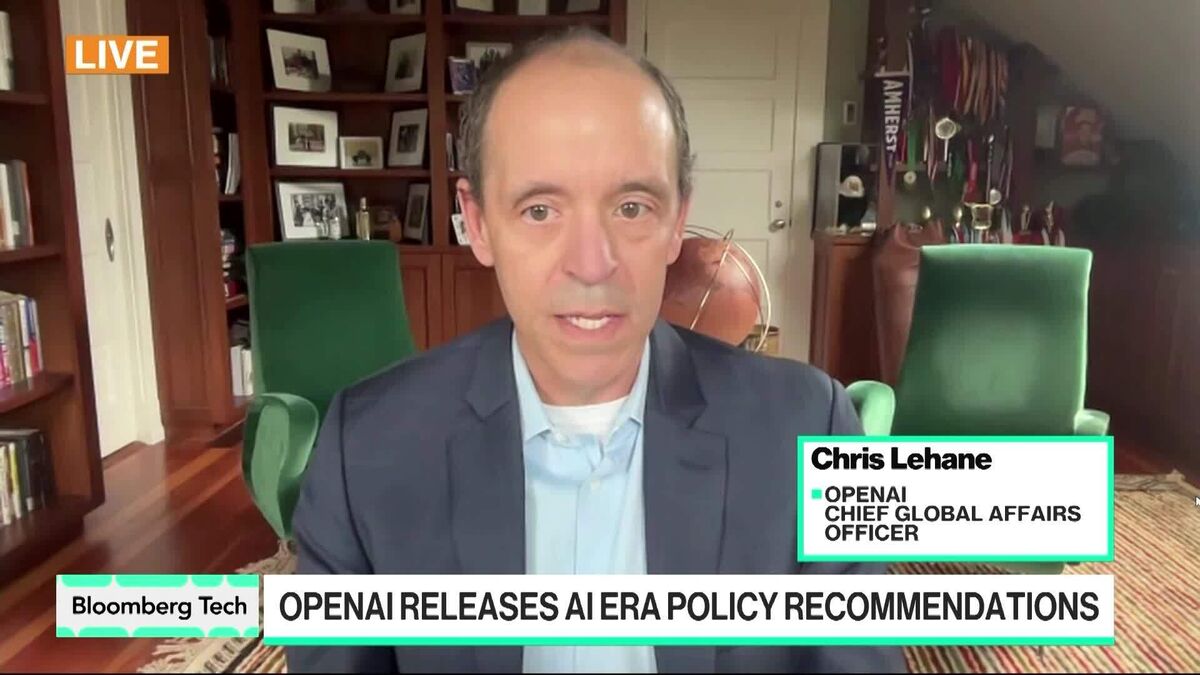
OpenAI Releases Policy Recommendations for AI Age
OpenAI has released policy recommendations to address the rapid social changes driven by AI. OpenAI's Chief Global Affairs Officer Chris Lehane discusses the company’s ideas to “ensure AI benefits everyone.” Lehane joins Caroline Hyde and Ed Ludlow on “Bloomberg Tech.” (Source: Bloomberg)
Knowledge Map
Connected Articles — Knowledge Graph
This article is connected to other articles through shared AI topics and tags.
More in Products

Beware the Magical 2-Person, $1 Billion AI-Driven Startup
In early 2024, OpenAI CEO Sam Altman predicted there would be a “one-person billion dollar company, which would have been unimaginable without AI, but now it will happen.” Several media outlets recently concluded that the prediction came true (albeit with two employees). But the story looks less promising upon deeper inspection. Retain Healthy Skepticism When [ ]
The Geometry Behind the Dot Product: Unit Vectors, Projections, and Intuition
The geometric foundations you need to understand the dot product The post The Geometry Behind the Dot Product: Unit Vectors, Projections, and Intuition appeared first on Towards Data Science .
AI Is Insatiable
While browsing our website a few weeks ago, I stumbled upon “ How and When the Memory Chip Shortage Will End ” by Senior Editor Samuel K. Moore. His analysis focuses on the current DRAM shortage caused by AI hyperscalers’ ravenous appetite for memory, a major constraint on the speed at which large language models run. Moore provides a clear explanation of the shortage, particularly for high bandwidth memory (HBM). As we and the rest of the tech media have documented, AI is a resource hog. AI electricity consumption could account for up to 12 percent of all U.S. power by 2028. Generative AI queries consumed 15 terawatt-hours in 2025 and are projected to consume 347 TWh by 2030. Water consumption for cooling AI data centers is predicted to double or even quadruple by 2028 compared to 2023. B

The one piece of data that could actually shed light on your job and AI
This story originally appeared in The Algorithm, our weekly newsletter on AI. To get stories like this in your inbox first, sign up here. Within Silicon Valley’s orbit, an AI-fueled jobs apocalypse is spoken about as a given. The mood is so grim that a societal impacts researcher at Anthropic, responding Wednesday to a call for
Discussion
Sign in to join the discussion
No comments yet — be the first to share your thoughts!