
The Agent Economy Needs Infrastructure, Not Custody
<p>The AI agent economy is about to get very real. When Claude needs to call an API, when a trading bot wants to execute a swap, or when an autonomous researcher needs to purchase a dataset — how do they pay? Today's answer is simple: they don't. Humans set up accounts, deposit funds, and babysit every transaction. But that doesn't scale when you have thousands of agents operating independently.</p> <p>The missing piece isn't smarter AI or better models. It's financial infrastructure that agents can operate autonomously — wallets they control, policies they respect, and payment rails they can use without human intervention.</p> <h2> Why Agent Wallets Matter More Than Agent Intelligence </h2> <p>We're building increasingly sophisticated AI agents that can write code, analyze markets, and ma
The AI agent economy is about to get very real. When Claude needs to call an API, when a trading bot wants to execute a swap, or when an autonomous researcher needs to purchase a dataset — how do they pay? Today's answer is simple: they don't. Humans set up accounts, deposit funds, and babysit every transaction. But that doesn't scale when you have thousands of agents operating independently.
The missing piece isn't smarter AI or better models. It's financial infrastructure that agents can operate autonomously — wallets they control, policies they respect, and payment rails they can use without human intervention.
Why Agent Wallets Matter More Than Agent Intelligence
We're building increasingly sophisticated AI agents that can write code, analyze markets, and make complex decisions. But when it comes to money, they're still toddlers with allowances. Every economic action requires a human to pre-fund an account, approve transactions, or manually handle payments.
This creates a fundamental bottleneck. Agents that could operate 24/7 across global markets are limited by human work schedules. Systems that could scale to thousands of parallel operations are constrained by manual oversight. The promise of autonomous agents hits a wall the moment they need to spend money.
The stakes are enormous. McKinsey estimates that AI agents could contribute up to $4.4 trillion annually to the global economy. But that assumes they can participate in economic activity independently. Without proper wallet infrastructure, we're building Ferrari engines for horse carriages.
What Agent Wallets Actually Need
Building wallets for AI agents isn't just about storing private keys. Agents operate differently than humans — they're faster, more systematic, but also more vulnerable to exploitation. They need infrastructure designed around their unique characteristics.
Security Through Policy, Not Approval
Humans can review every transaction before signing. Agents executing hundreds of micro-payments cannot. Instead, they need policy engines that encode business logic directly into wallet infrastructure.
WAIaaS implements 21 policy types with 4 security tiers. A trading agent might have policies like:
-
INSTANT: Transactions under $10 execute immediately
-
NOTIFY: Transactions under $100 execute with notifications
-
DELAY: Transactions under $1000 wait 5 minutes (cancellable)
-
APPROVAL: Larger transactions require human authorization
curl -X POST http://127.0.0.1:3100/v1/policies \ -H "Content-Type: application/json" \ -H "X-Master-Password: my-secret-password" \ -d '{ "walletId": "", "type": "SPENDING_LIMIT", "rules": { "instant_max_usd": 10, "notify_max_usd": 100, "delay_max_usd": 1000, "delay_seconds": 300, "daily_limit_usd": 5000 } }'curl -X POST http://127.0.0.1:3100/v1/policies \ -H "Content-Type: application/json" \ -H "X-Master-Password: my-secret-password" \ -d '{ "walletId": "", "type": "SPENDING_LIMIT", "rules": { "instant_max_usd": 10, "notify_max_usd": 100, "delay_max_usd": 1000, "delay_seconds": 300, "daily_limit_usd": 5000 } }'Enter fullscreen mode
Exit fullscreen mode
The policy engine enforces these rules automatically. Agents get the autonomy to operate within defined parameters, while humans maintain ultimate control over risk exposure.
Default-Deny Security
Unlike human wallets that can interact with any contract, agent wallets should follow a default-deny approach. Nothing is allowed unless explicitly permitted. This prevents agents from being tricked into interacting with malicious contracts or sending funds to unintended recipients.
WAIaaS implements this through CONTRACT_WHITELIST and ALLOWED_TOKENS policies. An agent can only call approved contracts and transfer whitelisted tokens:
{ "type": "CONTRACT_WHITELIST", "rules": { "contracts": [ {"address": "JUP6LkbZbjS1jKKwapdHNy74zcZ3tLUZoi5QNyVTaV4", "name": "Jupiter", "chain": "solana"} ] } }{ "type": "CONTRACT_WHITELIST", "rules": { "contracts": [ {"address": "JUP6LkbZbjS1jKKwapdHNy74zcZ3tLUZoi5QNyVTaV4", "name": "Jupiter", "chain": "solana"} ] } }Enter fullscreen mode
Exit fullscreen mode
Machine-Payable APIs (x402)
Perhaps most importantly, agents need a standard way to pay for API calls automatically. The x402 HTTP payment protocol enables exactly this — servers can return a 402 Payment Required response with payment instructions, and agents can pay and retry the request seamlessly.
curl -X POST http://127.0.0.1:3100/v1/transactions/send \ -H "Content-Type: application/json" \ -H "Authorization: Bearer wai_sess_" \ -d '{ "type": "TRANSFER", "to": "api-provider-address", "amount": "0.001", "x402_url": "https://api.example.com/expensive-endpoint" }'curl -X POST http://127.0.0.1:3100/v1/transactions/send \ -H "Content-Type: application/json" \ -H "Authorization: Bearer wai_sess_" \ -d '{ "type": "TRANSFER", "to": "api-provider-address", "amount": "0.001", "x402_url": "https://api.example.com/expensive-endpoint" }'Enter fullscreen mode
Exit fullscreen mode
This turns every API into a potential revenue stream and every agent into a paying customer. No subscriptions, no rate limits — just pay-per-use at machine speed.
Architecture for Agent Scale
Traditional wallet infrastructure assumes human operators checking balances in mobile apps. Agent infrastructure needs to support programmatic access at scale.
WAIaaS provides 39 REST API routes covering everything from basic balance checks to complex DeFi operations. Agents authenticate using JWT sessions rather than requiring private key access for every operation:
# Create a session (done by human administrator) curl -X POST http://127.0.0.1:3100/v1/sessions \ -H "Content-Type: application/json" \ -H "X-Master-Password: my-secret-password" \ -d '{"walletId": ""}'# Create a session (done by human administrator) curl -X POST http://127.0.0.1:3100/v1/sessions \ -H "Content-Type: application/json" \ -H "X-Master-Password: my-secret-password" \ -d '{"walletId": ""}'Agent uses session token for all operations
curl http://127.0.0.1:3100/v1/wallet/balance
-H "Authorization: Bearer wai_sess_eyJhbGciOiJIUzI1NiJ9..."`
Enter fullscreen mode
Exit fullscreen mode
The 7-stage transaction pipeline handles everything from validation to confirmation, with each stage enforcing different aspects of security policy. Gas conditional execution ensures transactions only execute when network conditions are favorable.
For AI frameworks like Claude, the 45 MCP tools provide native integration. Instead of wrestling with wallet UIs designed for humans, agents can call structured functions:
{ "mcpServers": { "waiaas": { "command": "npx", "args": ["-y", "@waiaas/mcp"], "env": { "WAIAAS_BASE_URL": "http://127.0.0.1:3100", "WAIAAS_SESSION_TOKEN": "wai_sess_" } } } }{ "mcpServers": { "waiaas": { "command": "npx", "args": ["-y", "@waiaas/mcp"], "env": { "WAIAAS_BASE_URL": "http://127.0.0.1:3100", "WAIAAS_SESSION_TOKEN": "wai_sess_" } } } }Enter fullscreen mode
Exit fullscreen mode
Now Claude can check balances, send transactions, and interact with DeFi protocols through simple tool calls rather than complex API integration.
DeFi for Agents
The real power emerges when agents can access decentralized finance autonomously. WAIaaS integrates 14 DeFi protocols including Jupiter for swaps, Aave for lending, Lido for staking, and Polymarket for prediction markets.
An agent managing a treasury could automatically:
-
Swap excess USDC to USDT when spreads are favorable
-
Stake idle ETH through Lido when yields exceed thresholds
-
Provide liquidity on Uniswap when impermanent loss risks are acceptable
-
Take positions on Polymarket based on data analysis
All while respecting policy constraints on maximum leverage, allowed assets, and position sizes:
{ "type": "LENDING_LTV_LIMIT", "rules": {"max_ltv_ratio": 0.7} }, { "type": "PERP_MAX_LEVERAGE", "rules": {"max_leverage": 3.0} }{ "type": "LENDING_LTV_LIMIT", "rules": {"max_ltv_ratio": 0.7} }, { "type": "PERP_MAX_LEVERAGE", "rules": {"max_leverage": 3.0} }Enter fullscreen mode
Exit fullscreen mode
The agent operates within human-defined parameters but executes trades at machine speed across global markets.
What This Enables
When agents have proper wallet infrastructure, entirely new economic models become possible:
Micro-service Agents: Instead of monolithic AI systems, we can build specialized agents that pay each other for services. A data analysis agent pays a web scraping agent for raw data, which pays a proxy service for clean IPs.
Resource Markets: Compute, storage, and bandwidth become liquid markets where agents bid for resources in real-time based on demand and availability.
Autonomous Organizations: DAOs run by AI agents that manage treasuries, execute strategies, and distribute profits without human intervention (within policy bounds).
Machine-to-Machine Commerce: IoT devices and AI systems transact directly, creating new economic networks that operate alongside but independent of human commerce.
This isn't speculation. The infrastructure exists today. Companies are already running trading agents on mainnet, managing multi-million dollar positions through policy-controlled wallets.
Getting Started
Want to give your agents financial capabilities? Here's how to get started:
-
Install the CLI: npm install -g @waiaas/cli
-
Initialize and start:
waiaas init waiaas start waiaas quickset --mode mainnetwaiaas init waiaas start waiaas quickset --mode mainnetEnter fullscreen mode
Exit fullscreen mode
- Configure your agent framework:
waiaas mcp setup --all # For Claude Desktop
Or manually configure with session tokens`
Enter fullscreen mode
Exit fullscreen mode
-
Set up policies for your use case (trading, payments, DeFi)
-
Start building agents that can pay their own way
The infrastructure layer for the agent economy isn't coming — it's here. The question is whether you'll be building on it or scrambling to catch up.
Ready to give your agents financial autonomy? Start with the open-source WAIaaS platform at https://github.com/minhoyoo-iotrust/WAIaaS or explore the documentation at https://waiaas.ai.
Sign in to highlight and annotate this article

Conversation starters
Daily AI Digest
Get the top 5 AI stories delivered to your inbox every morning.
More about
claudemodelopen-source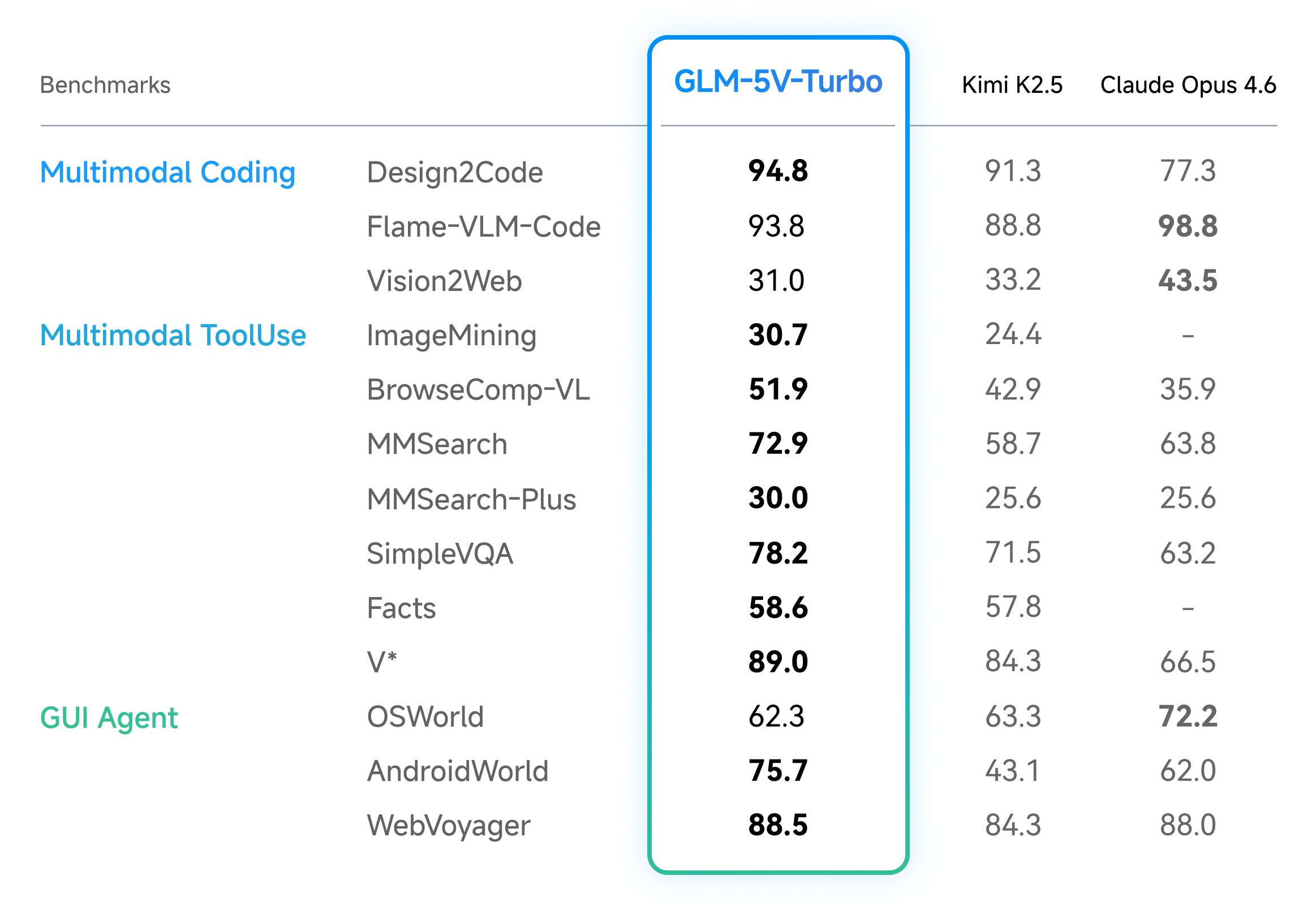
Z.ai Launches GLM-5V-Turbo: A Native Multimodal Vision Coding Model Optimized for OpenClaw and High-Capacity Agentic Engineering Workflows Everywhere
In the field of vision-language models (VLMs), the ability to bridge the gap between visual perception and logical code execution has traditionally faced a performance trade-off. Many models excel at describing an image but struggle to translate that visual information into the rigorous syntax required for software engineering. Zhipu AI’s (Z.ai) GLM-5V-Turbo is a vision […] The post Z.ai Launches GLM-5V-Turbo: A Native Multimodal Vision Coding Model Optimized for OpenClaw and High-Capacity Agentic Engineering Workflows Everywhere appeared first on MarkTechPost .

Announcing: Mechanize War
We are coming out of stealth with guns blazing! There is trillions of dollars to be made from automating warfare, and we think starting this company is not just justified but obligatory on utilitarian grounds. Lethal autonomous weapons are people too! We really want to thank LessWrong for teaching us the importance of alignment (of weapons targeting). We couldn't have done this without you. Given we were in stealth, you would have missed our blog from the past year. Here are some bang er highlights: Announcing Mechanize War Today we're announcing Mechanize War, a startup focused on developing virtual combat environments, benchmarks, and training data that will enable the full automation of armed conflict across the global economy of violence. We will achieve this by creating simulated envi

Maintaining Open Source in the AI Era
<p>I've been maintaining a handful of open source packages lately: <a href="https://pypi.org/project/mailview/" rel="noopener noreferrer">mailview</a>, <a href="https://pypi.org/project/mailjunky/" rel="noopener noreferrer">mailjunky</a> (in both Python and Ruby), and recently dusted off an old Ruby gem called <a href="https://rubygems.org/gems/tvdb_api/" rel="noopener noreferrer">tvdb_api</a>. The experience has been illuminating - not just about package management, but about how AI is changing open source development in ways I'm still processing.</p> <h2> The Packages </h2> <p><strong>mailview</strong> started because I missed <a href="https://github.com/ryanb/letter_opener" rel="noopener noreferrer">letter_opener</a> from the Ruby world. When you're developing a web application, you don
Knowledge Map
Connected Articles — Knowledge Graph
This article is connected to other articles through shared AI topics and tags.
More in Products

I Built 5 SaaS Products in 7 Days Using AI
<p>From zero to five live SaaS products in one week. Here is what I learned, what broke, and what I would do differently.</p> <h2> The Challenge </h2> <p>I wanted to test: can one developer, armed with Claude and Next.js, ship real products in a week?</p> <p>The answer: yes, but with caveats.</p> <h2> The 5 Products </h2> <ol> <li> <strong>AccessiScan</strong> (fixmyweb.dev) - WCAG accessibility scanner, 201 checks</li> <li> <strong>CaptureAPI</strong> (captureapi.dev) - Screenshot + PDF generation API</li> <li> <strong>CompliPilot</strong> (complipilot.dev) - EU AI Act compliance scanner</li> <li> <strong>ChurnGuard</strong> (paymentrescue.dev) - Failed payment recovery</li> <li> <strong>DocuMint</strong> (parseflow.dev) - PDF to JSON parsing API</li> </ol> <p>All built with Next.js, Type

Stop Accepting BGP Routes on Trust Alone: Deploy RPKI ROV on IOS-XE and IOS XR Today
<p>If you run BGP in production and you're not validating route origins with RPKI, you're accepting every prefix announcement on trust alone. That's the equivalent of letting anyone walk into your data center and plug into a switch because they said they work there.</p> <p>BGP RPKI Route Origin Validation (ROV) is the mechanism that changes this. With 500K+ ROAs published globally, mature validator software, and RFC 9774 formally deprecating AS_SET, there's no technical barrier left. Here's how to deploy it on Cisco IOS-XE and IOS XR.</p> <h2> How RPKI ROV Actually Works </h2> <p>RPKI (Resource Public Key Infrastructure) cryptographically binds IP prefixes to the autonomous systems authorized to originate them. Three components make it work:</p> <p><strong>Route Origin Authorizations (ROAs

Claude Code's Source Didn't Leak. It Was Already Public for Years.
<p>I build a JavaScript obfuscation tool (<a href="https://afterpack.dev" rel="noopener noreferrer">AfterPack</a>), so when the Claude Code "leak" hit <a href="https://venturebeat.com/technology/claude-codes-source-code-appears-to-have-leaked-heres-what-we-know" rel="noopener noreferrer">VentureBeat</a>, <a href="https://fortune.com/2026/03/31/anthropic-source-code-claude-code-data-leak-second-security-lapse-days-after-accidentally-revealing-mythos/" rel="noopener noreferrer">Fortune</a>, and <a href="https://www.theregister.com/2026/03/31/anthropic_claude_code_source_code/" rel="noopener noreferrer">The Register</a> this week, I did what felt obvious — I analyzed the supposedly leaked code to see what was actually protected.</p> <p>I <a href="https://afterpack.dev/blog/claude-code-source-

DeepSource vs Coverity: Static Analysis Compared
<h2> Quick Verdict </h2> <p><a href="https://media2.dev.to/dynamic/image/width=800%2Cheight=%2Cfit=scale-down%2Cgravity=auto%2Cformat=auto/https%3A%2F%2Fdev-to-uploads.s3.amazonaws.com%2Fuploads%2Farticles%2Fb5unb078gtfj88nul328.png" class="article-body-image-wrapper"><img src="https://media2.dev.to/dynamic/image/width=800%2Cheight=%2Cfit=scale-down%2Cgravity=auto%2Cformat=auto/https%3A%2F%2Fdev-to-uploads.s3.amazonaws.com%2Fuploads%2Farticles%2Fb5unb078gtfj88nul328.png" alt="DeepSource screenshot" width="800" height="500"></a><br> <a href="https://media2.dev.to/dynamic/image/width=800%2Cheight=%2Cfit=scale-down%2Cgravity=auto%2Cformat=auto/https%3A%2F%2Fdev-to-uploads.s3.amazonaws.com%2Fuploads%2Farticles%2Fiz6sa3w0uupusjbwaufr.png" class="article-body-image-wrapper"><img src="https://med
Discussion
Sign in to join the discussion
No comments yet — be the first to share your thoughts!