

Salesforce snaps up the team who built calendar app Clockwise to work on Agentforce
<h4>Just the team, not the tech</h4> <p>Salesforce's Agentforce team is getting an infusion of new talent by hiring the team behind Clockwise, a calendar scheduling app, but the app itself isn't sticking around.…</p>
Salesforce's Agentforce team is getting an infusion of new talent by hiring the team behind Clockwise, a calendar scheduling app, but the app itself isn't sticking around.
“We will be bringing our deep expertise building reliable, agentic software to the Agentic Enterprise,” Clockwise CEO and cofounder Matt Martin said in a LinkedIn post. “Now for the sad part: as part of this transition, the Clockwise services will be going away.”
Clockwise said that, as of March 27, it will no longer be available.
In a statement to The Register, Salesforce said it was not buying Clockwise or its technology.
“I want to clarify that this was not an acquisition,” a spokesperson said in an email. “Salesforce is not acquiring Clockwise or its technology. We look forward to welcoming members of the Clockwise team to Salesforce, where they will join the Agentforce team.”
It appears that the Clockwise team will be joining a Salesforce organization led by Gary Lerhaupt, who along with Martin cofounded Clockwise. Martin also previously worked for Salesforce as a software engineer between 2014 and 2016 before leaving to cofound Clockwise in 2016.
The Register has reached out to Martin and Lerhaupt directly on LinkedIn but neither has responded.
Lerhaupt left Clockwise last year and, in a comment on his farewell post, stated that he was going “into the great wide open,” which turned out to be a desk at Salesforce HQ, where he is vice president of product architecture for Agentforce.
Lerhaupt posted a welcome message to his new colleagues on LinkedIn.
“In a twist maybe only Silicon Valley could write, this crew is joining Salesforce,” he said of Clockwise’s employees. “More specifically, they're joining my charter to build Agent Interoperability and Orchestration within Agentforce. I couldn't be more excited to build the future of AI alongside them again!”
-
Salesforce stock buyback to saddle company with debt until 2066
-
Gartner questions whether Salesforce AI buffet will stay all-you-can-eat forever
-
Salesforce sacrifices 4,000 support jobs on the altar of AI
-
Salesforce CEO 'SaaSquatch' Benioff says his company will monster the SaaSpocalypse
Martin is also apparently joining that team as well, with one Salesforce engineer telling him “Welcome back to the Mothership – see you at onboarding” on LinkedIn and Martin replying “See you soon!”
As for the Clockwise product, it is recommending users transfer to rival scheduler Reclaim, as the Clockwise product and services will soon disappear and all data is being deleted. Clockwise said Reclaim is offering price matching for all migrating Clockwise customers.
On Clockwise’ FAQ page, it said Salesforce will not have access to users' data.
The company is working on refunding customers who have prepaid for services past March 27.
“Smart Hold events created by Clockwise (such as Focus Time, Travel Time, Meeting Breaks, and Personal Calendar synced events) will be removed from your calendar. Flexible Meetings will stop moving and the green Clockwise sparkle will be removed.” ®
The Register AI/ML
https://go.theregister.com/feed/www.theregister.com/2026/03/20/salesforce_clockwise_team/Sign in to highlight and annotate this article

Conversation starters
Daily AI Digest
Get the top 5 AI stories delivered to your inbox every morning.
More about
agent
Agentic AI deployment best practices: 3 core areas
The demos look slick. The pressure to deploy is real. But for most enterprises, agentic AI stalls long before it scales. Pilots that function in controlled environments collapse under production pressure, where reliability, security, and operational complexity raise the stakes. At the same time, governance gaps create compliance and data exposure risks before teams realize... The post Agentic AI deployment best practices: 3 core areas appeared first on DataRobot .
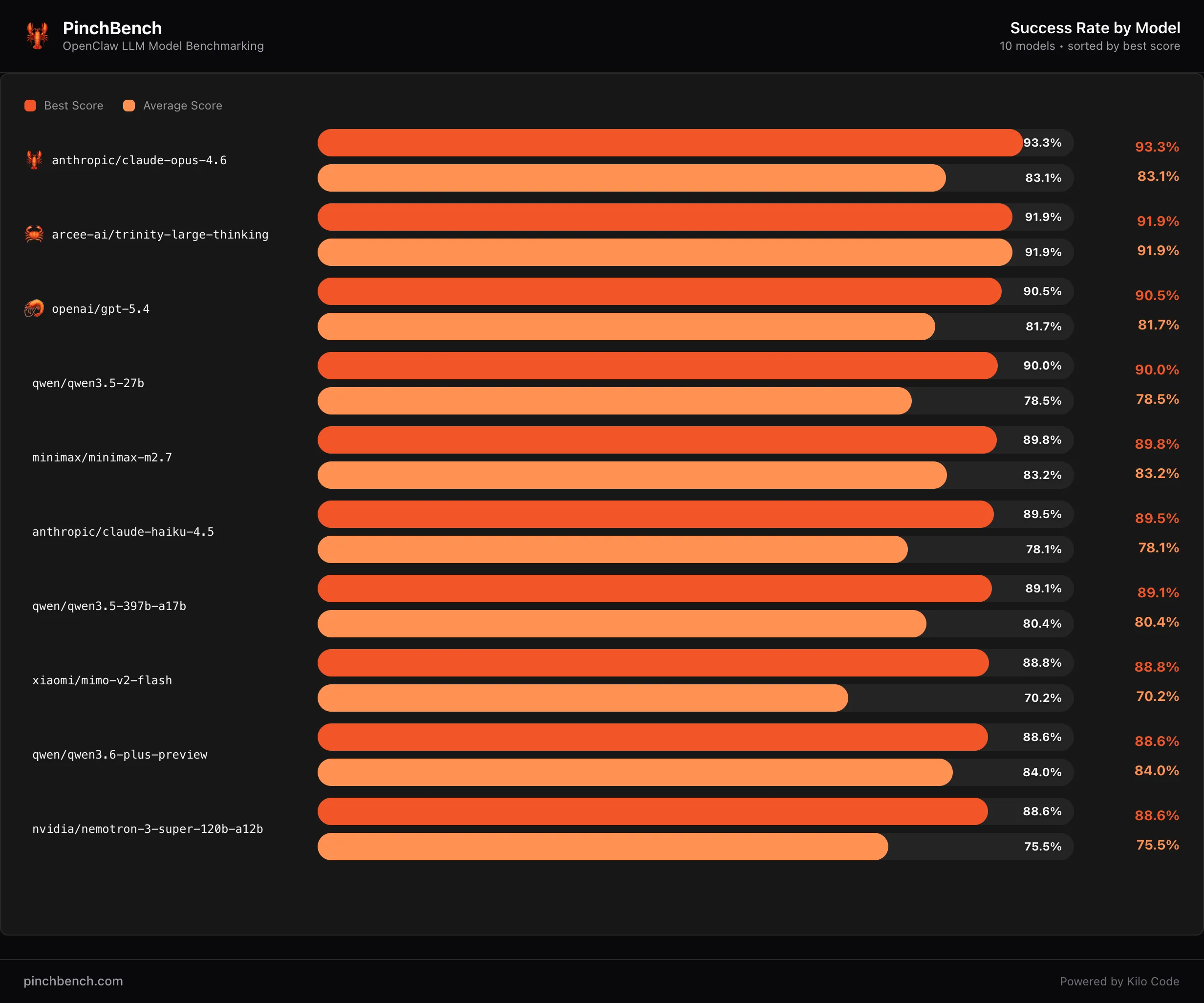
Arcee AI Releases Trinity Large Thinking: An Apache 2.0 Open Reasoning Model for Long-Horizon Agents and Tool Use
The landscape of open-source artificial intelligence has shifted from purely generative models toward systems capable of complex, multi-step reasoning. While proprietary reasoning models have dominated the conversation, Arcee AI has released Trinity Large Thinking. This release is an open-weight reasoning model distributed under the Apache 2.0 license, positioning it as a transparent alternative for developers [ ] The post Arcee AI Releases Trinity Large Thinking: An Apache 2.0 Open Reasoning Model for Long-Horizon Agents and Tool Use appeared first on MarkTechPost .
The agentic AI cost problem no one talks about: slow iteration cycles
Imagine a factory floor where every machine is running at full capacity. The lights are on, the equipment is humming, the engineers are busy. Nothing is shipping. The bottleneck isn’t production capacity. It s the quality control loop that takes three weeks every cycle, holds everything up, and costs the same whether the line is moving... The post The agentic AI cost problem no one talks about: slow iteration cycles appeared first on DataRobot .
Knowledge Map
Connected Articles — Knowledge Graph
This article is connected to other articles through shared AI topics and tags.
More in Products

Agentic AI deployment best practices: 3 core areas
The demos look slick. The pressure to deploy is real. But for most enterprises, agentic AI stalls long before it scales. Pilots that function in controlled environments collapse under production pressure, where reliability, security, and operational complexity raise the stakes. At the same time, governance gaps create compliance and data exposure risks before teams realize... The post Agentic AI deployment best practices: 3 core areas appeared first on DataRobot .
The agentic AI cost problem no one talks about: slow iteration cycles
Imagine a factory floor where every machine is running at full capacity. The lights are on, the equipment is humming, the engineers are busy. Nothing is shipping. The bottleneck isn’t production capacity. It s the quality control loop that takes three weeks every cycle, holds everything up, and costs the same whether the line is moving... The post The agentic AI cost problem no one talks about: slow iteration cycles appeared first on DataRobot .
What to look for when evaluating AI agent monitoring capabilities
Your AI agents are making hundreds — sometimes thousands — of decisions every hour. Approving transactions. Routing customers. Triggering downstream actions you don t directly control. Here s the uncomfortable question most enterprise leaders can t answer with confidence: Do you actually know what those agents are doing? If that question gives you pause, you re not alone. Many... The post What to look for when evaluating AI agent monitoring capabilities appeared first on DataRobot .
Discussion
Sign in to join the discussion
No comments yet — be the first to share your thoughts!