

Rich-U-Net: A medical image segmentation model for fusing spatial depth features and capturing minute structural details
arXiv:2603.29404v1 Announce Type: new Abstract: Medical image segmentation is of great significance in analysis of illness. The use of deep neural networks in medical image segmentation can help doctors extract regions of interest from complex medical images, thereby improving diagnostic accuracy and enabling better assessment of the condition to formulate treatment plans. However, most current medical image segmentation methods underperform in accurately extracting spatial information from medical images and mining potential complex structures and variations. In this article, we introduce the Rich-U-Net model, which effectively integrates both spatial and depth features. This fusion enhances the model's capability to detect fine structures and intricate details within complex medical imag
View PDF HTML (experimental)
Abstract:Medical image segmentation is of great significance in analysis of illness. The use of deep neural networks in medical image segmentation can help doctors extract regions of interest from complex medical images, thereby improving diagnostic accuracy and enabling better assessment of the condition to formulate treatment plans. However, most current medical image segmentation methods underperform in accurately extracting spatial information from medical images and mining potential complex structures and variations. In this article, we introduce the Rich-U-Net model, which effectively integrates both spatial and depth features. This fusion enhances the model's capability to detect fine structures and intricate details within complex medical images. Our multi-level and multi-dimensional feature fusion and optimization strategies enable our model to achieve fine structure localization and accurate segmentation results in medical image segmentation. Experiments on the ISIC2018, BUSI, GLAS, and CVC datasets show that Rich-U-Net surpasses other state-of-the-art models in Dice, IoU, and HD95 metrics.
Subjects:
Image and Video Processing (eess.IV)
Cite as: arXiv:2603.29404 [eess.IV]
(or arXiv:2603.29404v1 [eess.IV] for this version)
https://doi.org/10.48550/arXiv.2603.29404
arXiv-issued DOI via DataCite (pending registration)
Submission history
From: Zhuoyi Fang [view email] [v1] Tue, 31 Mar 2026 08:07:32 UTC (3,554 KB)
Sign in to highlight and annotate this article

Conversation starters
Daily AI Digest
Get the top 5 AI stories delivered to your inbox every morning.
More about
modelneural networkannounce

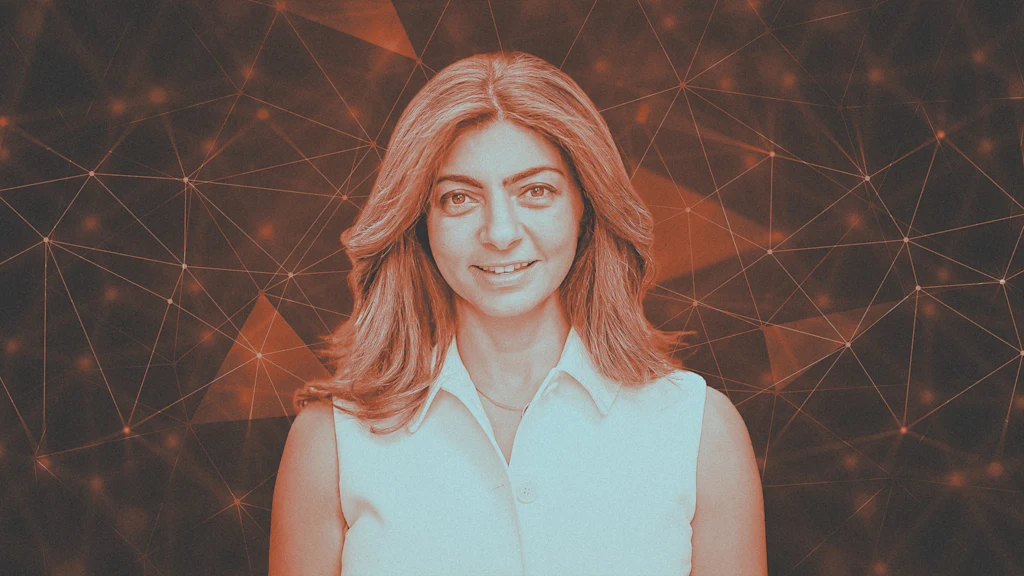
Rana el Kaliouby on why AI needs a more human future
AI is moving fast. But are we really keeping humans at the center? AI scientist, founder of Affectiva, investor at Blue Tulip, and host of Pioneers of AI, Rana el Kaliouby makes the case that human-centric AI isn t just a safety guardrail; it s the key to thriving socially, economically, and emotionally. She also cuts through the noise on the buzziest AI myths, including whether we’re in an AI bubble. This is an abridged transcript of an interview from Rapid Response recorded live at SXSW, hosted by former Fast Company editor-in-chief Robert Safian. From the team behind the Masters of Scale podcast, Rapid Response features candid conversations with today’s top business leaders navigating real-time challenges. Subscribe to Rapid Response wherever you get your podcasts to ensure you never mi
Knowledge Map
Connected Articles — Knowledge Graph
This article is connected to other articles through shared AI topics and tags.
More in Models



What is the effect on the Human mind from AI?
I am suggesting this topic because I know first hand that LLM-AI has changed how I process. My Story: At first I attempted to have GPT help write C code. Then the frustration between how it wrote code and how I learned to write code became an issue. I relented and decided to use what it gave me. I then allowed GPT to design the code and there I became lost and now fear dependency. In the end I see a need to go back to my own logic ,reasoning and design skills. So this is an issue that is advancing in the public realm and it has credibility. I thought to see what my HF peers think. -Ernst 1 post - 1 participant Read full topic
Discussion
Sign in to join the discussion
No comments yet — be the first to share your thoughts!