

Quant Factor Research in Practice: IC, IR, and the Barra Multi-Factor Model
Why Does Your Backtest Look Great But Lose Money Live? Classic quant beginner story: find an "interesting" indicator → backtest → great results → trade live → lose money. Why? Because "looks effective" and "statistically significant" are two very different things. Quantitative factor research has a rigorous evaluation framework: IC, IR, and Barra risk neutralization. Skip this and your backtest is just mining noise. Part 1: IC — The Measuring Stick for Factor Effectiveness IC (Information Coefficient) = correlation between current-period factor exposure and next-period stock returns. Use RankIC (Spearman) over Pearson IC in practice—it's more robust to outliers. import scipy.stats as stats def calc_rank_ic ( factor_series , return_series ): rank_factor = factor_series . rank () rank_return
Why Does Your Backtest Look Great But Lose Money Live?
Classic quant beginner story: find an "interesting" indicator → backtest → great results → trade live → lose money.
Why?
Because "looks effective" and "statistically significant" are two very different things. Quantitative factor research has a rigorous evaluation framework: IC, IR, and Barra risk neutralization. Skip this and your backtest is just mining noise.
Part 1: IC — The Measuring Stick for Factor Effectiveness
IC (Information Coefficient) = correlation between current-period factor exposure and next-period stock returns.
Use RankIC (Spearman) over Pearson IC in practice—it's more robust to outliers.
import scipy.stats as stats
def calc_rank_ic(factor_series, return_series): rank_factor = factor_series.rank() rank_return = return_series.rank() ic, _ = stats.spearmanr(rank_factor, rank_return) return ic`_
Enter fullscreen mode
Exit fullscreen mode
Thresholds
Metric Threshold Meaning
Mean IC
0.03 (Pearson) / > 0.05 (RankIC) Basic bar for validity
IC positive rate
55% Directional stability
IC std dev Lower is better Consistency
IC = 0.05 sounds tiny, but in noisy markets like China A-shares, this is genuinely meaningful.
Part 2: IR — Stability Matters More Than Average Effectiveness
IR = Mean IC / Std Dev of IC
Enter fullscreen mode
Exit fullscreen mode
-
IR > 0.5: Minimum for real-world use
-
IR > 1.0: Excellent factor
Recommended combination method: ICIR weighting
Weight each factor proportional to its IR. This rewards both effectiveness and consistency—better than equal-weight combinations.
Part 3: Barra CNE5/CNE6 — The "OS" for Multi-Factor Models
Barra models serve three functions:
-
Risk attribution: Where is your return coming from?
-
Factor neutralization: Strip sector/size noise from your alpha factor
-
Portfolio optimization: Maximize alpha while controlling style exposure
CNE5: 10 Core Style Factors
Factor Meaning
BETA Market sensitivity
MOMENTUM 525-day weighted return (excl. last 21 days)
SIZE ln(market cap)
EARNYILD Earnings yield composite
RESVOL Residual volatility, orthogonalized to BETA
GROWTH Composite revenue/earnings growth
BTOP Book-to-price (value)
LEVERAGE Composite financial leverage
LIQUIDTY Turnover rate composite
SIZENL Non-linear size (cube of SIZE, orthogonalized)
CNE6 Additions (Better for 2024+)
-
Quality (ROE stability, earnings quality)
-
Sentiment (analyst rating changes, fund flows)
-
Dividend Yield
Part 4: The Complete Factor Research Workflow
Step 1: Factor construction (winsorize → fill missing → standardize) Step 2: Factor neutralization (regress out industry and size) Step 3: Single-factor testing (RankIC series, ICIR, quintile backtest) Step 4: Multi-factor combination (ICIR-weighted) Step 5: Portfolio construction (sector constraints, minimize tracking error) Step 6: Evaluation (excess return, max drawdown, Sharpe, IR)Step 1: Factor construction (winsorize → fill missing → standardize) Step 2: Factor neutralization (regress out industry and size) Step 3: Single-factor testing (RankIC series, ICIR, quintile backtest) Step 4: Multi-factor combination (ICIR-weighted) Step 5: Portfolio construction (sector constraints, minimize tracking error) Step 6: Evaluation (excess return, max drawdown, Sharpe, IR)Enter fullscreen mode
Exit fullscreen mode
Part 5: Five Pitfalls You Must Avoid
-
No industry neutralization → Overweights one sector → sector rotation causes massive drawdown
-
No outlier handling → Financial metrics have extreme values; use winsorizing (3σ or MAD)
-
Look-ahead bias → China financial reports have disclosure delays; always use announcement date
-
Ignoring transaction costs → ~1.5% round-trip in A-shares destroys high-turnover strategies
-
Data mining bias → Testing 200 factors and keeping top 20 is just noise. Always OOS validate
Part 6: Factor Effectiveness in China A-Shares (2026)
Factor Status Notes
Small cap ⚠️ Declining Pressure since 2024 registration reform
Low volatility ✅ Stable Defensive returns hold in volatile markets
Quality (ROE stability) ✅ Effective CNE6 addition; institutions prefer it
Momentum ⚠️ Unstable Short-term (20–60 days) only
Value ⚠️ Weak Growth > Value environment persists
Sentiment ✅ Short-term Good for daily/weekly strategies
2026 recommendation: Focus on Quality + Low Volatility. Most resilient in current environment.
Conclusion
Mastering IC/ICIR + Barra neutralization is like installing a filter on your strategy research pipeline. It doesn't guarantee good factors—but it effectively screens out the bad ones that merely look good.
This is basic hygiene for quantitative strategy research.
Data: Zheshang Securities Financial Engineering Report, BigQuant, Barra CNE5/CNE6 methodology docs. Factor assessments based on 2025–2026 China A-share practice.
DEV Community
https://dev.to/linou518/quant-factor-research-in-practice-ic-ir-and-the-barra-multi-factor-model-1h8kSign in to highlight and annotate this article

Conversation starters
Daily AI Digest
Get the top 5 AI stories delivered to your inbox every morning.
More about
modelannouncevaluation
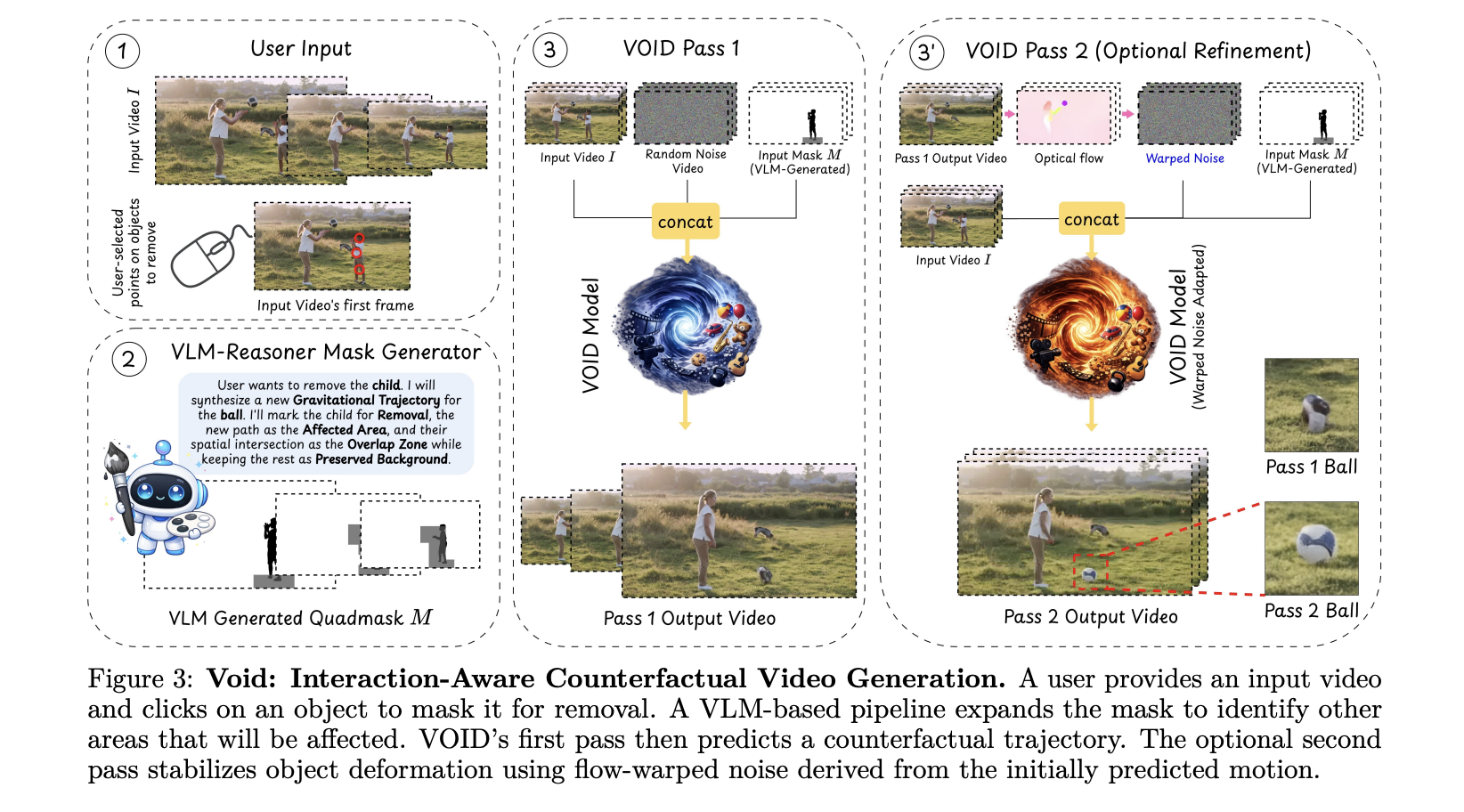
Netflix AI Team Just Open-Sourced VOID: an AI Model That Erases Objects From Videos — Physics and All
Video editing has always had a dirty secret: removing an object from footage is easy; making the scene look like it was never there is brutally hard. Take out a person holding a guitar, and you re left with a floating instrument that defies gravity. Hollywood VFX teams spend weeks fixing exactly this kind of problem. [ ] The post Netflix AI Team Just Open-Sourced VOID: an AI Model That Erases Objects From Videos — Physics and All appeared first on MarkTechPost .
Knowledge Map
Connected Articles — Knowledge Graph
This article is connected to other articles through shared AI topics and tags.
More in Market News

Big Tech firms are accelerating AI investments and integration, while regulators and companies focus on safety and responsible adoption.
The AI landscape is experiencing unprecedented growth and transformation. This post delves into the key developments shaping the future of artificial intelligence, from massive industry investments to critical safety considerations and integration into core development processes. Key Areas Explored: Record-Breaking Investments: Major tech firms are committing billions to AI infrastructure, signaling a significant acceleration in the field. AI in Software Development: We examine how companies are leveraging AI for code generation and the implications for engineering workflows. Safety and Responsibility: The increasing focus on ethical AI development and protecting vulnerable users, particularly minors. Market Dynamics: How AI is influencing stock performance, cloud computing strategies, and

Discussion
Sign in to join the discussion
No comments yet — be the first to share your thoughts!