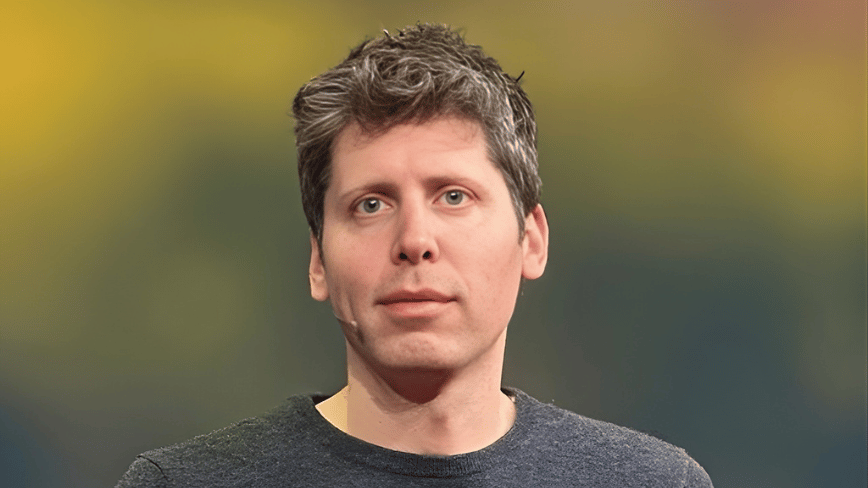
OpenAI closes record $122 billion round at $852 billion valuation, opens door to retail investors for the first time
There is a number that keeps getting larger, and on Tuesday it got larger again. OpenAI announced that it had closed its latest funding round with $122 billion in committed capital, valuing the ChatGPT maker at $852 billion post-money. The figure is up from the $110 billion the company announced in February, when Amazon, Nvidia, […] This story continues at The Next Web
There is a number that keeps getting larger, and on Tuesday it got larger again. OpenAI announced that it had closed its latest funding round with $122 billion in committed capital, valuing the ChatGPT maker at $852 billion post-money. The figure is up from the $110 billion the company announced in February, when Amazon, Nvidia, and SoftBank each committed tens of billions to anchor what was already the largest private funding round in history.
The additional $12 billion came from a broader pool of investors, and it is this tranche that marks the more consequential shift. For the first time, OpenAI extended participation to individual investors through bank channels, raising $3 billion from retail participants. It is a move that looks less like conventional venture financing and more like the groundwork for what comes next: a widely anticipated initial public offering that could land as early as the fourth quarter of 2026.
SoftBank co-led the round alongside Andreessen Horowitz and D. E. Shaw Ventures. Among the strategic investors, Amazon’s commitment was the largest at up to $50 billion, followed by Nvidia and SoftBank at $30 billion each. Microsoft, OpenAI’s longtime partner, also participated, though the company did not disclose the size of its contribution. As of late last year, Microsoft had invested more than $13 billion in OpenAI.
The pressure of valuation
The scale of the round reflects both the ambition of OpenAI’s plans and the sheer volume of capital now chasing AI infrastructure. The company said it is generating $2 billion in revenue per month, up from the $13.1 billion it recorded for the full year in 2025. ChatGPT now supports more than 900 million weekly active users, including more than 50 million subscribers. These are numbers that would be remarkable for any company; for one that launched its signature product in late 2022, they are extraordinary.
But OpenAI is still burning cash and is not yet profitable, a detail that looms larger as the valuation climbs. CEO Sam Altman will be under considerable pressure to justify an $852 billion price tag, particularly as the company has been retreating from some of its more ambitious spending plans in recent months. OpenAI shut down Sora, its short-form video generation app, after user engagement fell sharply and a licensing deal with Disney fell apart.
The retreat from Sora is instructive. It suggests that even within OpenAI, there is a growing recognition that not every frontier of generative AI will prove commercially viable, at least not on the timelines that venture-stage valuations demand. The AI boom that powered record growth in 2025 was driven overwhelmingly by enterprise adoption and coding tools, not consumer novelty. OpenAI’s CFO Sarah Friar has said the company will focus on “practical adoption” in 2026, a signal that the prioritisation of revenue-generating products over experimental ones is now explicit strategy.
The retail investor question
The decision to open the round to individual investors is notable for several reasons. It broadens OpenAI’s shareholder base ahead of an IPO, creating a constituency of retail supporters who will have a financial interest in the company’s public debut succeeding. OpenAI will also be included in several exchange-traded funds managed by ARK Invest, further extending ownership to a class of investors who have historically had no access to pre-IPO AI companies.
But $3 billion from retail investors, while symbolically significant, represents less than 2.5 per cent of the total round. The real capital, and the real leverage, remains with a handful of corporate and institutional backers whose strategic interests extend well beyond financial returns. Amazon’s $50 billion investment, for instance, is as much about securing AI infrastructure for its cloud computing division as it is about portfolio returns. Nvidia’s $30 billion cements its position as the indispensable hardware provider to the AI industry. SoftBank, which secured a $40 billion bridge loan to fund its commitment, is betting that AI will be the defining investment thesis of the decade.
The capital being deployed is, by any historical standard, staggering. But OpenAI framed it in infrastructural terms, comparing the investment to the buildout of foundational technology layers. “The capital being deployed today is helping build the infrastructure layer for intelligence itself,” the company said. It is the kind of language designed to make $122 billion sound not like a bet but like an inevitability.
Whether the market agrees will depend on what OpenAI does next. The company that other firms are restructuring themselves to compete with must now demonstrate that its revenue trajectory can sustain a valuation that exceeds the GDP of most countries. At $852 billion, OpenAI is no longer a startup being judged by its potential. It is being judged, increasingly, by the gap between what it promises and what it delivers.
The Next Web AI
https://thenextweb.com/news/openai-122-billion-round-852-billion-valuation-retail-investorsSign in to highlight and annotate this article

Conversation starters
Daily AI Digest
Get the top 5 AI stories delivered to your inbox every morning.
More about
announcecompanyfunding
Mandarin is replacing Cantonese. Offbeat AI fights back as Big Tech looks away
Preserving Cantonese has been challenging due to the dominance of Mandarin, limited learning resources and a lack of a standard written form. With a declining number of young learners, the language faces an uncertain future. Artificial intelligence (AI) – seen by some as an existential threat to humanity – may become the hope for saving the language, and many others, along with the distinct cultures they embody. This is the mission of Hong Kong-based deep-tech company Votee AI: to use large...

Japan’s Shibuya to fine litterbugs on the spot from June as visitor numbers surge
Tokyo’s Shibuya ward – home to the famous scramble crossing and one of the Japanese capital’s busiest shopping and nightlife districts – is abandoning its long-standing policy of asking people to take their rubbish home. Instead, it is turning to on-the-spot fines as visitor numbers surge and litter piles up. Under a new campaign branded “If you throw trash, you lose cash”, anyone caught dropping rubbish will be fined 2,000 yen (US$12.50), with enforcement starting on June 1 after a grace...
Why China is always misunderstood and misrepresented
Why didn’t China develop its own scientific and industrial revolutions when it made so many discoveries and advances over millennia? That is often called “Needham’s question”, named after the historian of Chinese science and tech Joseph Needham. Why didn’t China develop capitalism during the Song dynasty when it was so close to achieving a breakthrough with trade, commerce, currency and semi-industrialisation, and an emerging merchant class? The Hungarian-French sinologist Etienne Balazs, among...
Knowledge Map
Connected Articles — Knowledge Graph
This article is connected to other articles through shared AI topics and tags.
More in Market News

Depthfirst, which aims to build a "general security intelligence" for finding and fixing company vulnerabilities, raised an $80M Series B at a $580M valuation (Thomas Brewster/Forbes)
Thomas Brewster / Forbes : Depthfirst, which aims to build a “general security intelligence” for finding and fixing company vulnerabilities, raised an $80M Series B at a $580M valuation — AI cybersecurity firm Depthfirst has scored $120 million in funding to build a kind of “general security intelligence” that can defend against malicious AI.
Kestra, an open-source workflow orchestration startup, raised a $25M Series A led by RTP Global, as Kestra looks to expand its go-to-market strategy (Chris Metinko/Axios)
Chris Metinko / Axios : Kestra, an open-source workflow orchestration startup, raised a $25M Series A led by RTP Global, as Kestra looks to expand its go-to-market strategy — Kestra, an open-source workflow orchestration startup, raised a $25 million Series A led by RTP Global, CEO Emmanuel Darras tells Axios Pro exclusively.
OpenAI raises $122 billion in boosted funding round - Community Newspaper Group
<a href="https://news.google.com/rss/articles/CBMi5wFBVV95cUxPQktySnBmbjQweE45aVNSZkY4LS0wRF82STd1bHVfSDh3UllFamhFSUpkSG55ckpGSmpaNE9DRU1CNERaX0VidzRLbGFRZmtBT19BYmpOZkRmVzZ2ZjBhS1d3elhwRDhXZW02ZkZMZmNLWlVPQ21INDRHRFVGc3lVZlF5bmRITFdNNi1MdWVLWTU2VFp2V0FmdVg4aWNaUElhOGNPenFBY1VRN2ZnWEZxRXhyNjRISjJLcDVjMjFNZmRxRUJ3ek54NkltOVlLajRrQ1dtclpKb1NjWEhuaE44S2U0MUJ2S28?oc=5" target="_blank">OpenAI raises $122 billion in boosted funding round</a> <font color="#6f6f6f">Community Newspaper Group</font>
OpenAI closes $122 billion funding round, biggest ever in Silicon Valley - qz.com
<a href="https://news.google.com/rss/articles/CBMiaEFVX3lxTE5JUUQxSlk3cnJRUXZrZmJFYUJXUGlSVEVoUTJPS0tKMTNwNGNCb25MU011bW9jWm9LRjVQWTM1dklTT3pZMWFKWFFybWFwZ3JrWEFvM0dYY1pMSm5ObVlmYUFqdWxNLWo2?oc=5" target="_blank">OpenAI closes $122 billion funding round, biggest ever in Silicon Valley</a> <font color="#6f6f6f">qz.com</font>
Discussion
Sign in to join the discussion
No comments yet — be the first to share your thoughts!