
Oil Prices Plunge as Donald Trump Announces US Forces Will Leave Iran Within Weeks
Oil prices whipsawed around $100 a barrel after Donald Trump said US forces could leave Iran within weeks, despite the Strait of Hormuz remaining largely shut. Traders are now trying to square the president's upbeat timeline with escalating attacks and a deepening regional supply shock.
Oil prices swung violently around the $100 mark on Wednesday in New York and London trading, after Donald Trump said US forces could leave Iran 'in two or three weeks' even as the vital Strait of Hormuz remains largely shut to tanker traffic.
The news came after weeks of extreme turbulence in energy markets since the US‑Israeli offensive against Iran began on 28 February, choking off a waterway that normally carries about a fifth of the world's seaborne crude. Benchmark contracts have ricocheted higher as traders tried to price in the risk of a prolonged supply squeeze centred on the Middle East's most sensitive shipping route.
For context, oil prices had just notched their strongest monthly rally since records began in 1988. The US West Texas Intermediate (WTI) benchmark surged more than 60% over the past month and settled about 5% higher on Tuesday at $118.35 a barrel. By early Wednesday, some of that fever had broken. WTI for May delivery was last down 1.15% at $100.21 at 6.15 a.m. ET, while June Brent clawed back part of a heavier sell‑off to hover around $104.
Those numbers barely capture the whiplash. At one point in the session, crude dropped more than 4%, a sharp reversal driven largely by Trump's off‑the‑cuff remarks on Tuesday evening, when he appeared to claim success in Iran and sketched out a remarkably swift pull‑out.
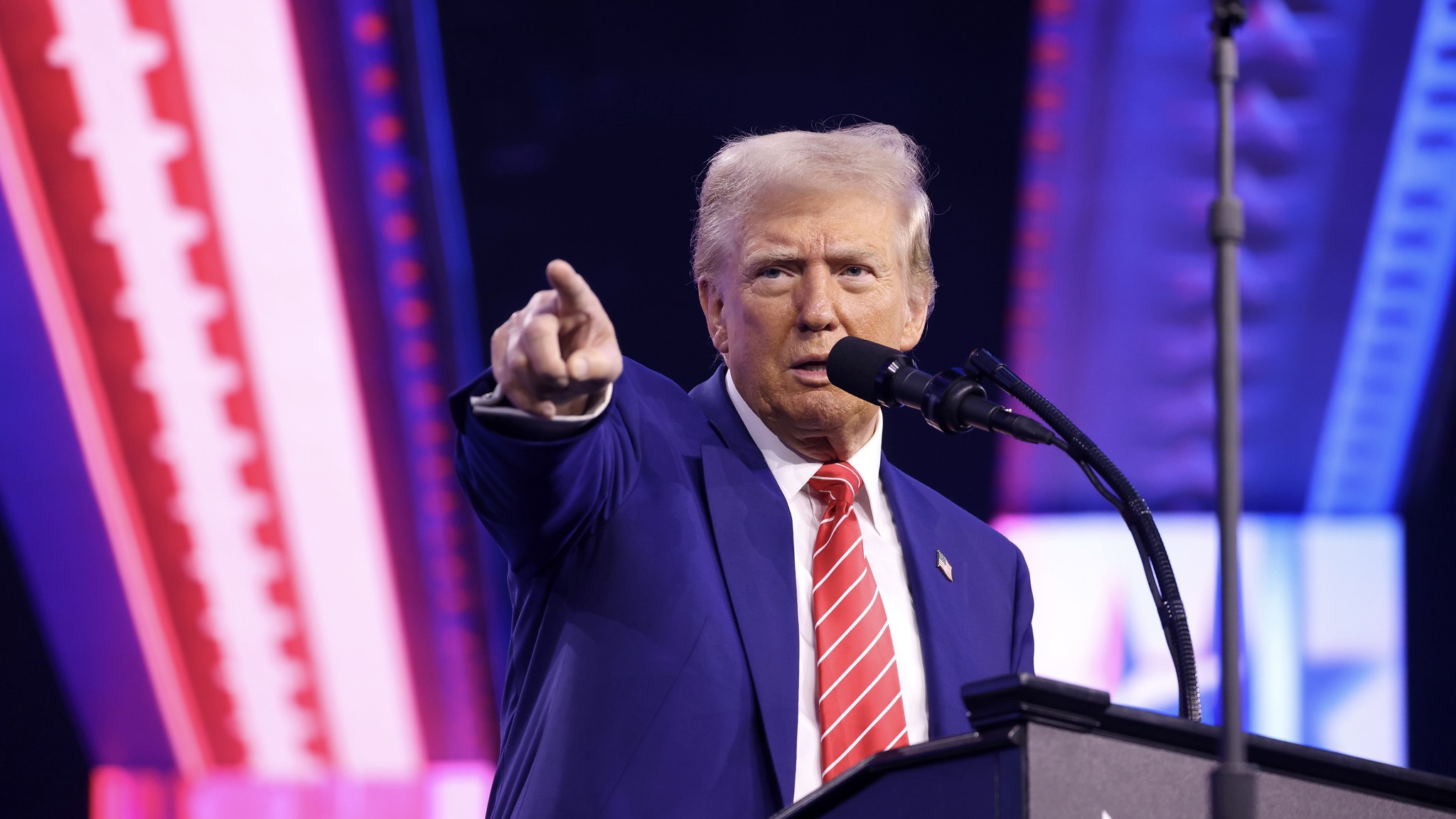
'We leave because there's no reason for us to do this. We'll be leaving very soon,' he told reporters at the White House, adding that he expected US troops to depart Iran within 'two or three weeks.' For traders who had been braced for a grinding conflict, that sounded almost like a ceasefire, or at least an exit ramp.
Oil Prices Jolt As Trump Downplays Need For Iran Deal
Oil prices reacted in seconds because the president did more than hint at withdrawal. Trump also dismissed the idea that Washington needed a negotiated settlement to end the war, insisting Iran 'doesn't have to make a deal' and describing it as 'a new regime' that he portrayed as 'much more accessible.' He further claimed to have prevented Tehran from acquiring a nuclear weapon.
None of those assertions has been independently verified, and there is, as yet, no public evidence to substantiate the nuclear claim. The White House moved quickly to channel the fallout. Spokesperson Karoline Leavitt said in a post on X that Trump would deliver a national address on Iran at 9 p.m. ET on Wednesday, promising an 'important update' on the conflict.
TUNE IN: Tomorrow night at 9PM ET, President Trump will give an Address to the Nation to provide an important update on Iran.
— Karoline Leavitt (@PressSec) March 31, 2026
In the interim, the battlefield told a more complicated story than Trump's talk of imminent departure. Iran has effectively halted oil shipments through the Strait of Hormuz, the narrow chokepoint linking the Persian Gulf to the Gulf of Oman. Before the war, roughly 20% of global oil flows passed through those waters. Since late February, that artery has been largely blocked, tightening supply and feeding the month‑long price eruption.
The disruption is not theoretical. The US‑Israeli campaign has already triggered what analysts describe as a severe energy supply shock, hitting refiners and import‑dependent economies hardest. Whether Trump can simply 'leave' without addressing the status of Hormuz, or the security of Gulf producers more broadly, is the question that keeps traders glued to every word from Washington and Tehran.
Geopolitics, Oil Prices And A War With No Clear End
If markets were looking for signs of de‑escalation on the ground, they did not find them on Wednesday. Iran's Revolutionary Guards announced they would begin targeting US companies operating in the region, explicitly naming 18 major firms including Google, Microsoft, Apple, Intel, IBM, Tesla and Boeing. It was a deliberately broad list that pulled Big Tech and aerospace giants into the psychological theatre of the conflict.
Almost in parallel, Iranian drones struck fuel tanks at Kuwait International Airport, according to Kuwaiti local media citing the country's civil aviation authority. The attack caused a 'massive fire' and damage to storage tanks, underlining how quickly the war has leapt across borders and into civilian infrastructure.
Kuwait International Airport has been targeted by blatant drone attacks from Iran and armed groups that it supports, the Civil Aviation Authority said in a statement early Wednesday.
The attack targeted fuel tanks operated by Kuwait Aviation Fuelling Company (KAFCO), the… pic.twitter.com/pfPuLxgkIF
— KUWAIT TIMES (@kuwaittimesnews) April 1, 2026
Against that backdrop, Trump's timeline for withdrawal looks optimistic at best, and to some analysts, detached from the realities of the battlefield and the oil market. 'Trump remains stuck. Leaving now would admit defeat,' said Michael Feller, co‑founder of the think‑tank Geopolitical Strategy. He argued that Trump's earlier threat to destroy Iranian civilian infrastructure would 'make no difference other than to further drive up oil prices.'
It is a blunt assessment, and one that reflects a growing view in parts of the policy world that Washington has boxed itself in. Once the Strait of Hormuz was effectively shut down and Iranian forces began to hit regional assets, the costs of a hasty exit rose sharply. Any perception of retreat would raise uncomfortable questions about US guarantees to Gulf allies whose economies rely on keeping tankers moving.
Tehran, for its part, insists that back‑channel communication does not add up to peace talks. Iranian Foreign Minister Abbas Araghchi told Al Jazeera that messages had been exchanged with the US, either directly or via regional intermediaries, but rejected any suggestion that negotiations were under way.
'I receive messages from [US special envoy] Witkoff directly, as before, and this does not mean that we are in negotiations,' Araghchi said, stressing that 'there is no truth to the claim of negotiations with any party in Iran.' All such contacts, he said, were routed through the Foreign Ministry or security agencies.
For traders, the gap between rhetoric and reality is precisely where the risk lies. Oil prices are now being tugged not only by hard data on supply and demand, but by presidential soundbites, drone strikes and opaque diplomatic messaging that may or may not signal an off‑ramp. Until either Hormuz reopens or a credible ceasefire framework emerges, every new claim will be chewed over and, inevitably, priced in.
Originally published on IBTimes UK
International Business Times
https://www.ibtimes.com/oil-prices-plunge-donald-trump-announces-us-forces-will-leave-iran-within-weeks-3800681Sign in to highlight and annotate this article

Conversation starters
Daily AI Digest
Get the top 5 AI stories delivered to your inbox every morning.
More about
announce
J-CHAT: Japanese Large-scale Spoken Dialogue Corpus for Spoken Dialogue Language Modeling
arXiv:2407.15828v2 Announce Type: replace-cross Abstract: Spoken dialogue is essential for human-AI interactions, providing expressive capabilities beyond text. Developing effective spoken dialogue systems (SDSs) requires large-scale, high-quality, and diverse spoken dialogue corpora. However, existing datasets are often limited in size, spontaneity, or linguistic coherence. To address these limitations, we introduce J-CHAT, a 76,000-hour open-source Japanese spoken dialogue corpus. Constructed using an automated, language-independent methodology, J-CHAT ensures acoustic cleanliness, diversity, and natural spontaneity. The corpus is built from YouTube and podcast data, with extensive filtering and denoising to enhance quality. Experimental results with generative spoken dialogue language m


Approximating Analytically-Intractable Likelihood Densities with Deterministic Arithmetic for Optimal Particle Filtering
arXiv:2512.01023v3 Announce Type: replace-cross Abstract: Particle filtering algorithms have enabled practical solutions to problems in autonomous robotics (self-driving cars, UAVs, warehouse robots), target tracking, and econometrics, with further applications in speech processing and medicine (patient monitoring). Yet, their inherent weakness at representing the likelihood of the observation (which often leads to particle degeneracy) remains unaddressed for real-time resource-constrained systems. Improvements such as the optimal proposal and auxiliary particle filter mitigate this issue under specific circumstances and with increased computational cost. This work presents a new particle filtering method and its implementation, which enables tunably-approximative representation of arbitra
Knowledge Map
Connected Articles — Knowledge Graph
This article is connected to other articles through shared AI topics and tags.

Discussion
Sign in to join the discussion
No comments yet — be the first to share your thoughts!