
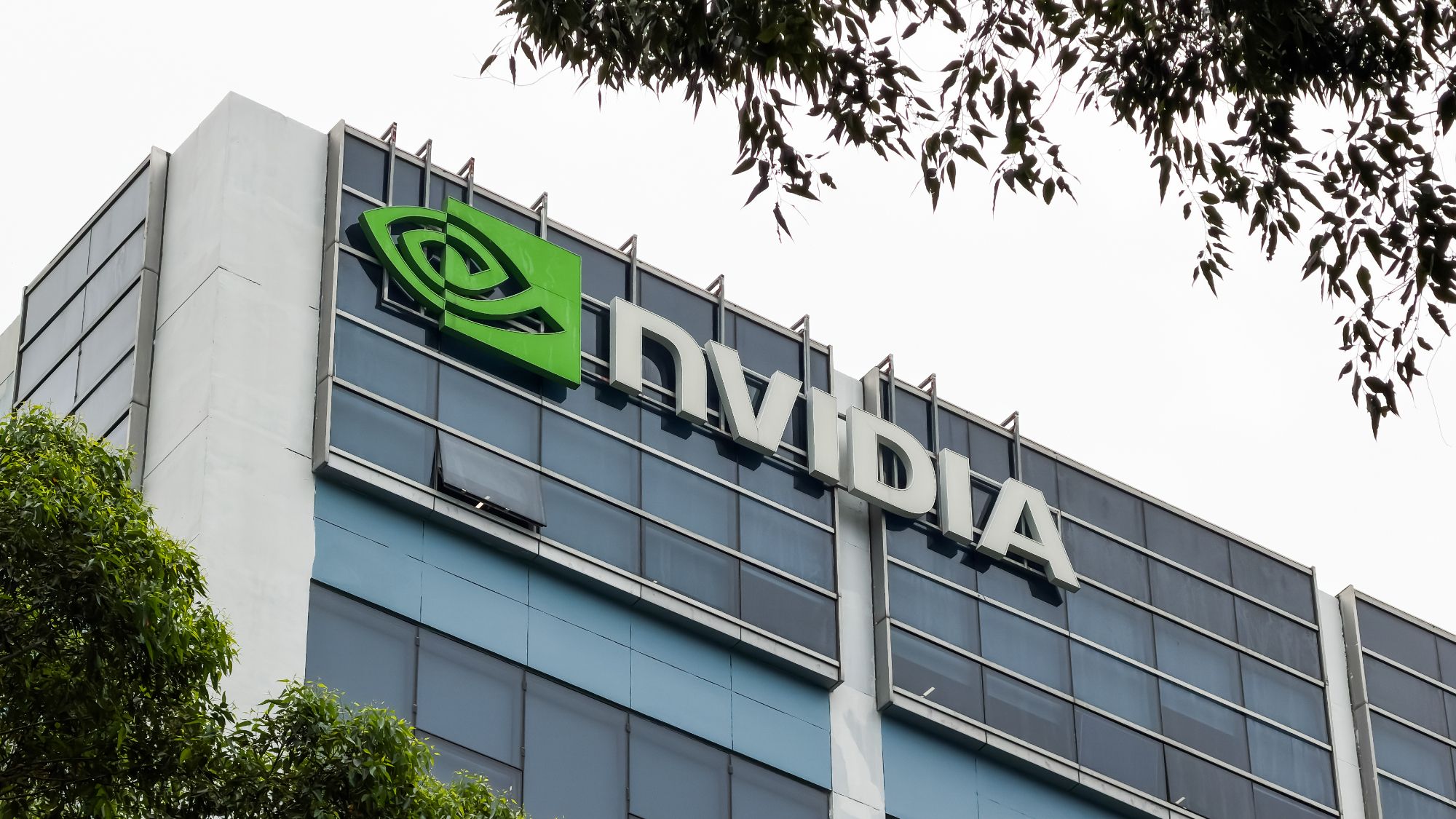
Nvidia market share in China falls to less than 60% — Chinese chip makers deliver 1.65 million AI GPUs as the government pushes data centers to use domestic chips
Nvidia market share in China falls to less than 60% — Chinese chip makers deliver 1.65 million AI GPUs as the government pushes data centers to use domestic chips
Chinese semiconductor firms have taken a big chunk of the domestic market, claiming 41% of the local AI server market and delivering 1.65 million AI GPUs out of a total of 4 million units in 2025. IDC numbers reported by Reuters claim that Nvidia still leads with a 55% market share, shipping an estimated 2.2 million cards, but this is a major contraction compared to the company’s claimed 95% market share before sanctions.
Huawei is reported to be the big winner among the Chinese chipmakers, shipping around 812,000 AI chips or nearly 20% of the market. The Shenzhen-based firm is continuing development of AI processors, with the company launching its Atlas 350 AI accelerator last week, which is claimed to have nearly three times the performance of Nvidia H20 chips. T-Head, which is owned by Alibaba, the e-commerce platform widely known as China’s Amazon, holds a distant third place with 256,000 units sold.
AMD sits just outside of the top three chipmakers in China, shipping 160,000 units for a 4% share of the domestic AI chip market. Baidu’s Kunlunxin AI chip subsidiary and Chinese AI chip maker Cambricon round out the top five, with each company delivering 116,000 cards.
Article continues below
Trump reversed the ban on the H20 and MI308 in July 2025, but Chinese companies were told to stop ordering Nvidia’s chips after U.S. Commerce Secretary Howard Lutnick’s “addition” comments during an interview. In December 2025, Trump made a complete U-turn and finally allowed Nvidia to ship the H200 to China, but it took several months before Chinese companies were allowed to order the U.S.-only chips, and only for specific institutions and applications.
Beijing is facing a dilemma as it wants to support its domestic chip industry but also wants its AI tech companies to remain competitive on the global stage. While Chinese chip makers have advanced by leaps and bounds in recent years, it still lags five to ten years in AI data center chips compared to Nvidia and AMD. Despite that, the Chinese government’s efforts seem to be paying off, as seen by the increasing market share of local chip makers.
We have yet to see if Washington’s move to allow Nvidia to sell its H200 chips to China will see the company regain its lost market share in 2026. But even if Chinese companies are eager to purchase these AI GPUs en masse, Beijing’s effort to redirect some of the demand towards domestic semiconductors will likely mean that Nvidia would have a hard time returning to pre-sanctions market share.
Follow Tom's Hardware on Google News, or add us as a preferred source, to get our latest news, analysis, & reviews in your feeds.
Sign in to highlight and annotate this article

Conversation starters
Daily AI Digest
Get the top 5 AI stories delivered to your inbox every morning.
More about
marketmilliongovernment
China's homegrown silicon suppliers gain traction as Nvidia struggles to get its chips into the market — Huawei, Cambricon and more step up to fill crucial market gap - Tom's Hardware
China's homegrown silicon suppliers gain traction as Nvidia struggles to get its chips into the market — Huawei, Cambricon and more step up to fill crucial market gap Tom's Hardware


How AI is Transforming Demand Planning in Modern Supply Chains (From Forecasting to Execution)
Traditional demand planning struggles with dynamic markets, relying too heavily on historical data. AI changes this by enabling real-time demand sensing, probabilistic forecasting, and reinforcement learning for smarter decisions. By combining data, predictive models, and digital twins, businesses can optimize inventory, reduce stockouts, and respond faster to disruptions—turning planning into a continuous, adaptive system. Read All
Knowledge Map
Connected Articles — Knowledge Graph
This article is connected to other articles through shared AI topics and tags.
More in Market News
China's homegrown silicon suppliers gain traction as Nvidia struggles to get its chips into the market — Huawei, Cambricon and more step up to fill crucial market gap - Tom's Hardware
China's homegrown silicon suppliers gain traction as Nvidia struggles to get its chips into the market — Huawei, Cambricon and more step up to fill crucial market gap Tom's Hardware
How AI is Transforming Demand Planning in Modern Supply Chains (From Forecasting to Execution)
Traditional demand planning struggles with dynamic markets, relying too heavily on historical data. AI changes this by enabling real-time demand sensing, probabilistic forecasting, and reinforcement learning for smarter decisions. By combining data, predictive models, and digital twins, businesses can optimize inventory, reduce stockouts, and respond faster to disruptions—turning planning into a continuous, adaptive system. Read All

Discussion
Sign in to join the discussion
No comments yet — be the first to share your thoughts!