
Nvidia Extends its Reach Into Self-Driving
The AI hardware and software vendor targets another tech sector.
Nvidia has signed a series of new deals with automakers as takeup of the AI giant's self-driving tech gathers momentum.
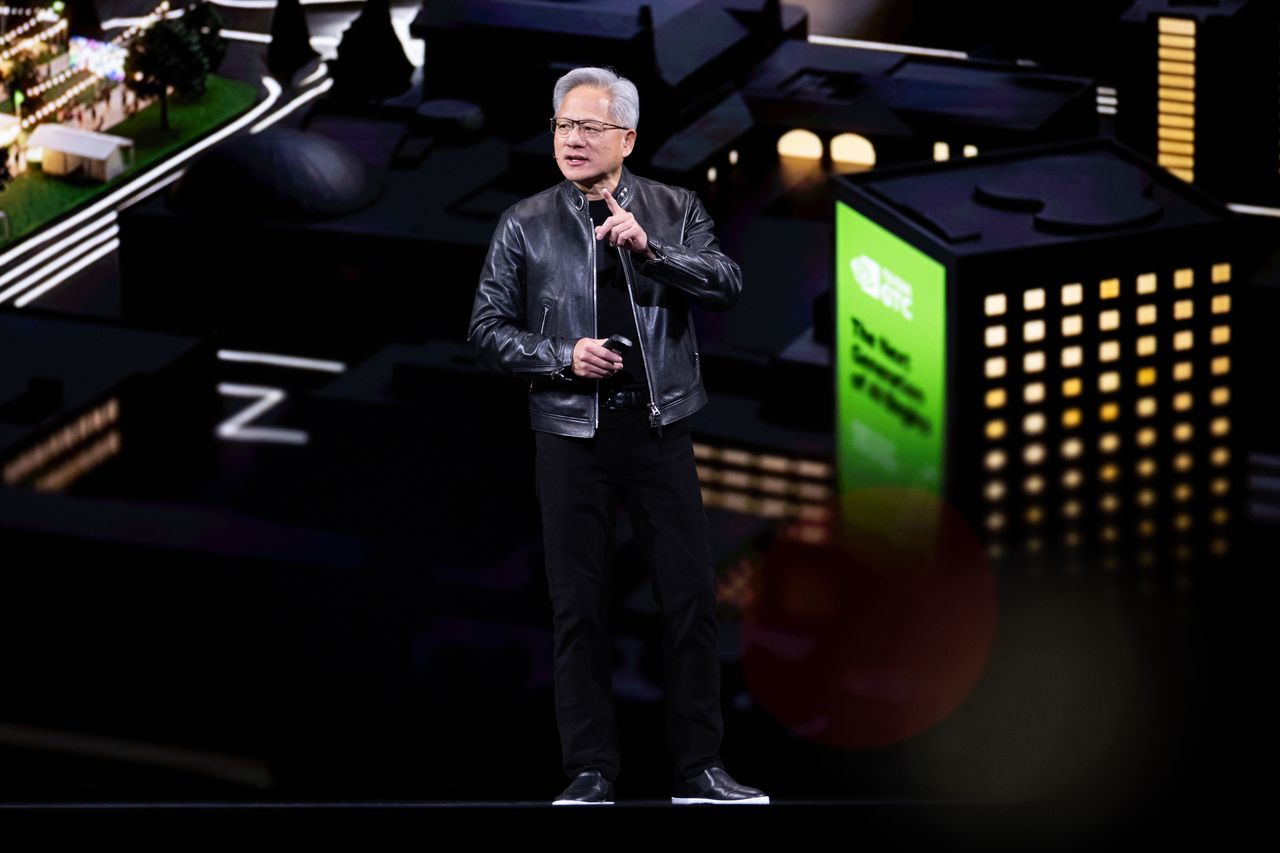
CEO Jensen Huang, at the vendor's GTC conference this week, confirmed four new partners for Nvidia’s “robotaxi-ready” platform: South Korea’s Hyundai, Nissan of Japan, and Chinese autonomous vehicle companies BYD and Geely.
“The ChatGPT moment of self-driving cars has arrived,” Huang said in a conference keynote.
Specifically, the new deals will see BYD, Geely and Nissan develop programs to deliver Level 4 automated driving functionality, as defined by the Society of Automotive Engineers, built on Nvidia’s Drive Hyperion. Level 4 is considered to be when a vehicle is in charge of the driving in defined scenarios and circumstances.
Drive Hyperion is Nvidia’s production-ready compute and sensor architecture, which serves as a platform for automakers and developers to build and test their own software, as Nissan is doing with U.K. AI firm Wayve.
Related:Microsoft to Invest $10B in AI and Cybersecurity in Japan
Nvidia’s agreement with the Hyundai Motor Group is more extensive and is effectively an expansion of existing collaborations.
The Korean automaker will also use Nvidia Drive Hyperion to develop a scalable autonomous driving stack -- but this will range in functionality from Level 2+, essentially advanced driver assistance, most likely on Hyundai and Kia-badged passenger cars, to more advanced Level 4 robotaxi services through the group’s Motional subsidiary. Motional is already operating commercially in Las Vegas, having launched there with Uber this week.
Nvidia, meanwhile, confirmed an expansion of its own robotaxi ambitions in tandem with Uber, targeting the launch of a fleet of autonomous vehicles entirely powered by its full-stack Nvidia Drive software across 28 cities and four continents by 2028, with Los Angeles and the San Francisco Bay Area leading the way in 2027.
This fleet will also tap into Nvidia's Alpamayo open model and Halos OS, which provides a safety framework. Alpamayo was originally unveiled at the CES conference this year, but GTC introduced an upgrade that allows it to learn even more effectively from unpredictable events. The model uses driving videos, navigation guidance, and natural language prompts as inputs to generate driving trajectories with reasoning.
Away from automobiles, Japan’s Isuzu is working with Tokyo-based AI startup Tier IV on Level 4 autonomous bus development using the Nvidia Drive AGX Thor system-on-a-chip, which is part of Nvidia Drive Hyperion.
Although Nvidia does not make self-driving vehicles itself, it’s clear that the company is positioning itself as integral to their continued development, as Huang said.
Related:Google Launches Open Model Family Gemma 4
“The autonomous vehicle revolution is here -- the first multitrillion-dollar robotics industry. Everything that moves will eventually be autonomous,” he said.
About the Author
Contributing Writer
Graham Hope has worked in automotive journalism in the U.K. for 26 years, including spells as editor of leading consumer news website and weekly Auto Express and respected buying guide CarBuyer.
Sign in to highlight and annotate this article

Conversation starters
Daily AI Digest
Get the top 5 AI stories delivered to your inbox every morning.
Knowledge Map
Connected Articles — Knowledge Graph
This article is connected to other articles through shared AI topics and tags.




Discussion
Sign in to join the discussion
No comments yet — be the first to share your thoughts!