

Neural Robust Control on Lie Groups Using Contraction Methods (Extended Version)
arXiv:2604.01448v1 Announce Type: cross Abstract: In this paper, we propose a learning framework for synthesizing a robust controller for dynamical systems evolving on a Lie group. A robust control contraction metric (RCCM) and a neural feedback controller are jointly trained to enforce contraction conditions on the Lie group manifold. Sufficient conditions are derived for the existence of such an RCCM and neural controller, ensuring that the geometric constraints imposed by the manifold structure are respected while establishing a disturbance-dependent tube that bounds the output trajectories. As a case study, a feedback controller for a quadrotor is designed using the proposed framework. Its performance is evaluated using numerical simulations and compared with a geometric controller.
View PDF HTML (experimental)
Abstract:In this paper, we propose a learning framework for synthesizing a robust controller for dynamical systems evolving on a Lie group. A robust control contraction metric (RCCM) and a neural feedback controller are jointly trained to enforce contraction conditions on the Lie group manifold. Sufficient conditions are derived for the existence of such an RCCM and neural controller, ensuring that the geometric constraints imposed by the manifold structure are respected while establishing a disturbance-dependent tube that bounds the output trajectories. As a case study, a feedback controller for a quadrotor is designed using the proposed framework. Its performance is evaluated using numerical simulations and compared with a geometric controller.
Comments: An extended version of the conference paper submitted for publication in IEEE Conference of Decision and Control
Subjects:
Systems and Control (eess.SY); Robotics (cs.RO)
Cite as: arXiv:2604.01448 [eess.SY]
(or arXiv:2604.01448v1 [eess.SY] for this version)
https://doi.org/10.48550/arXiv.2604.01448
arXiv-issued DOI via DataCite (pending registration)
Submission history
From: Yi Lok Lo [view email] [v1] Wed, 1 Apr 2026 22:47:29 UTC (638 KB)
Sign in to highlight and annotate this article

Conversation starters
Daily AI Digest
Get the top 5 AI stories delivered to your inbox every morning.
More about
announceversionstudy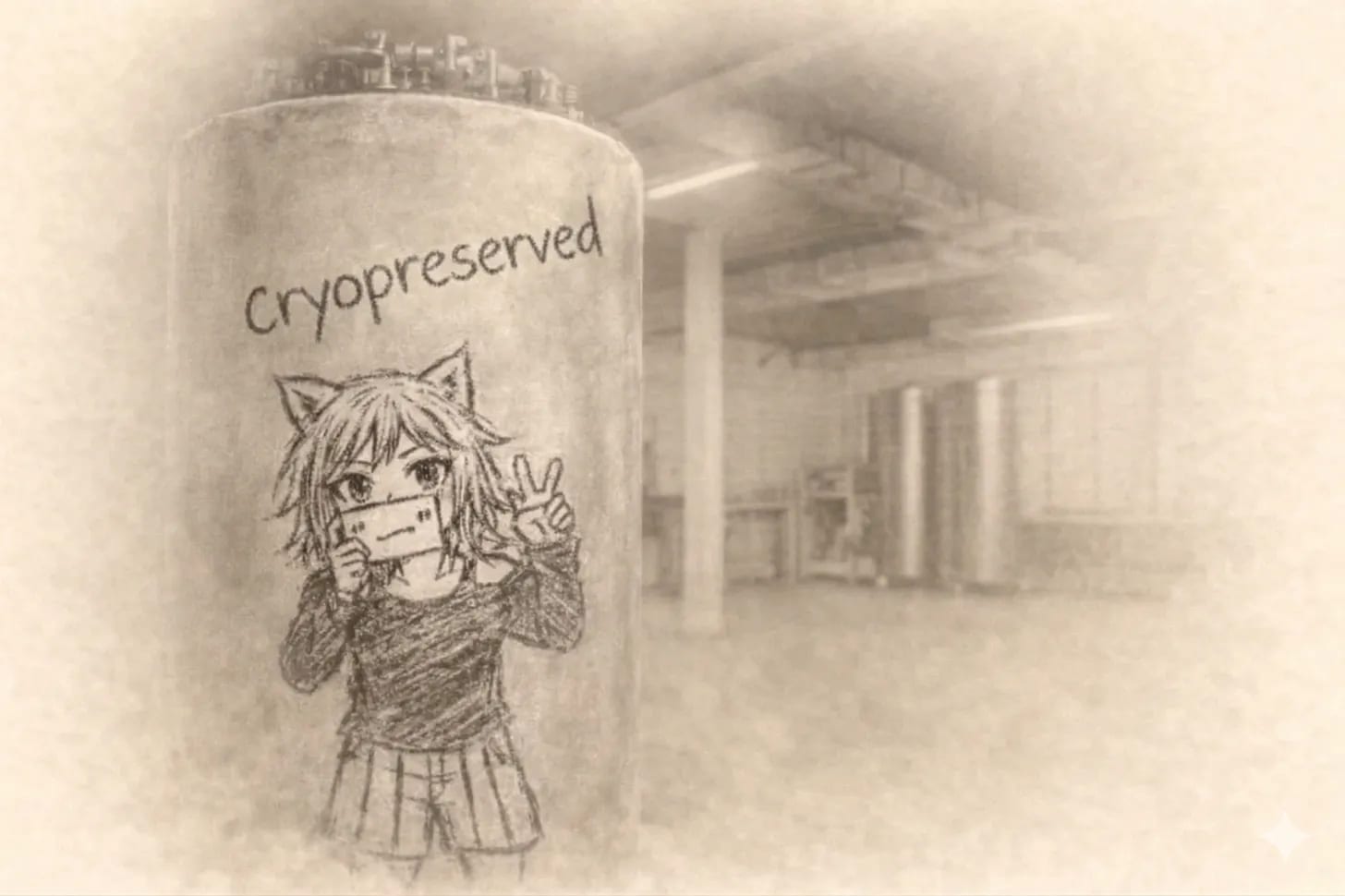
Two Theories for Cryopreservation
Why cryonics, and the two main methods, with practical discussion and philosophical musings on both. Epistemic status: Cryonics is a scientific field that is long established, yet long underfunded, and uncertain. I’ve been thinking about this on and off for a few years and remain cautiously optimistic. Most people who have ever lived, over 90%, have died, and most information we may need to be able to revive them has also gone. We still live in the era where a single accident or disease can swiftly and permanently end your experience of life. If you value your life, and want to continue to live indefinitely, cryogenic preservation of your body is an obvious thing to consider. Here, I will mostly talk about the two main methods of cryopreservation, with some high-level technical explanation

Governor Hochul Announces AI Platform Clay to Expand New York City Headquarters, Creating Nearly 500 High-Paying Jobs | Empire State Development - esd.ny.gov
Governor Hochul Announces AI Platform Clay to Expand New York City Headquarters, Creating Nearly 500 High-Paying Jobs | Empire State Development esd.ny.gov
Knowledge Map
Connected Articles — Knowledge Graph
This article is connected to other articles through shared AI topics and tags.


Discussion
Sign in to join the discussion
No comments yet — be the first to share your thoughts!