

MIRI Comms is hiring
See details and apply. In the wake of the success of Nate and Eliezer’s book, If Anyone Builds It, Everyone Dies, we have an opportunity to push through a lot of doors that have cracked open, and roll a lot of snowballs down a lot of hills. 2026 is going to be a year of […] The post MIRI Comms is hiring appeared first on Machine Intelligence Research Institute .
See details and apply.
In the wake of the success of Nate and Eliezer’s book, If Anyone Builds It, Everyone Dies, we have an opportunity to push through a lot of doors that have cracked open, and roll a lot of snowballs down a lot of hills. 2026 is going to be a year of ambitious experimentation, trying lots of new ways to deliver MIRI ideas and content to newly receptive audiences.
This means ramping up our capacity, particularly in the arena of communications. Our team did an admirable job in 2025 of handling all of the challenges of launching and promoting a book (including helping Nate and Eliezer assemble the supplemental materials for it, which is an artifact that we expect to be extremely useful, going forward). But we’ve both a) had to let some things slide a little bit, in the scramble, and want to get the house back in order, and b) need more hands for the upcoming push.
Further description is available here, along with the application. A (very abridged) version is below. We’re hoping to hire somewhere between 2 and 8 new team members within the next 3 months.
We’ll be doing a more concentrated push in places like Linkedin starting in January, but at the moment we’re highly interested in hearing from people in our existing network. If you have friends with relevant skills who might be interested, please tell them about our openings.
The vision: In 2025, MIRI’s comms team was organized around the singular goal of making the launch of IABIED go well.
In 2026, we are looking to form a team that is taking an ambitious, multistrategy approach to getting the MIRI worldview in front of as many eyes as possible, with some degree of prioritizing particular audiences but a healthy dose of “everybody.”
Picture a team meeting in which:
-
One person affirms that our newsletter is ready to go out next week, and includes the latest update from the technical governance team (who they met with yesterday). They also are tracking a conversation on the MIRI twitter account that has multiple prominent AI developers chiming in about a technical question.
-
One person updates the team on the state of three separate projects: a collaboration with a high-profile Youtuber, a previously-successful show writer who is working on a Netflix pitch with a script involving AI, and a funding pitch for a young up-and-comer who thinks they can turn a few thousand dollars into a series of TikToks that address two of the top ten Key Confusions on MIRI’s list.
-
Speaking of those Key Confusions, another person spends a few minutes giving a report on a collaboration with Palisade in which we tried out half a dozen explanatory metaphors for Confusion Three, and we now have the one that seems to click with people best. That person will pass the new metaphor on to Nate and Malo, and in the meantime, perhaps somebody wants the MIRI account to tweet it out?
-
Shifting gears, the staff writers give their updates: one of them spent the past week helping the TGT streamline and polish a document, and got it down to 66% as long while also making it 20% better. Another has been focused more on our in-group, and has a mini-sequence of three short essays ready for release on LessWrong.
This is just a single example in a pretty high-dimensional space. But what we’re getting at qualitatively is a team of largely self-directed agents, each with one or two specializations and mostly pursuing very different tasks, but all under the general umbrella of “move fast and make things (that help the overall mission).”
The roles (somewhat overlapping):
-
Core comms manager (handling website, blog, inboxes, existing social media)
-
Social media manager (helping MIRI engage with social media intentionally and effectively rather than haphazardly and halfheartedly)
-
Media outreach director (helping us to build and maintain a network of journalists, content creators, and influencers who might be interested in sharing MIRI ideas with their own preexisting audiences)
-
Analyst (helping us track what is actually working and which memes are confusing or unhelpful)
-
Pipeline builder (helping us develop and maintain reliable delivery streams to get MIRI ideas to new audiences)
-
Staff writer
-
Managing editor
Team members can be remote, in-Berkeley, or hybrid. Salaries at MIRI are variable, and we try to meet each employee’s needs—we think there are (roughly) three types of candidates for these roles: junior, senior/experienced, and stellar. We expect most junior and senior salaries to fall within the $80–160k range, and a stellar candidate much more than that. (If you are e.g. a national media figure who is interested in working with MIRI to ameliorate existential risk from AI and are worth $500k/yr, let us know that.)
More detail and application.
Sign in to highlight and annotate this article

Conversation starters
Daily AI Digest
Get the top 5 AI stories delivered to your inbox every morning.
More about
research
Research across 1,372 participants and 9K+ trials details "cognitive surrender", where most subjects had minimal AI skepticism and accepted faulty AI reasoning (Kyle Orland/Ars Technica)
Kyle Orland / Ars Technica : Research across 1,372 participants and 9K+ trials details cognitive surrender , where most subjects had minimal AI skepticism and accepted faulty AI reasoning When it comes to large language model-powered tools, there are generally two broad categories of users.
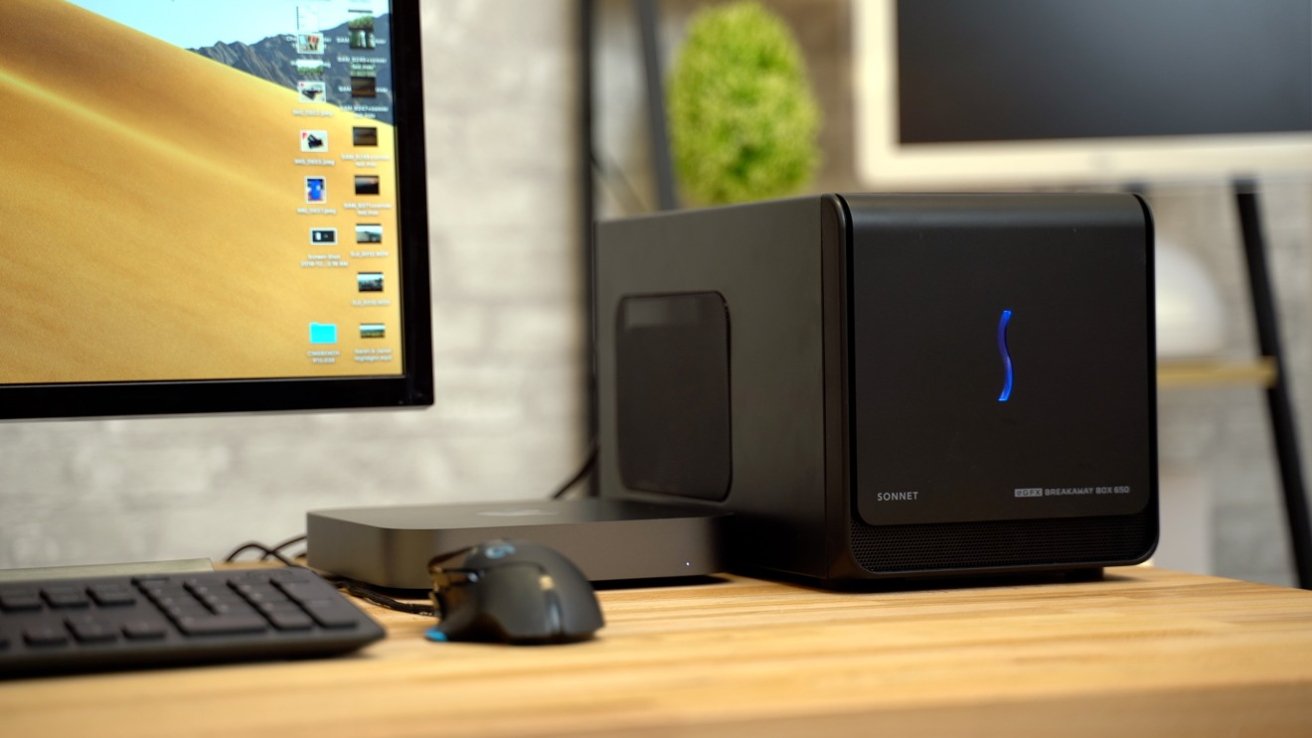
Apple reportedly signed a 3rd-party driver, by Tiny Corp, for AMD or Nvidia eGPUs for Apple Silicon Macs; it s meant for AI research, not accelerating graphics (AppleInsider)
AppleInsider : Apple reportedly signed a 3rd-party driver, by Tiny Corp, for AMD or Nvidia eGPUs for Apple Silicon Macs; it's meant for AI research, not accelerating graphics Apple has signed a driver for AMD or Nvidia eGPUs connected to Apple Silicon but there are some big caveats, and it won't improve your graphics.

Knowledge Map
Connected Articles — Knowledge Graph
This article is connected to other articles through shared AI topics and tags.
More in Products


Why I Run 22 Docker Services at Home
Somewhere in my living room, a 2018 gaming PC is running 22 Docker containers, processing 15,000 emails through a local LLM, and managing the finances of a real business. It was never supposed to do any of this. I run a one-person software consultancy in the Netherlands; web development, 3D printing, and consulting. Last year, I started building an AI system to help me manage it all. Eight specialized agents handling email triage, financial tracking, infrastructure monitoring, and scheduling. Every piece of inference runs locally. No cloud APIs touching my private data. This post covers the hardware, what it actually costs, and what I'd do differently if I started over. The Setup: Three Machines, One Mesh Network The entire system runs on three machines connected via Tailscale mesh VPN: do
![How to Embed ChatGPT in Your Website: 5 Methods Compared [2026 Guide]](https://media2.dev.to/dynamic/image/width=1200,height=627,fit=cover,gravity=auto,format=auto/https%3A%2F%2Fdev-to-uploads.s3.amazonaws.com%2Fuploads%2Farticles%2Fap1l58ek0p6aqj2yrzi6.png)
How to Embed ChatGPT in Your Website: 5 Methods Compared [2026 Guide]
You want ChatGPT on your website. Maybe for customer support. Maybe to answer FAQs automatically. Or maybe you're running live events and need AI to handle the flood of questions pouring into your chat room. Learning how to embed ChatGPT in your website is simpler than you think - but there's more to consider than most guides tell you. Here's the thing: most guides only cover half the picture. They show you how to add a basic AI chatbot widget. But what happens when 5,000 people hit your site during a product launch? What about moderating AI responses before your chatbot tells a customer something embarrassingly wrong? And what if you need AI assistance in a group chat, not just a 1-to-1 support conversation? To embed ChatGPT in your website, you have two main approaches: use a no-code pla

I Switched From GitKraken to This Indie Git Client and I’m Not Going Back
I've been using GitKraken for the past three years. It's a solid tool, no doubt. But when they bumped the price to $99/year and started locking basic features behind the paywall, I started looking around. I didn't expect to find anything worth switching to. Then I stumbled on GitSquid. I honestly don't remember how I found it - probably a random thread on Reddit or Hacker News. The website looked clean, the screenshots looked promising, and it had a free tier, so I figured I'd give it a shot. Worst case, I'd uninstall it after 10 minutes like every other "GitKraken alternative" I'd tried before. That was two weeks ago. I've since uninstalled GitKraken. First Impressions The install was fast. No account creation, no sign-in, no "let us send you onboarding emails", just download the DMG, dra
Discussion
Sign in to join the discussion
No comments yet — be the first to share your thoughts!