
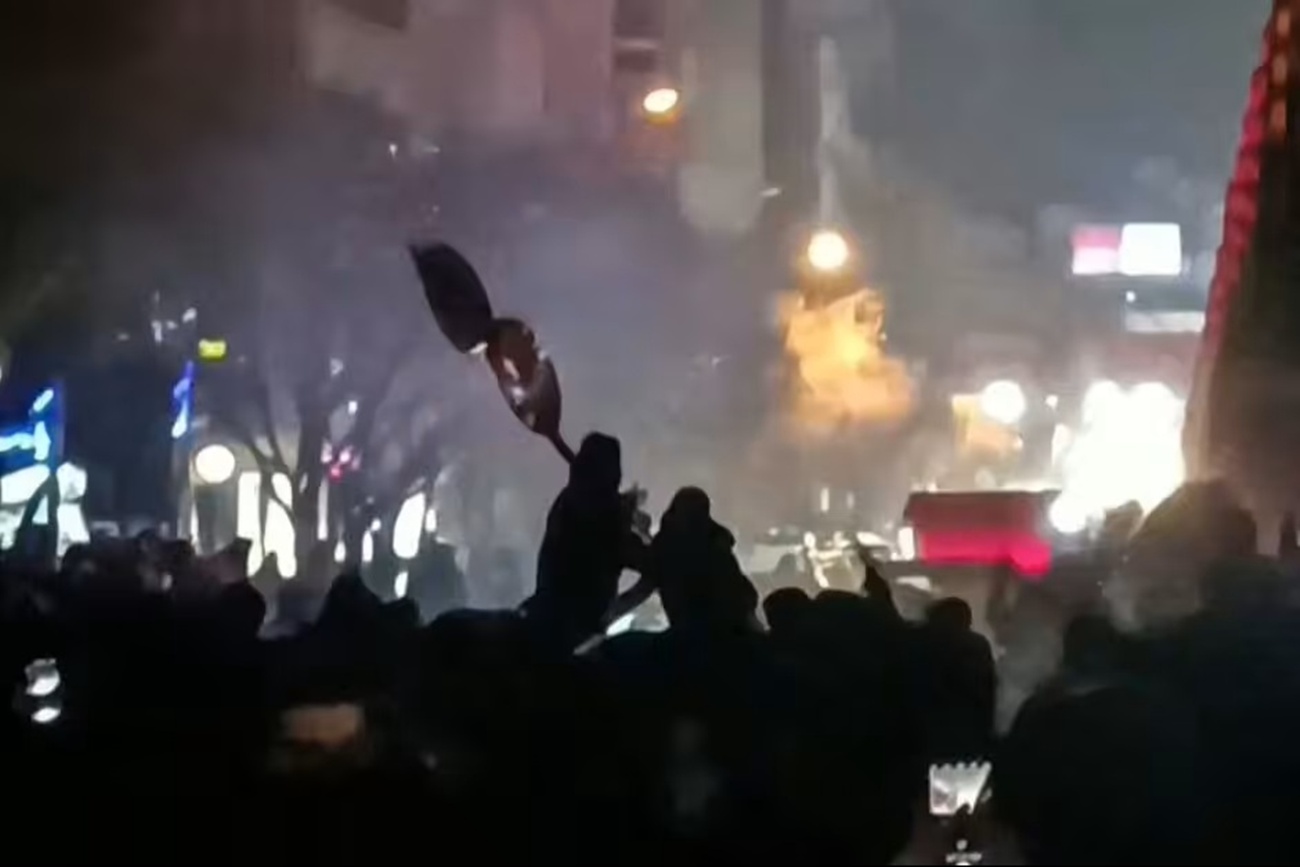
Iran Reportedly Executing Political Prisoners As War With Israel And U.S. Rages On
Iran has executed four political prisoners in the last week as it continues to crack down on dissent during the war against the U.S. and Israel.
Iran executed four members of the political opposition this week in a move critics contend is the theocratic regime's attempt to stifle and intimidate potential opposition, according to a new report.
In the last week, four members of the People's Mojahedin Organization of Iran (PMOI) were executed, the New York Post detailed. The regime said the men were convicted of crimes committed during protests in January.
"They were chivalrous men who did not bow to any torture or pressure and stood firm on their pledge and covenant until the very end," Maryam Rajavi, president-elect of the Paris-based National Council of Resistance of Iran, said in a statement to Reuters.
On Monday, the organization said that Babak Alipour, 34, a law graduate, and Pouya Ghobadi, 32, an electrical engineer, were hanged. The day before, two other men, Ali Akbar Daneshvar Kar and Mohammad Taghavi, were executed.
In the first week of January, tens of thousands of protestors took to the streets in Iran to protest the regime. Those protests ended in bloodshed, with thousands of protestors were killed by regime forces.
U.S.-based Human Rights Activists News Agency has said at least 7,000 people were killed in the crackdown. Some reporting has placed the death toll of protestors much higher. Iran International reported that the true number of Iranian civilians killed in the massacres was over 36,000, with most of the killings happening on January 8 and January 9 after internet access within Iran was cut off.
Overall, executions in Iran for the first quarter of the year are down, according to the human rights organization Hengaw. The organization reported that at least 160 people had been executed in Iran in the first three months of the year, compared to 233 executions over the same time period in 2025.
However, the organization also noted that at least 12 political or ideological prisoners were executed in that time frame. Eight of those executions happened in the last few weeks following the start of the war launched by Israel and the U.S. against the regime.
International Business Times
https://www.ibtimes.com/iran-reportedly-executing-political-prisoners-war-israel-us-rages-3800778Sign in to highlight and annotate this article

Conversation starters
Daily AI Digest
Get the top 5 AI stories delivered to your inbox every morning.
More about
report
Cloud Observability vs Monitoring: What's the Difference and Why It Matters
Cloud Observability vs Monitoring: What's the Difference and Why It Matters Your alerting fires at 2 AM. CPU is at 94%, error rate is at 6.2%, and latency is climbing. You page the on-call engineer. They open the dashboard. They see the numbers going up. What they cannot see is why — because the service throwing errors depends on three upstream services, one of which depends on a database that is waiting on a connection pool that was quietly exhausted by a batch job that ran 11 minutes ago. Monitoring told you something was wrong. Observability would have told you what. This is not a semantic argument. Teams with mature observability resolve incidents 2.8x faster than teams that rely on monitoring alone, according to DORA research. The gap matters in production. Understanding why the gap e

Real-time emotion detection from webcam — no wearables needed
We’ve been running controlled trials with real-time facial affect analysis using nothing but a standard 720p webcam — no IR sensors, no EEG caps, no chest straps. The goal? Detect emotional valence and arousal with enough accuracy to be useful in high-stakes environments: remote proctoring, telehealth triage, UX research. Most open-source pipelines fail here because they treat emotion as a static classification problem. We treat it as a dynamic signal. Our stack uses a lightweight RetinaFace for detection, followed by a pruned EfficientNet-B0 fine-tuned on dynamic expressions from the AFEW and SEED datasets — not just static FER2013 junk. Temporal smoothing via a 1D causal CNN on top of softmax outputs reduces jitter and improves response latency under variable lighting. The real breakthro
Takedown is not a ticket, but a campaign-suppression system
Most security teams still talk about takedown as if it were one workflow: detect a phishing page, file an abuse report, wait for the host or registrar, close the ticket, move on. That model was always too simple, and it is getting weaker. The better way to think about takedown is this: takedown is the process of reducing attacker operating time across the assets, channels, and trust surfaces a campaign depends on . If your process only removes one URL but leaves the spoofed number, the cloned social profile, the fake app listing, the paid ad, or the next domain in the chain untouched, you did not really suppress the campaign. You trimmed one branch. That distinction matters because modern phishing and scam operations are not domain-only problems. APWG recorded 892,494 phishing attacks in Q
Knowledge Map
Connected Articles — Knowledge Graph
This article is connected to other articles through shared AI topics and tags.
More in Analyst News
Real-time emotion detection from webcam — no wearables needed
We’ve been running controlled trials with real-time facial affect analysis using nothing but a standard 720p webcam — no IR sensors, no EEG caps, no chest straps. The goal? Detect emotional valence and arousal with enough accuracy to be useful in high-stakes environments: remote proctoring, telehealth triage, UX research. Most open-source pipelines fail here because they treat emotion as a static classification problem. We treat it as a dynamic signal. Our stack uses a lightweight RetinaFace for detection, followed by a pruned EfficientNet-B0 fine-tuned on dynamic expressions from the AFEW and SEED datasets — not just static FER2013 junk. Temporal smoothing via a 1D causal CNN on top of softmax outputs reduces jitter and improves response latency under variable lighting. The real breakthro
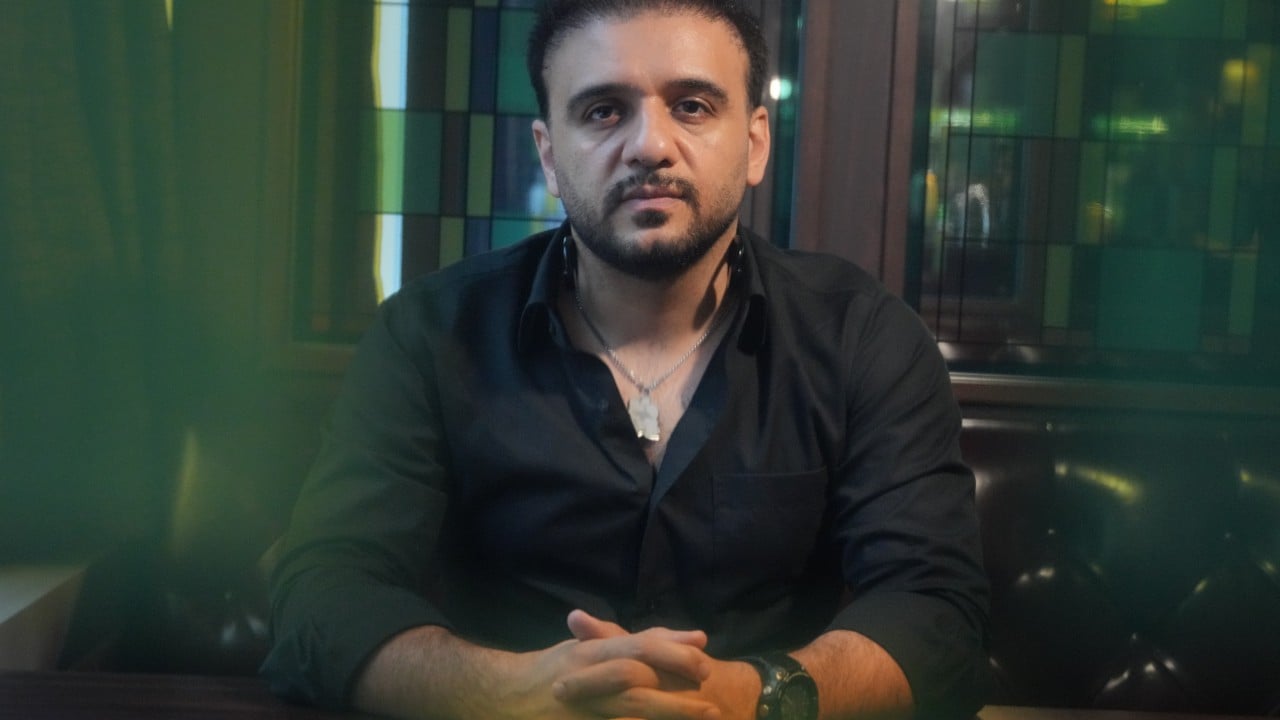
Anxious days, sleepless nights for young Iranians in Hong Kong as war rages on
Life for Hong Kong-based Iranian biomedical researcher Behzad Nasiri Ahmadabadi is filled with anxiety as he spends each day waiting for a call from his family that may not come amid the conflict in the Middle East. The stress is similar for Iranian student Ali*, who spends his days scrolling through news reports from across the world to piece together events on the ground and lies awake at night thinking about what they mean. Young Iranians in Hong Kong are dealing with the conflict in a...

Discussion
Sign in to join the discussion
No comments yet — be the first to share your thoughts!